
Arne Jonckheere

Arne JonckheereIndustrial product designer

Master in Product Development, University of Antwerp. I like the hands-on part best: building, testing and rebuilding until a product works in the real world.

01LemnaSenseMaster's thesis · 2026 02ResonanceA soda maker in Bose's design language · 2024 03Surface TensionSurface modelling · SolidWorks, Siemens NX 04A Form StudioMy own maker brand · FDM, SLA, CNC 05BarmadilloMy own pop-up coffee bar · 2026
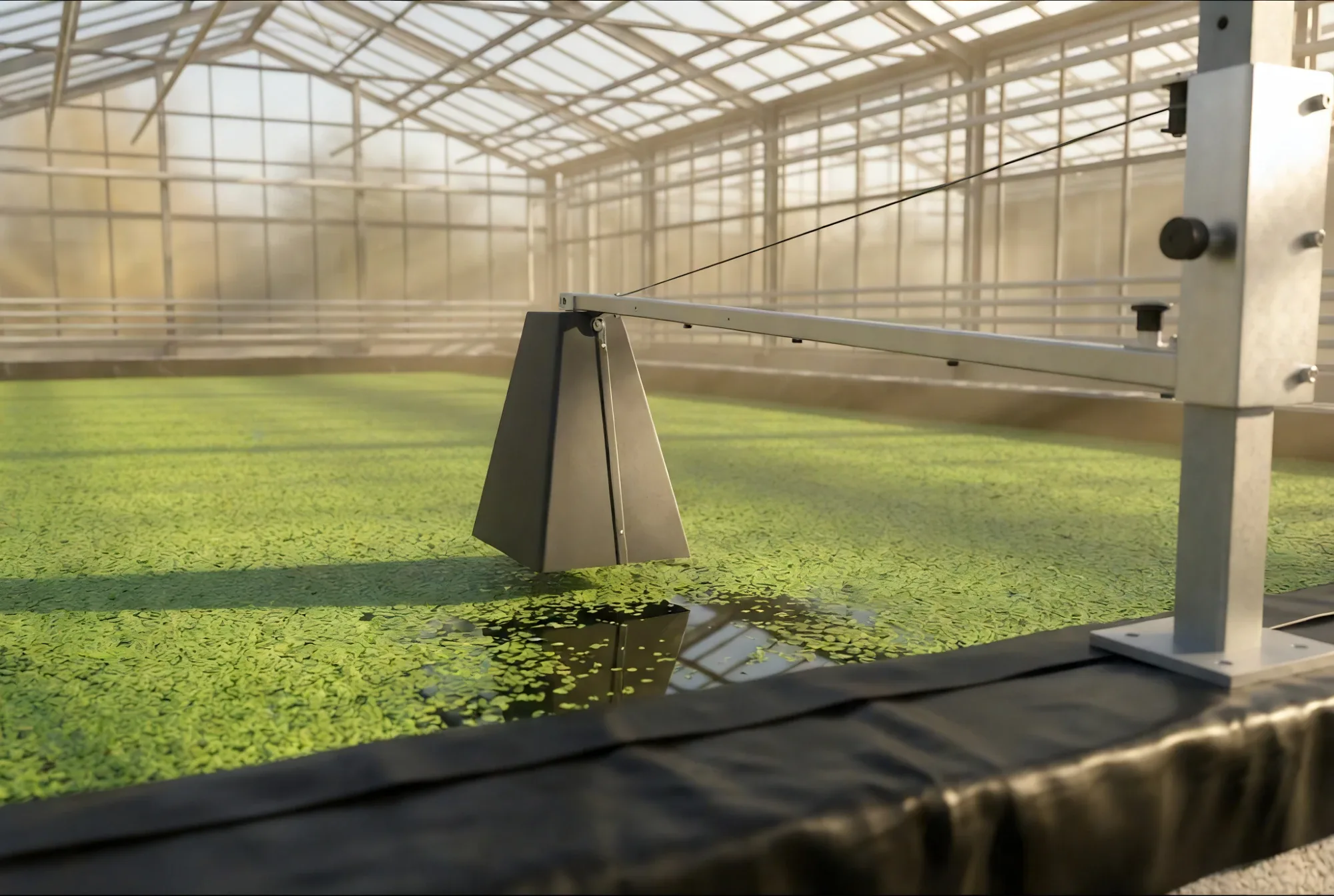
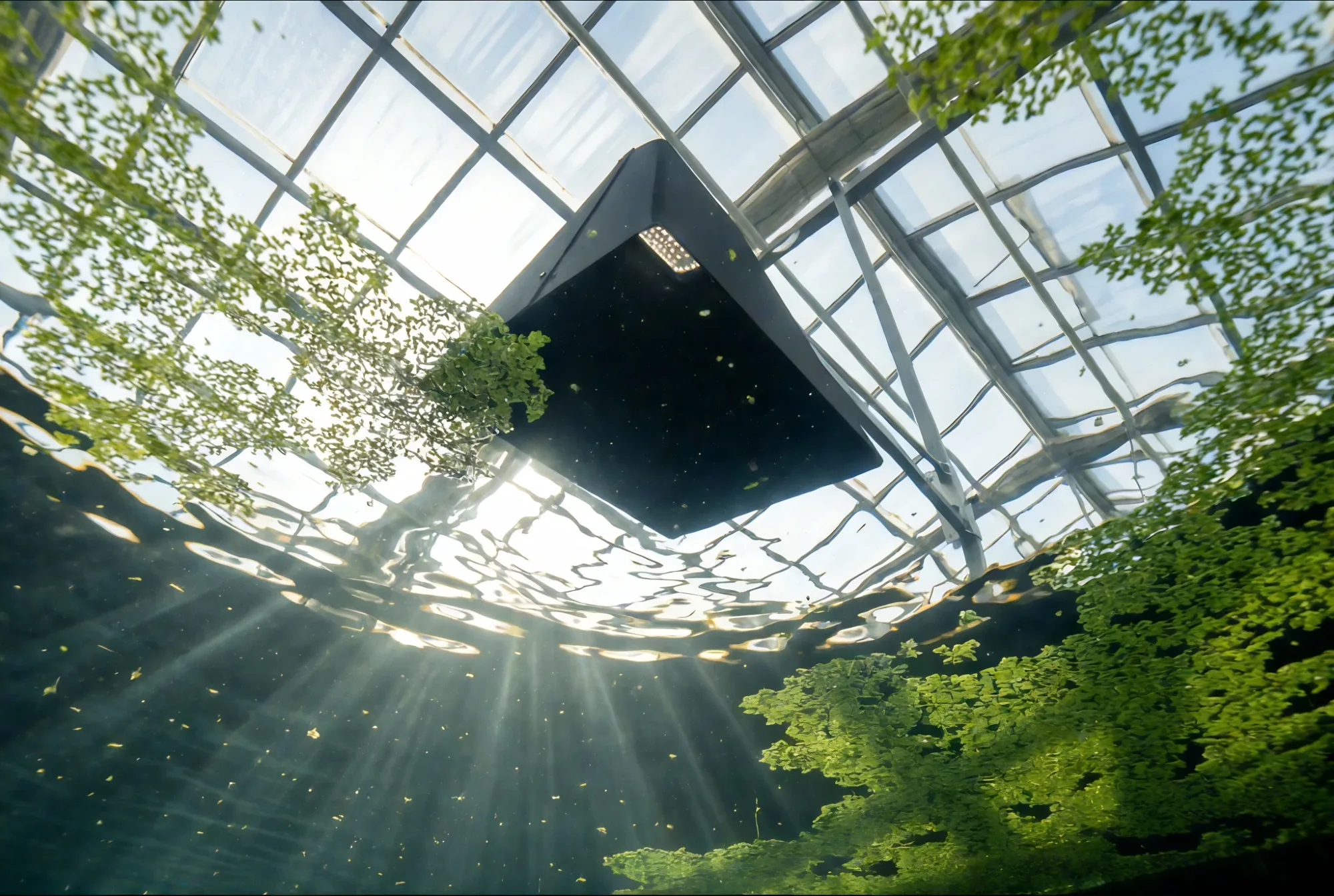
Render from under the water: the black LemnaSense sensor hangs above a duckweed pond in a greenhouse.

LemnaSense

A sensor that tells duckweed growers when to harvest, without touching the crop.

Year
2025–2026
Context
Master's thesis, University of Antwerp
Team
Solo, one full year
Scope
Field research, concept, testing, CAD, app design

Growers harvest by eye

Since 2025, duckweed is approved in the EU as a novel food: a fast-growing, protein-rich crop. In Flemish greenhouses it yields far less than it could.

The plant doubles its biomass in one to three days, so timing is everything. Harvest too early and light reaches the water, and algae take over. Harvest too late and the layer gets too dense to keep growing. Today growers judge that moment visually or by the calendar.

5–7 tyield in Flanders today
20–55 twhat the plant can do
Top view of duckweed on water, about 37 percent covered. The same pond a day later, about 64 percent covered.
Analysis window, 20 × 30 cm. Day 1
Surface covered by duckweed
0.0%
density of the layer optimal growth zone shaded

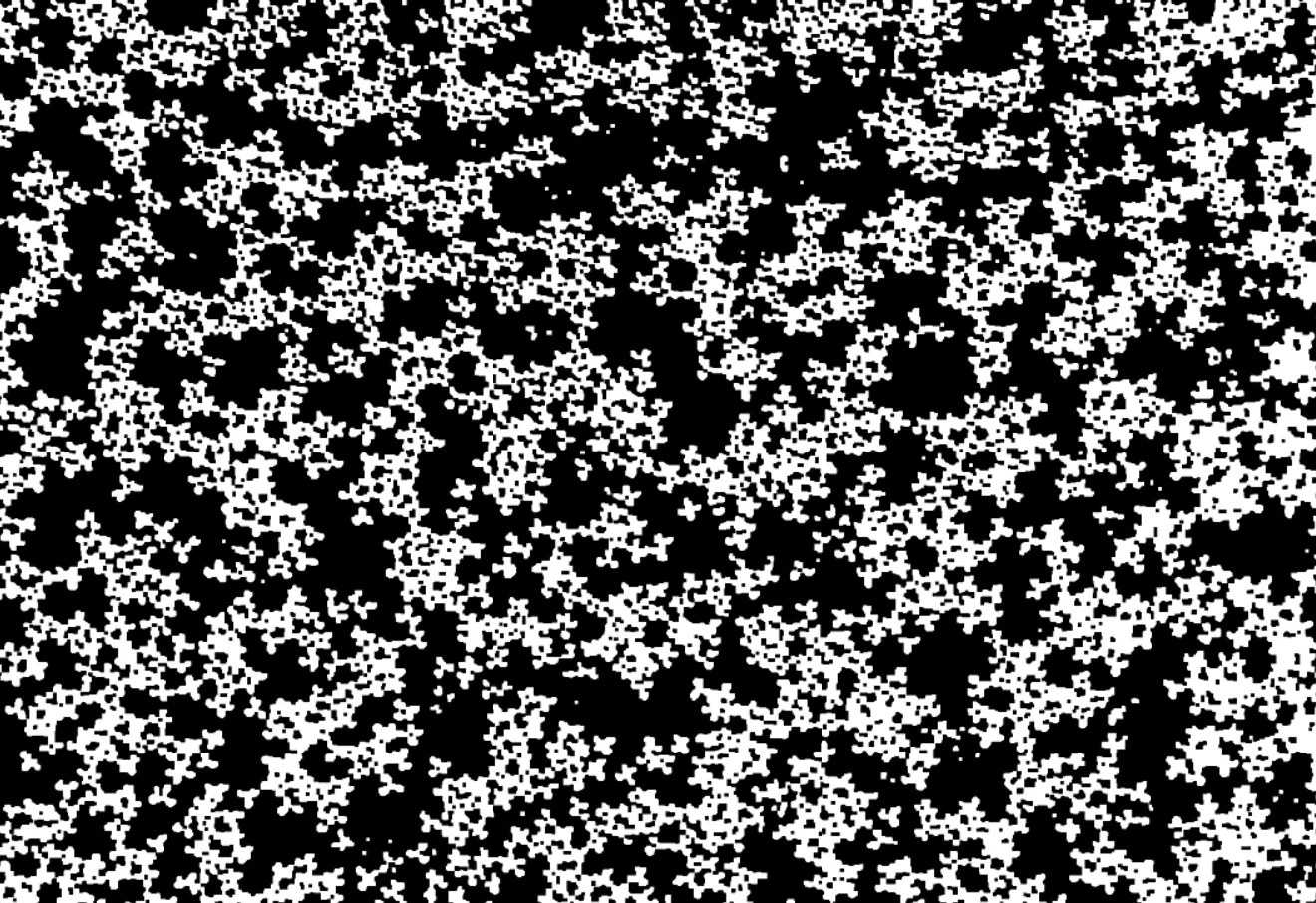
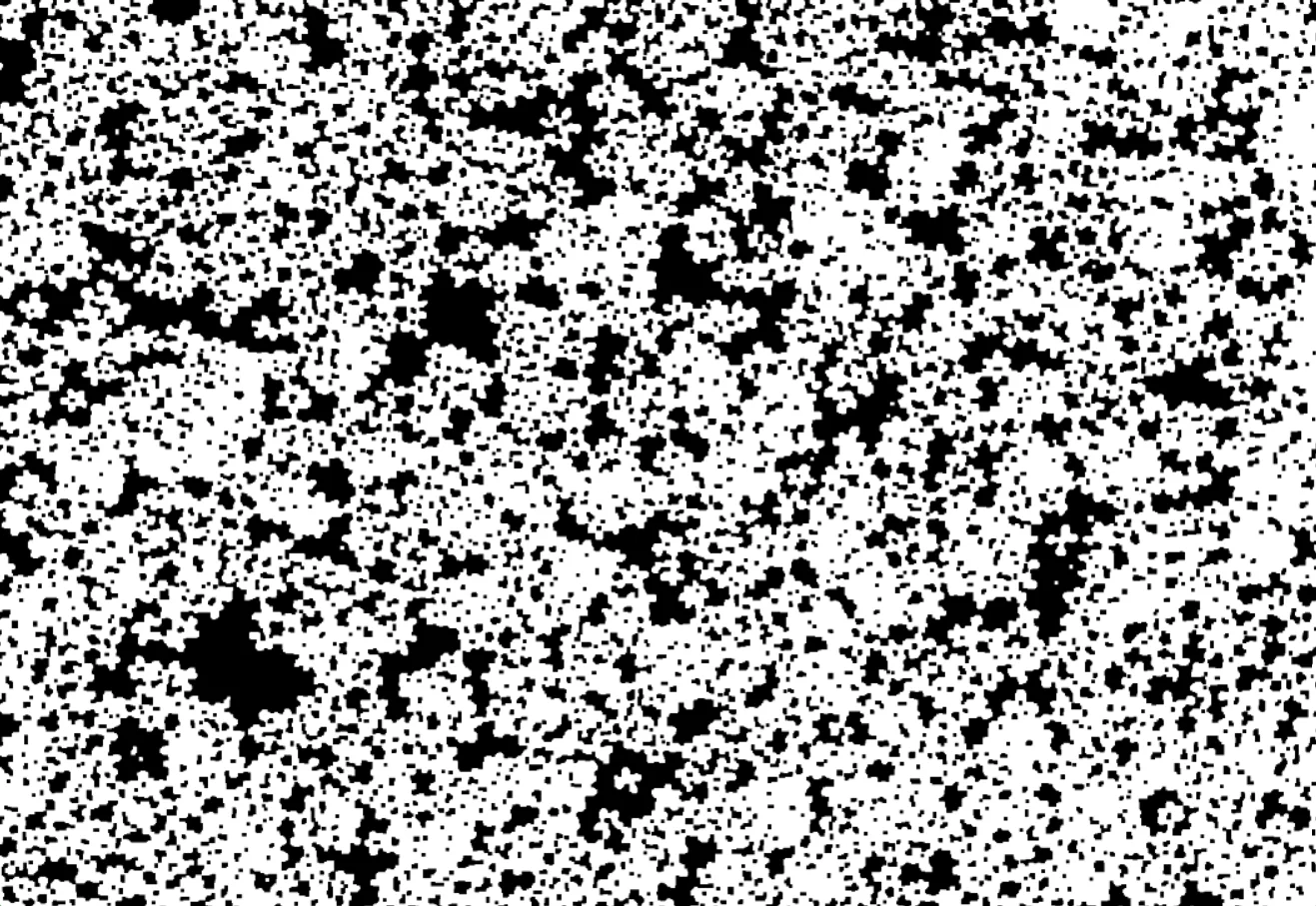
Every five minutes the LEDs switch on and the camera takes one picture of the pond.

A Python script converts it to HSV and classifies every pixel: duckweed or water.

37.43 % covered. Still early in the growth zone, so no harvest needed yet.

One day later: 64.35 %, just under the top of the zone at 66.3 %.

The average of the last 12 measurements is in the zone, so the grower gets a message: harvest today.

How the design was decided

Research in the field

Interviews and visits with Inagro, VIVES and the pilot grower Azaleakwekerij Van De Steene gave six possible innovation directions. The experts agreed on one priority: an objective way to measure density.

Six concepts, one winner

Light transmission buoys, weighing baskets, a camera on a moving arm and more, scored on biology, feasibility, cost, maintenance, robustness and scale. A static camera on a swing arm scored highest. The growers asked for no moving mechanics in a humid greenhouse.

Tested before it was drawn

Split peas first, then real duckweed to calibrate coverage against biomass. Camera heights of 20, 30 and 40 cm under three light settings. Sunlight under the shield at a worst-case solar altitude of 29.8°, with a 28 mm gap above the water.

Technical design

Three parts, one system
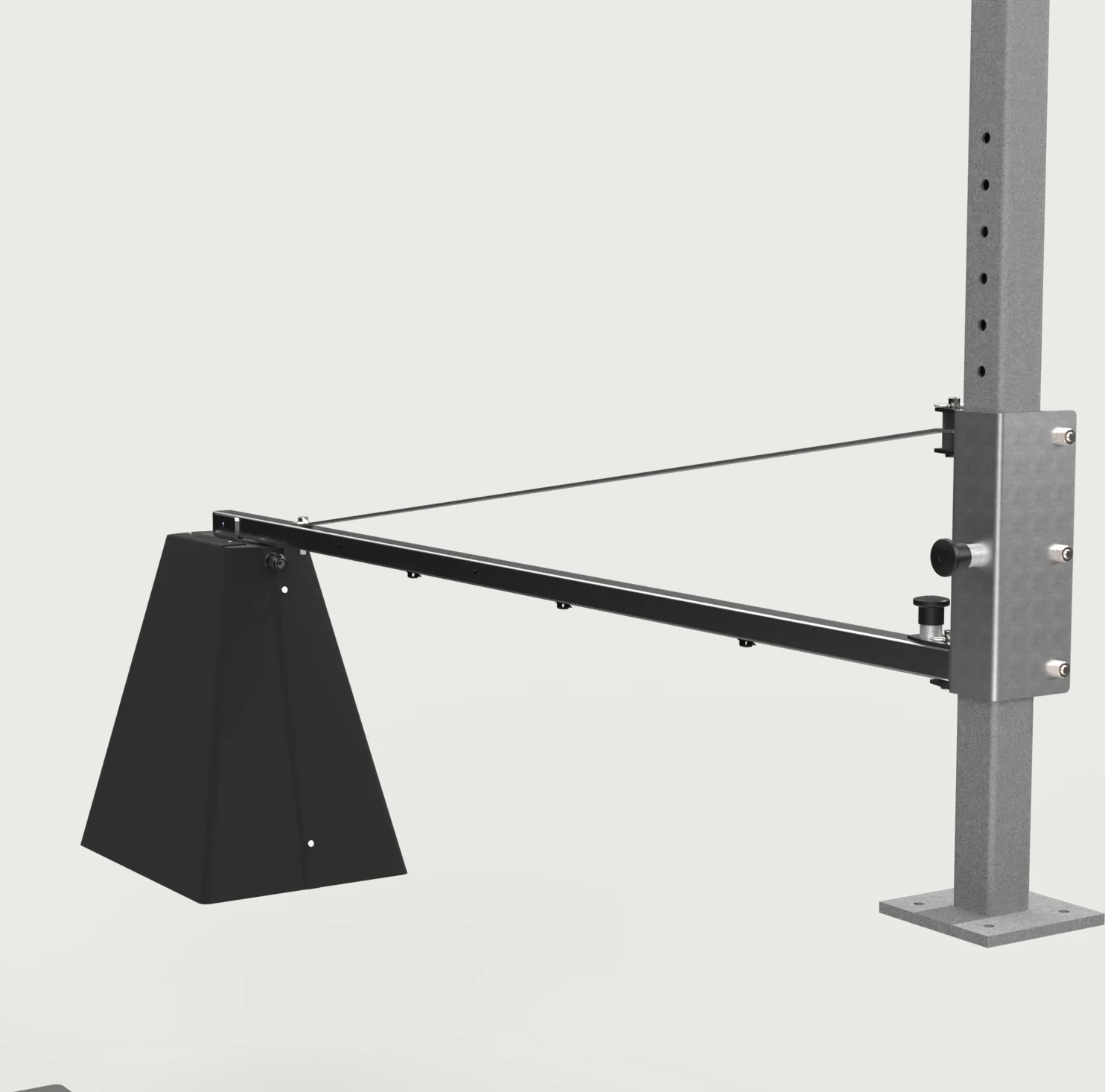
Render of the complete system: a black light shield hanging from an aluminium swing arm on a vertical post.
  1. Sensor unitCamera, LED ring and computer in a printed housing, sealed against a wet greenhouse.
  2. Light shieldTwo folded halves that keep sun and reflections out of the picture.
  3. Support structureAn aluminium swing arm on a post: 1.5 m of reach, adjustable in height, turned aside for maintenance.

01 · Sensor unit

Inside the unit
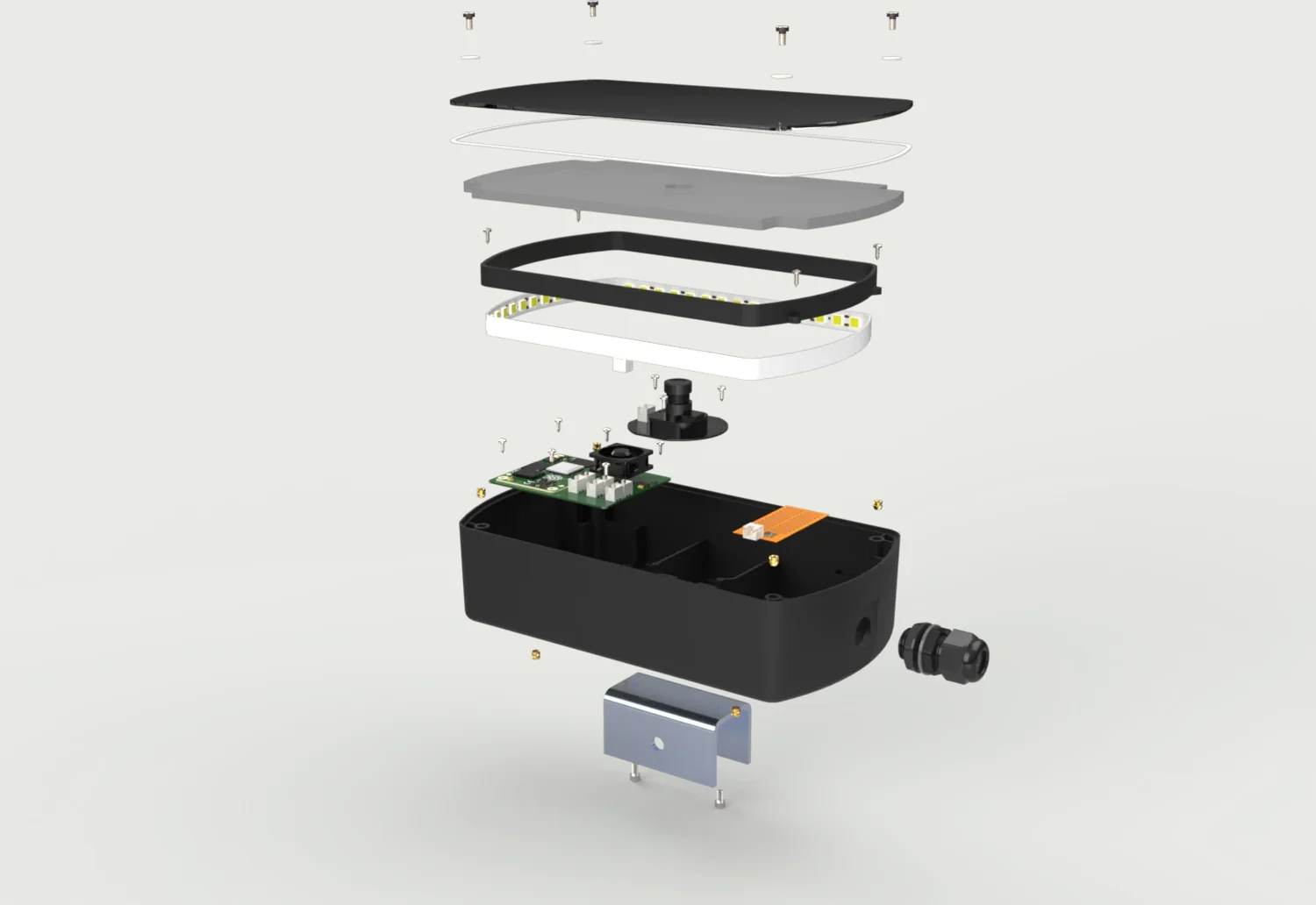
Exploded view of the sensor unit seen from above at an angle: cover, seal, diffuser, LED ring, camera, circuit board and the ribbed housing.

Matte black ASA

ASA withstands the heat and UV of a greenhouse where PLA would not. Matte black absorbs stray light from the LEDs, which keeps reflections out of the camera image.

Sealed to IP65

A printed TPU seal between housing and cover, nylon washers under the bolts and an M16 cable gland. Built for splashing water, not for going under.

Kept above dew point

The air in the greenhouse is at 60–95 % humidity. A PTC heater and a fan keep the camera from fogging.

Made to be opened again

M3 heat-set inserts give the printed housing metal threads that survive repeated assembly.

Four prototypes to get the light right
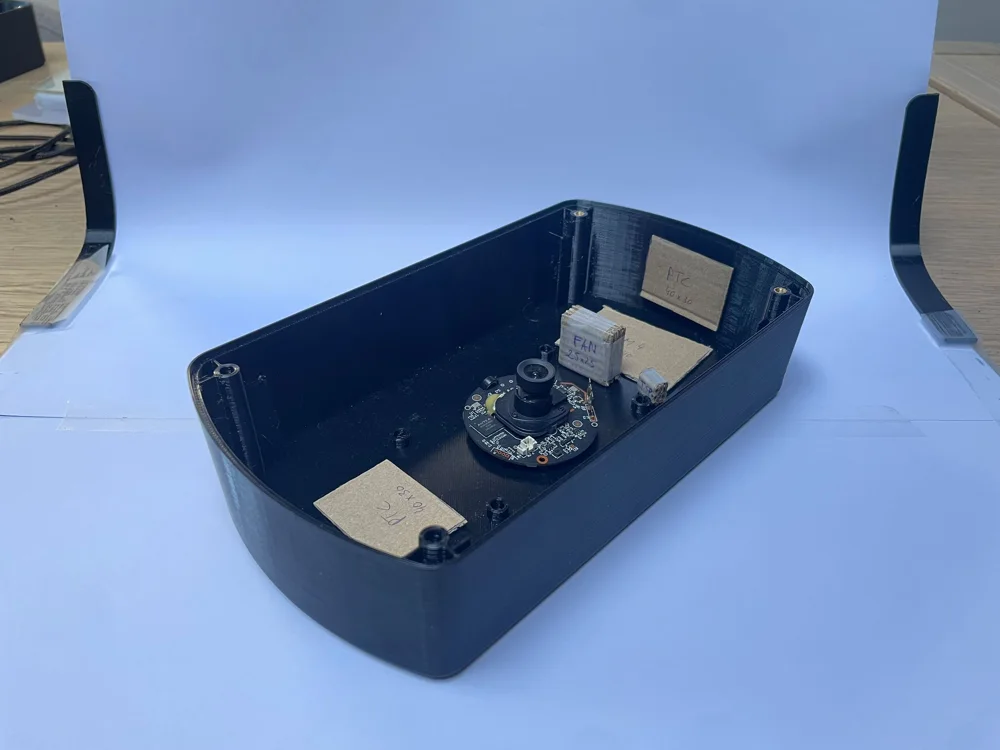
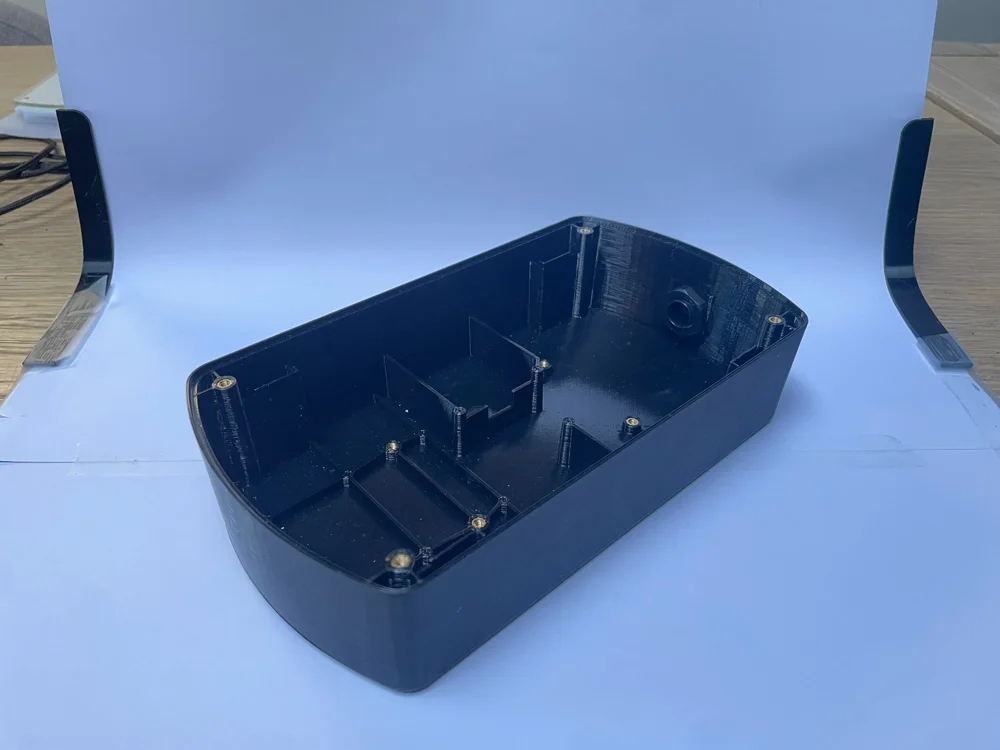
Photo of the first printed prototype: an open black shell with cardboard mock-ups of the electronics inside.
1A plain shell, with scale mock-ups of the electronics to find their place.
Photo of the second prototype: the black housing now has internal ribs and mounting points.
2Ribs for stiffness and mounting points, and a first milled cover.
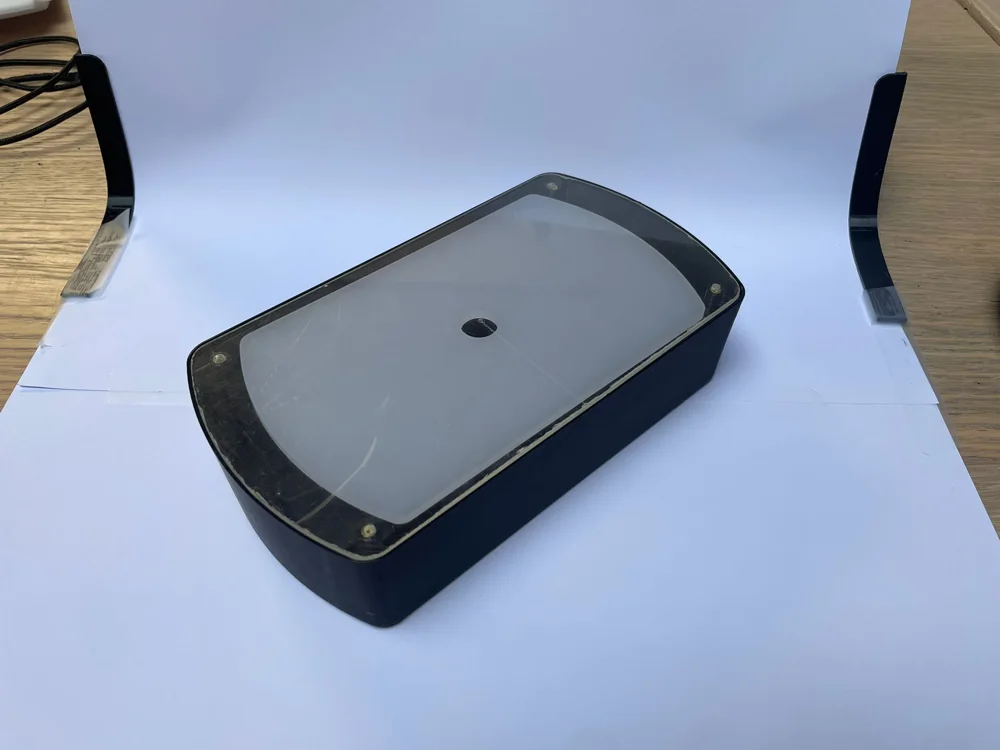
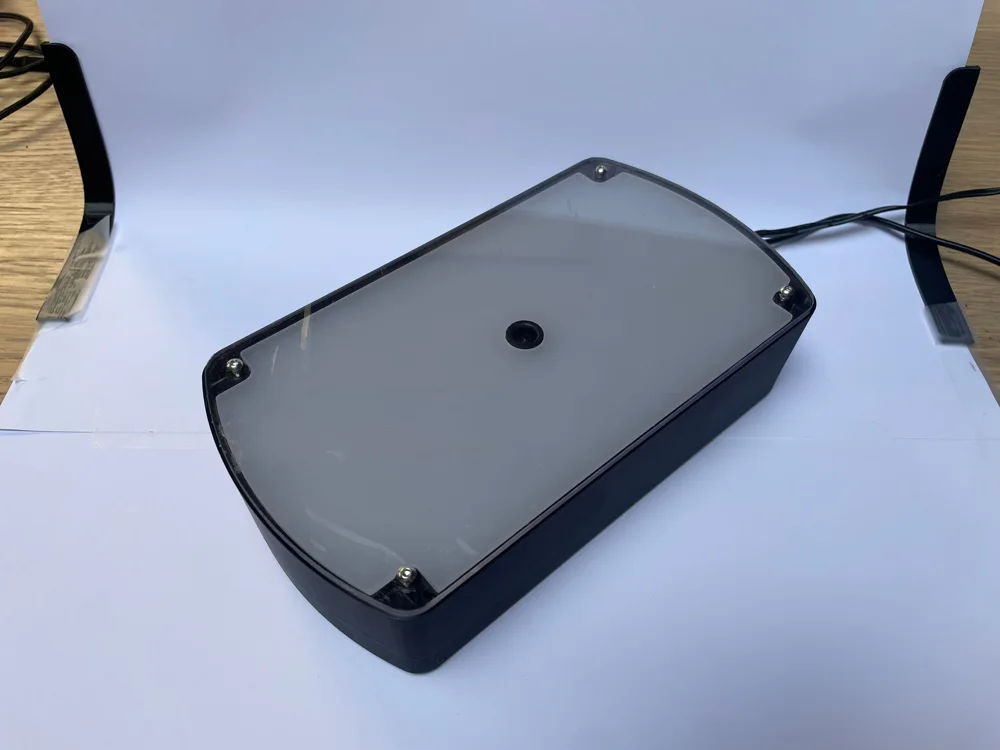
Photo of the third prototype, closed with a white diffuser and a clear cover.
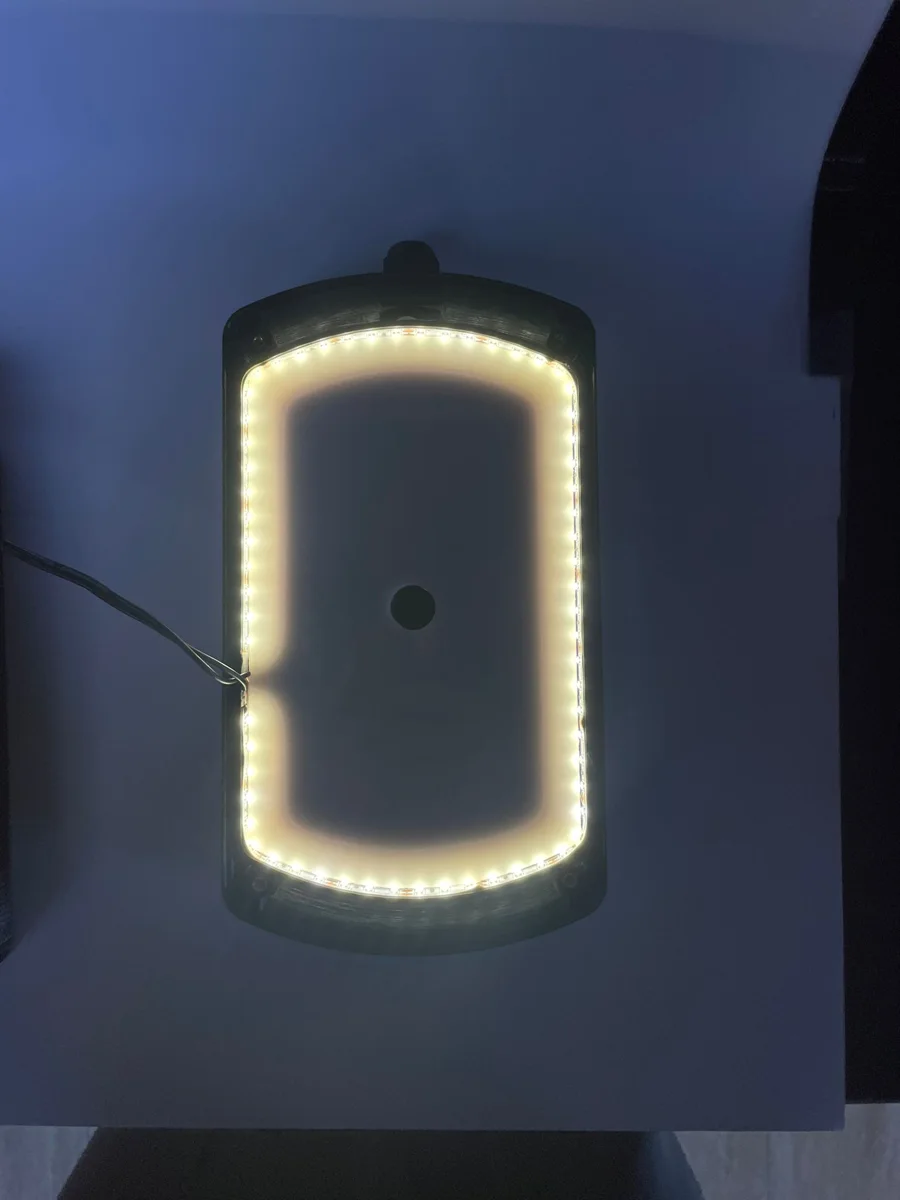
35 mm taller, because the camera's power connector did not fit. Lit from its edge, the diffuser only glowed 20 mm in.
Photo of the fourth prototype, closed, with the diffuser lit evenly.
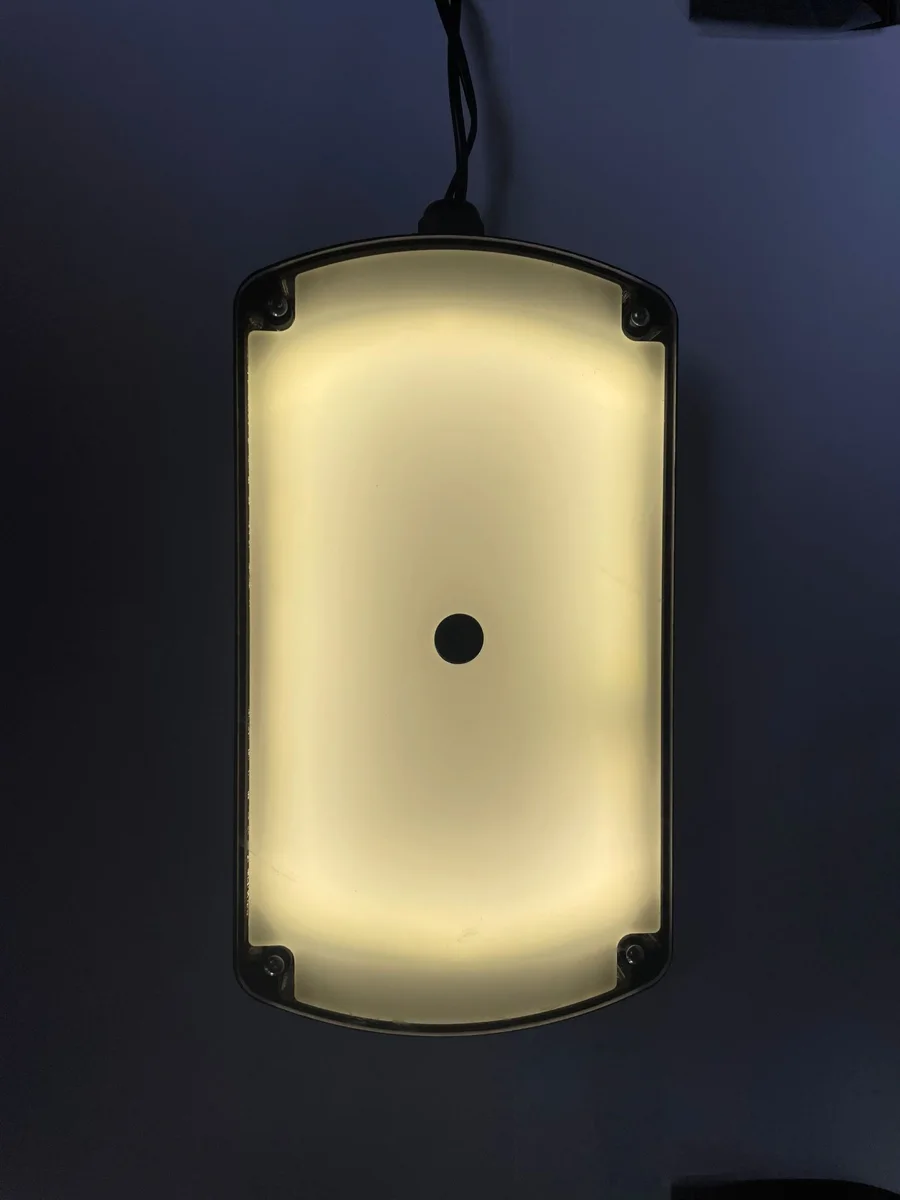
4The LED strip moved 15 mm below the diffuser, and the light became even.
The third prototype switched on in the dark: only a ring of light points around the edge.
Prototype 3: light at the rim only.
The fourth prototype switched on in the dark: the whole diffuser glows evenly.
Prototype 4: an even field of light.

Lit from the edge, the light reached only 20 mm into the diffuser. With the strip 15 mm below it the whole surface glows, and the camera sees an evenly lit pond.

Made in small series
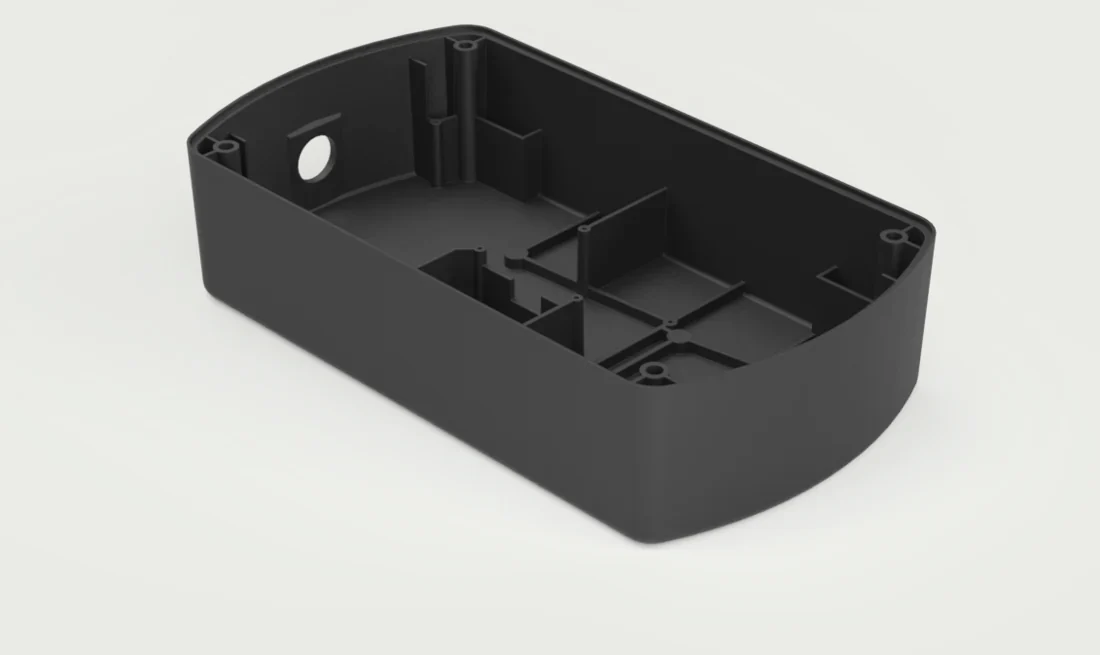
Render of the empty housing, showing the ribs and screw points inside.
The housing: ribs, screw points and the opening for the cable gland.

3D printing

Housing, LED ring holder and seal are printed. The housing takes 7 h 46 min and 184 g of ASA. A 0.6 mm nozzle at 0.2 mm layers gives thicker lines that fuse better, for a tighter wall.

Laser cutting

The clear cover is 2 mm cast acrylic, the diffuser 5 mm opal acrylic. Cutting them in-house on a CO₂ laser reduces the dependence on suppliers and speeds up iterations.

Nesting

Nested with Deepnest, 3 mm apart: 139 covers or 141 diffusers from one 3000 × 1500 mm sheet.

02 · Light shield

A shield in two folded halves
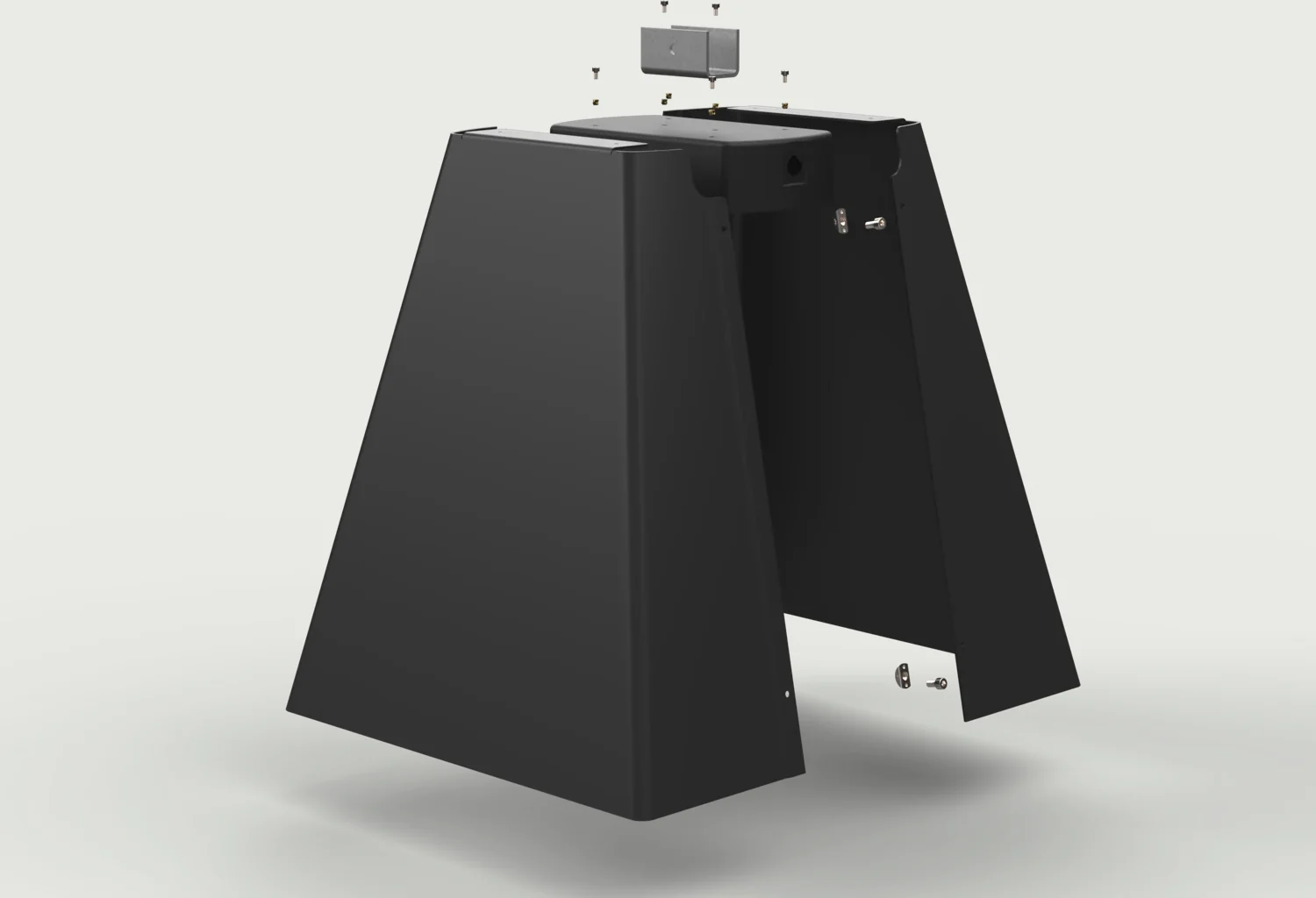
Exploded render of the light shield: two black folded halves that close around the sensor unit.

Sunlight, reflections and shadows change what the camera sees. A fixed shield takes them out of the measurement.

Cut flat, then folded

2 mm ASA/ABS sheet: the impact strength of ABS under a UV-resistant ASA layer, laser cut and folded with heat.

Two near-identical halves

Both halves use the same fold settings; only the cut-out for the cable gland differs. They overlap and bolt together, so they come off for maintenance.

Sized by testing

The opening at the bottom is 31 × 41 cm, the size found in the camera tests.

03 · Support structure

An arm one person can handle
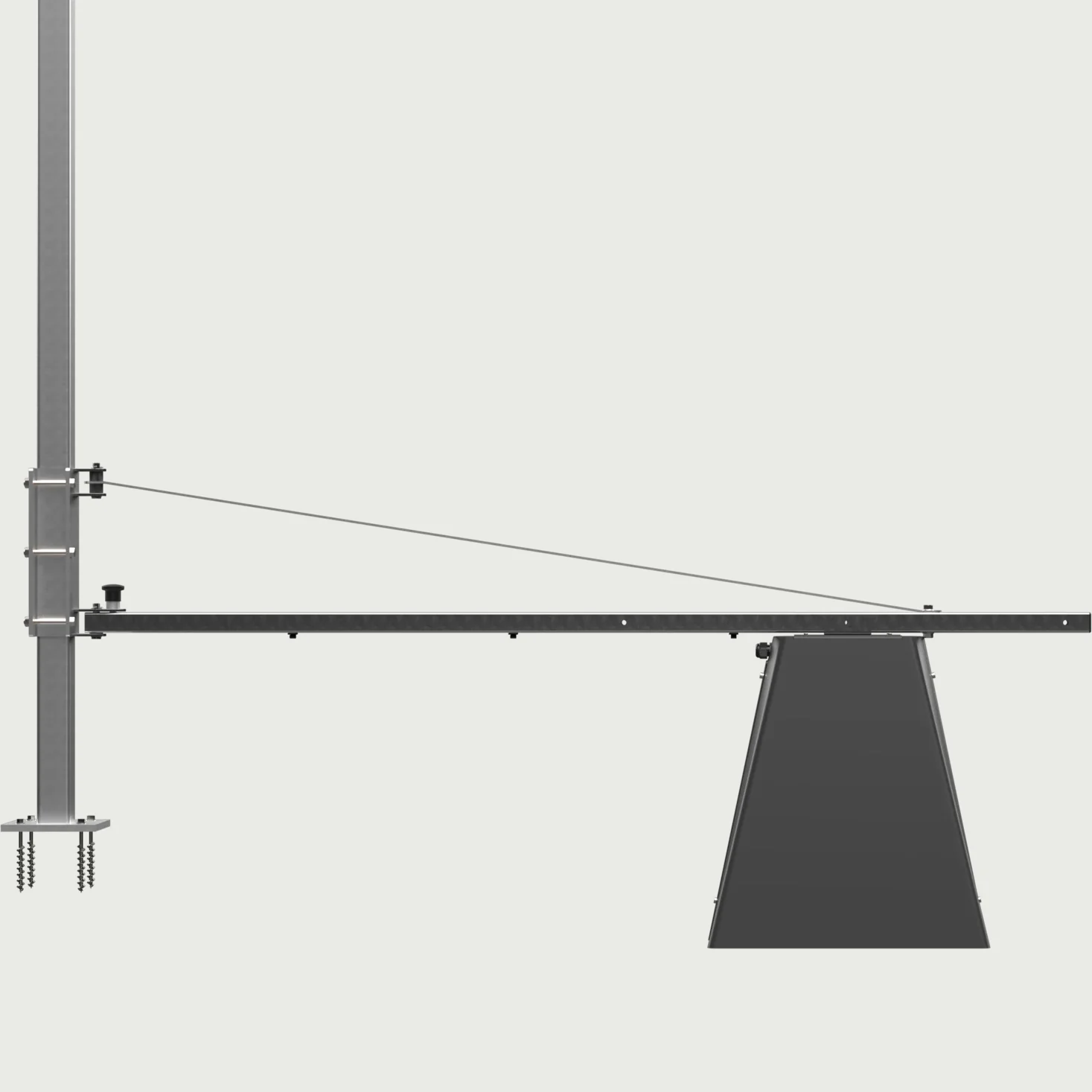
Render of the swing arm on its post, seen from the side, with the shield hanging over the middle.
1.5 m of reach, to the middle of the pond.
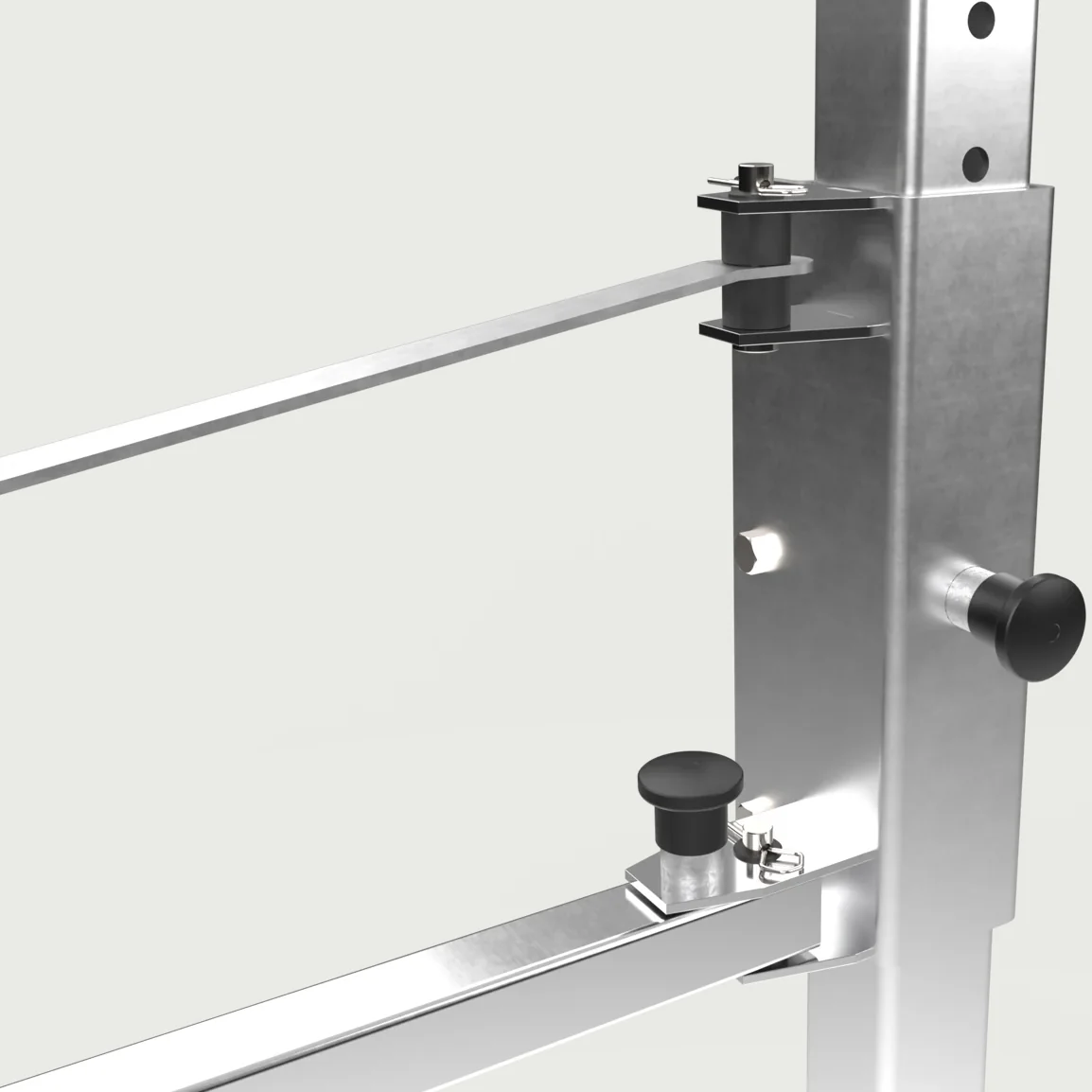
Close render of the sliding sleeve on the post, with its locking knob and the arm hinged to it.
The sleeve slides over the post and locks with a pin.
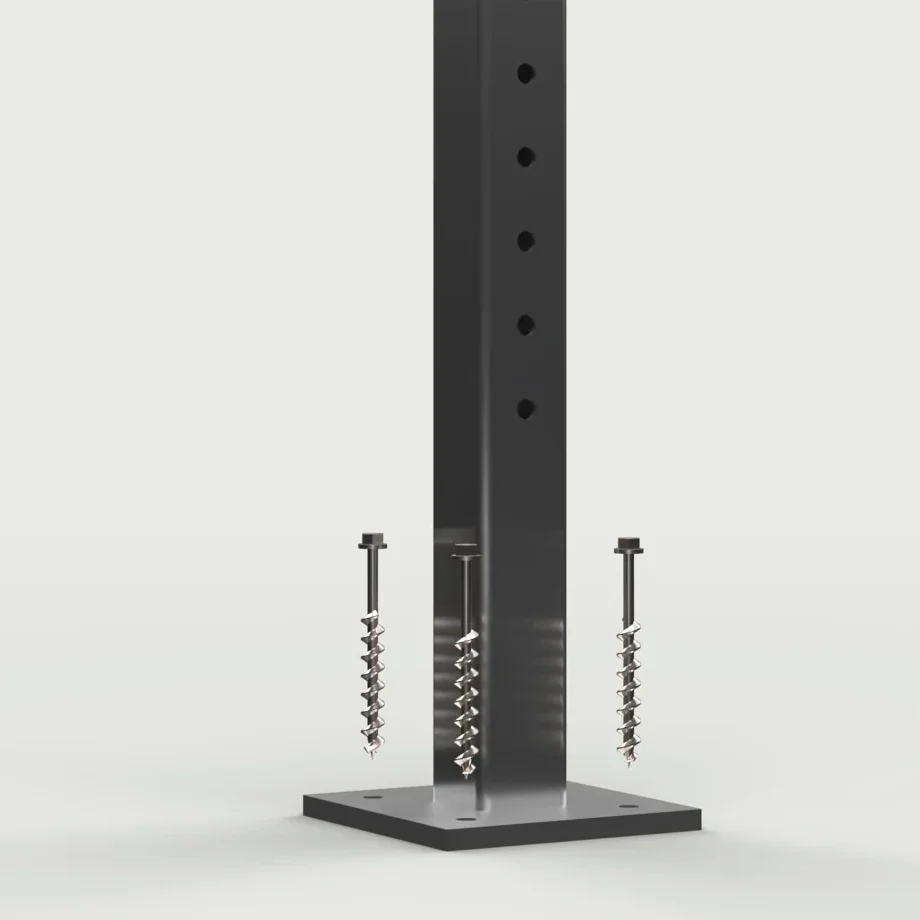
Render of the foot of the post with its base plate and screws.
The foot, screwed into the aerated concrete edge.

Aluminium, for weight

The arm is moved up and down by hand. Aluminium keeps it light and does not corrode in the humid air.

One tube, four arms

A 30 × 30 mm tube, 1500 mm long. Four arms come out of one 6 m length, with every hole cut on a tube laser in one step.

Height and rotation

A folded sleeve and clamp plate slide over the post and lock in its holes. The arm turns on M10 pins and locks in set positions.

Checked with the makers

The structure was reviewed several times with a welder and a draughtsman at a metalworking company, to keep it simple to produce.
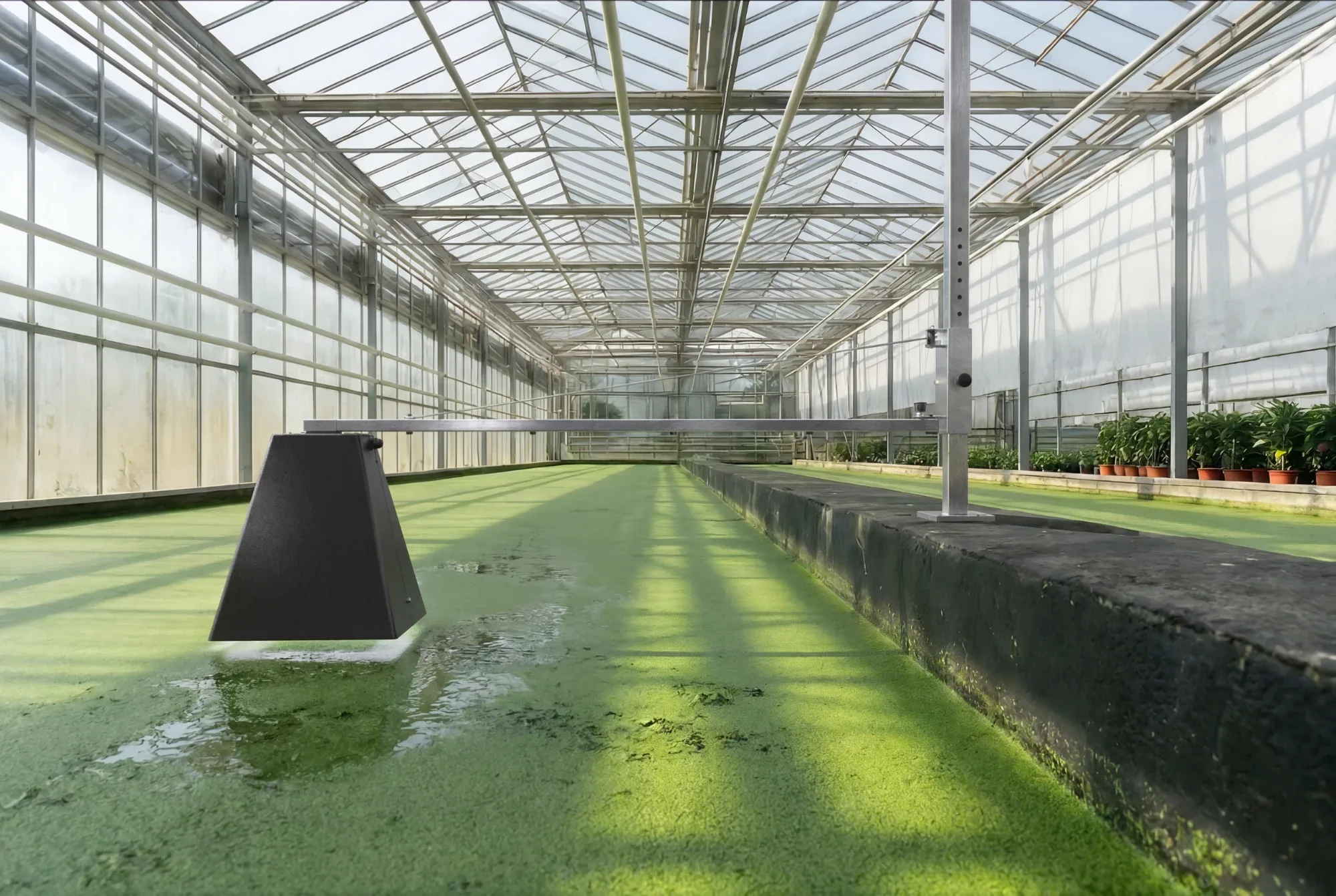
Render of LemnaSense on its swing arm above a long raceway pond full of duckweed.
Mounted on a swing arm over the raceway pond, fixed to the greenhouse roof and the aerated concrete edge.

One number for the grower

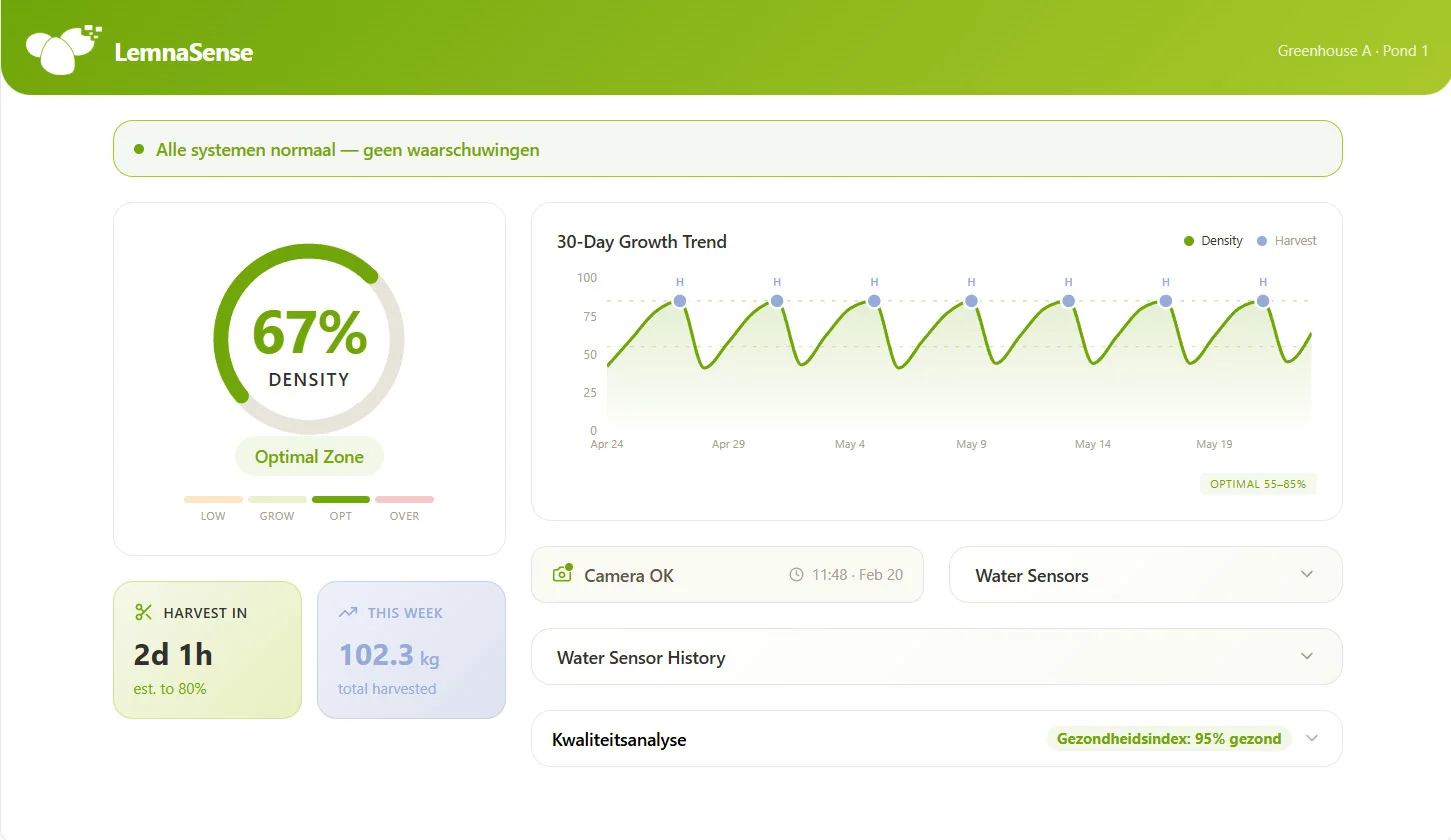
The app shows the density, the zone it is in and the expected time to harvest. Nothing more on the first screen.

The growers warned against the busy dashboards they know. Charts show at most three lines; pH, EC and temperature stay one tap away. Because fresh duckweed has to be steamed and frozen right after harvest, the app predicts the moment and sends a notification in advance.
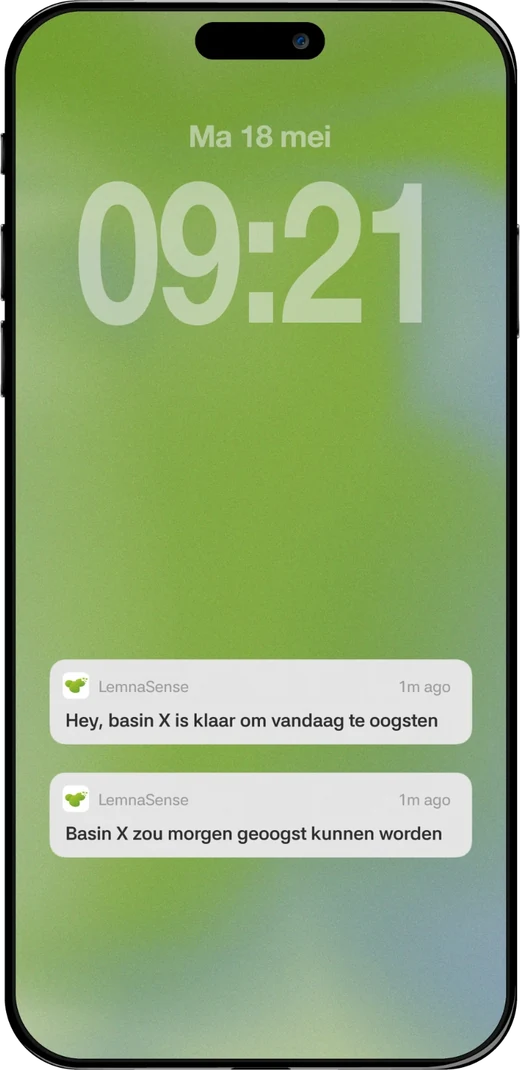
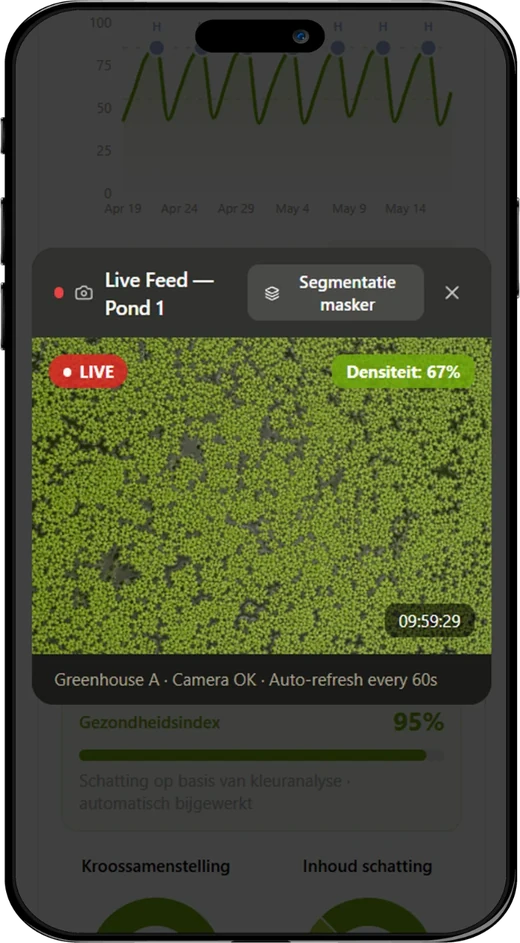
Lock screen with two LemnaSense notifications: a pond is ready to harvest today, another tomorrow.
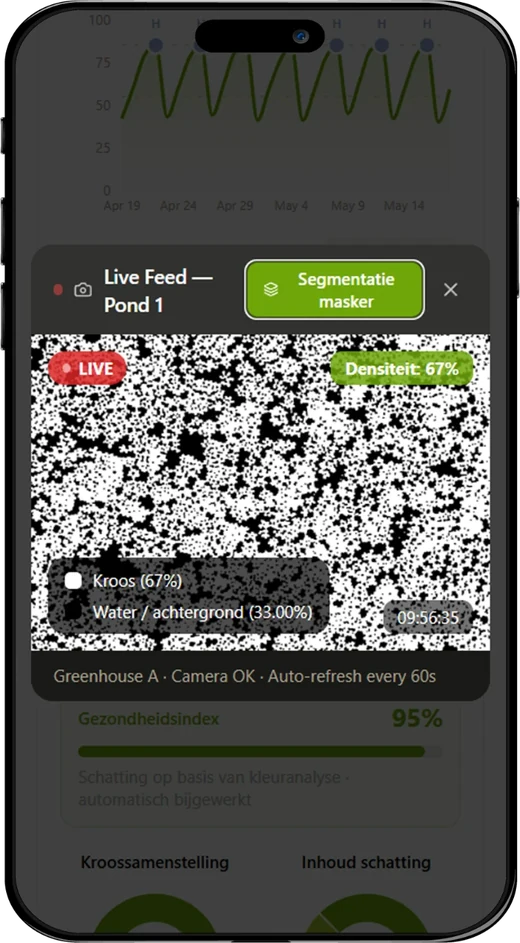
Live camera feed of pond 1 with a density of 67 percent.
Live feed
The same live feed with the segmentation mask: duckweed 67 percent, water 33 percent.
Segmentation mask
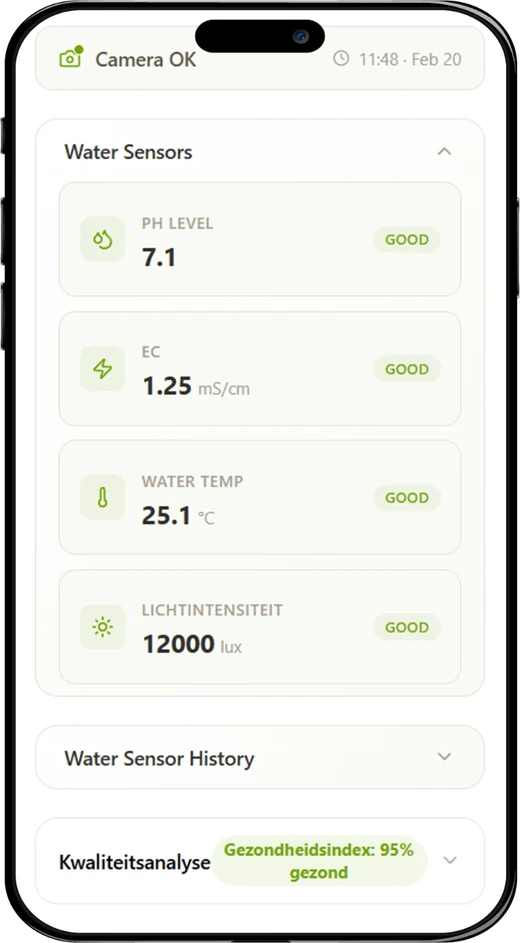
Water sensors: pH 7.1, EC 1.25 mS/cm, water 25.1 °C, light 12000 lux, all good.
Water sensors
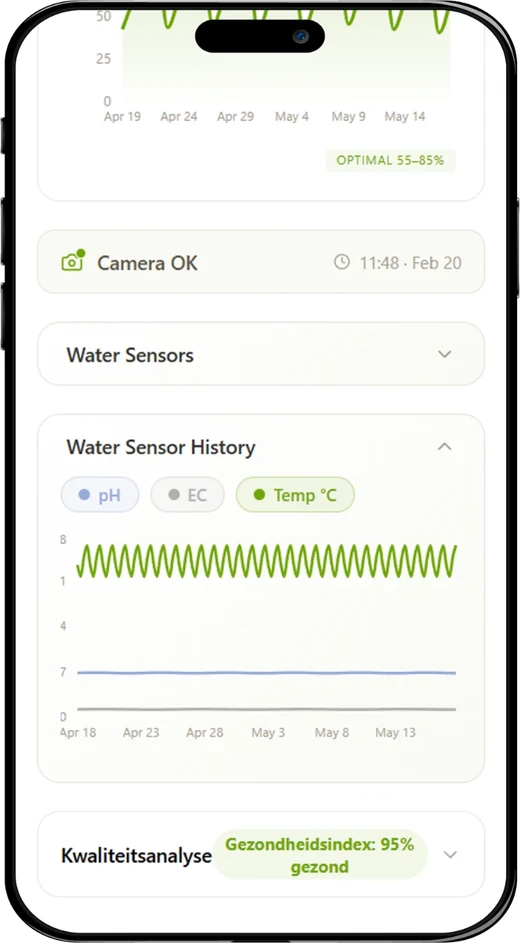
Water sensor history chart with pH, EC and temperature.
History
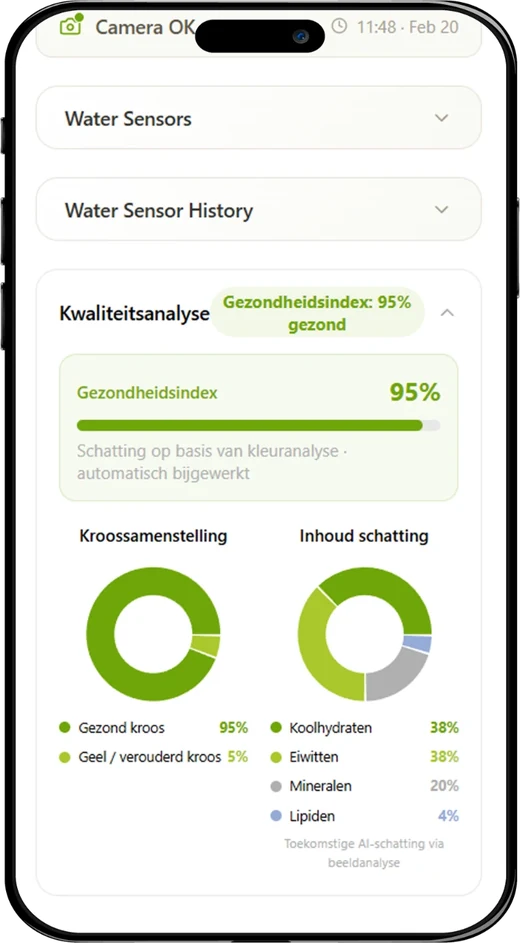
Quality analysis: health index 95 percent and an estimate of the composition.
Quality analysis
LemnaSense desktop app with the same overview on a wide screen.
Close render of the sensor with its folded light shield hanging from the aluminium swing arm.
The light shield keeps sun and greenhouse reflections out of the picture, so measurements stay comparable through the day.

Master's thesis, Product Development, University of Antwerp, 2025–2026. Promotor: Filiep Dewitte. With input from Inagro, VIVES and Azaleakwekerij Van De Steene.

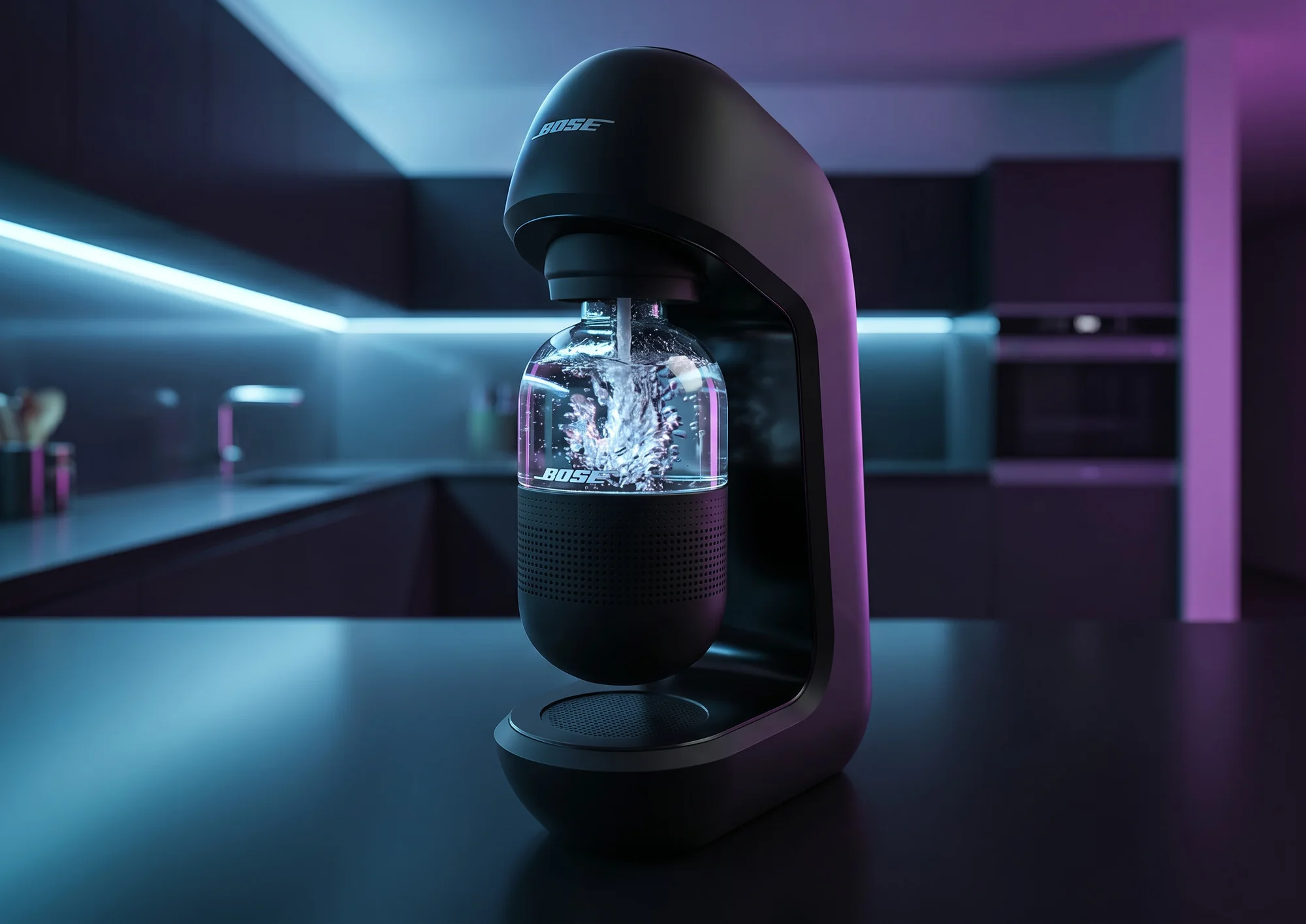
Render of the black soda maker on a kitchen counter at night, lit by violet and blue light.

Resonance

What would a soda maker look like if Bose made one?

Year
2024
Context
Advanced Product Design, first Master
Team
Three designers
My part
Brand history analysis, all CAD, every render

Reading sixty years of Bose

A brand's design language is not in its logo. It is in what keeps coming back. I mapped almost every Bose product category since 1966 before anyone drew a soda maker.

1966

What keeps coming back

  • A monovolume
  • Rounded edges
  • Double-curved surfaces
  • Convex faces meeting flat ones
  • A perforated circular pattern
  • Buttons set into indentations

Model of Boer

Before drawing, we placed Bose in established brand models. The Model of Boer reads a brand from the inside out: what it believes, and how that reaches your senses.

Three values, three animals

The analysis kept landing on three words: durable, reliable, innovative. We looked for each one in nature and drew from there.

Line studies of soda maker forms derived from an orca, one form filled in violet.
An orca gliding under water, in black and white.Photo: Iewek Gnos, Unsplash
DurableThe orca. Strong, muscular, lives 50 to 80 years and adapts to any sea. Heavy, closed volumes.
Line studies derived from a Weimaraner's head, one C-shaped form filled in violet.
A Weimaraner in profile, in black and white.Photo: Cristofer Maximilian, Unsplash
ReliableThe Weimaraner. Loyal and consistent. The lines of its head became an offset edge and a slanted nozzle.
Line studies derived from an ant's leg, one form filled in violet.
A close-up of an ant on dry ground, its legs clearly visible, in black and white.Photo: Akbar Nemati, Unsplash
InnovativeThe ant. Solves problems by building. Its leg, seen from the side, became the internal movement of the machine.

Three concepts

Concept 1, AquaLink Max: a rounded monovolume with the bottle inside its opening.
AquaLink MaxAnt and orca: a rounded monovolume with flat faces.
Concept 2, PureStream Ultra: an angled C-shaped body with a bottle beside it.
PureStream UltraWeimaraner: an offset edge and a nozzle that straightens when the bottle goes in.
Concept 3, InfiniteFizz Flex: a tall column with the bottle inside.
InfiniteFizz FlexMostly ant: a column where we tested material combinations.

Scored against Bose's identity with the Butterfly Model, then shown to a wide audience in a survey. Concept 3 felt too traditional for Bose. Concept 1 scored highest; concept 2 had the edge but lacked stability. The final design combines the two.

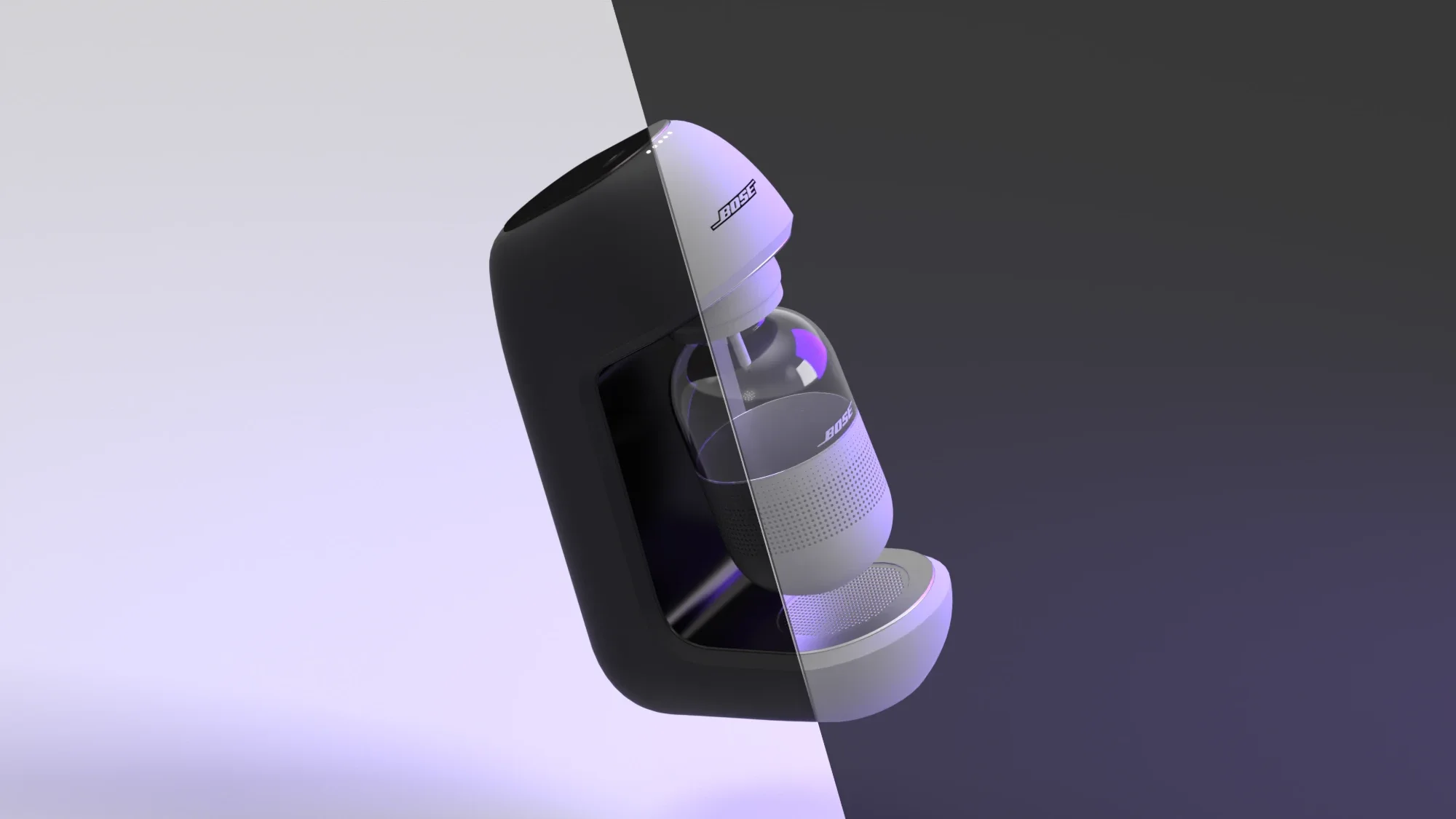
Render of the final soda maker floating at an angle, split diagonally between a light lilac half and a dark half.
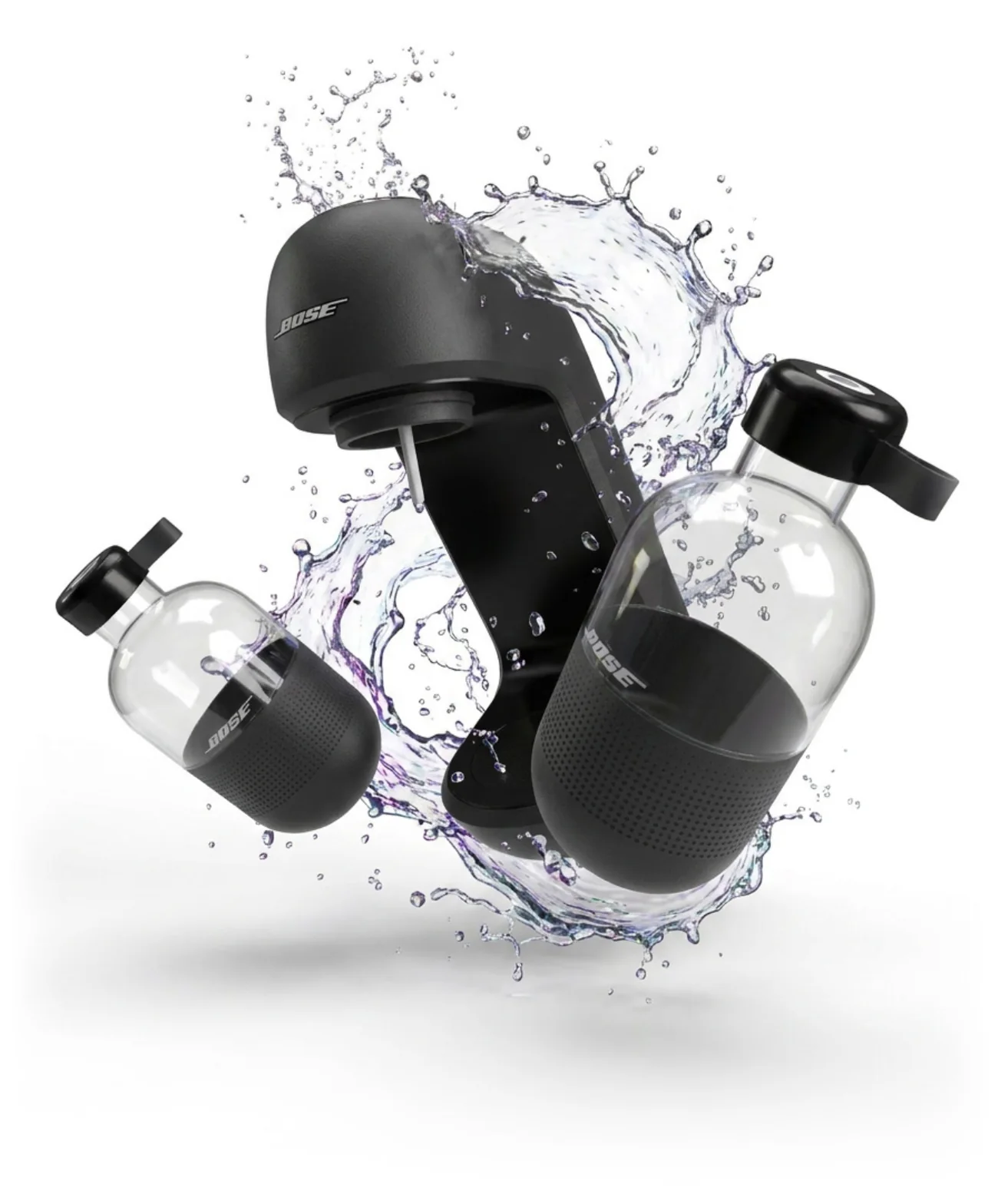
Final render: the soda maker and two bottles turning through a splash of water.
Redefinerefreshment

Bose AquaLink Ultra Soda Maker

The rounded, stable body of the first concept with the angled features of the second. Innovative, and still balanced on the counter.

Advanced Product Design, first Master, Product Development, University of Antwerp. A team of three: Luna Hongenaert, Amelie Wissels and Arne Jonckheere. A student concept; not affiliated with or endorsed by Bose.

The two rebuilt bikes, the orange MIMIC e-bike and NAWA Racer, on a road at sunset with mountains behind them.

Surface Tension

Complex surface modelling in SolidWorks and Siemens NX.

Context
Course deliverables, University of Antwerp
Team
Solo
Tools
SolidWorks, Siemens NX
Scope
Surface modelling, surface analysis, renders

Surfaces that hold the light

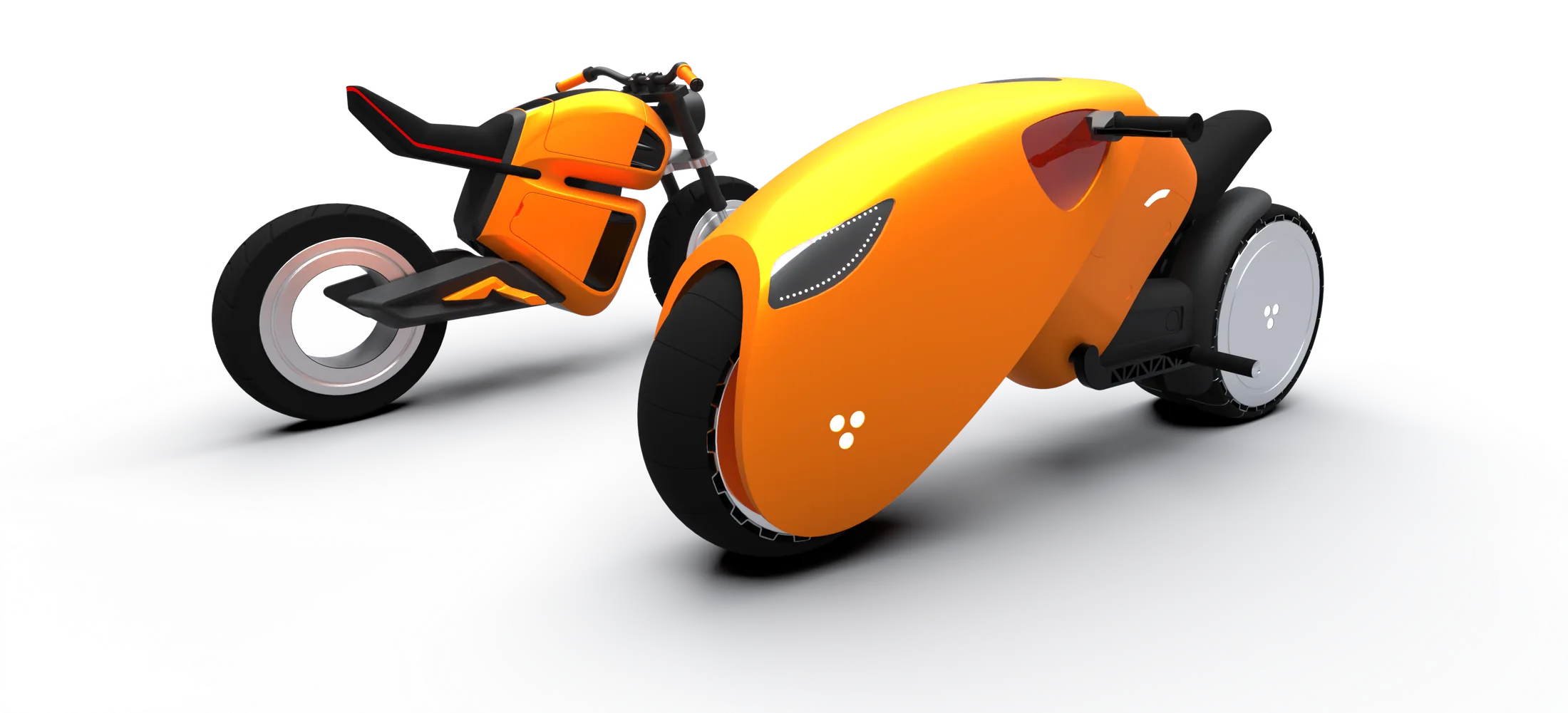
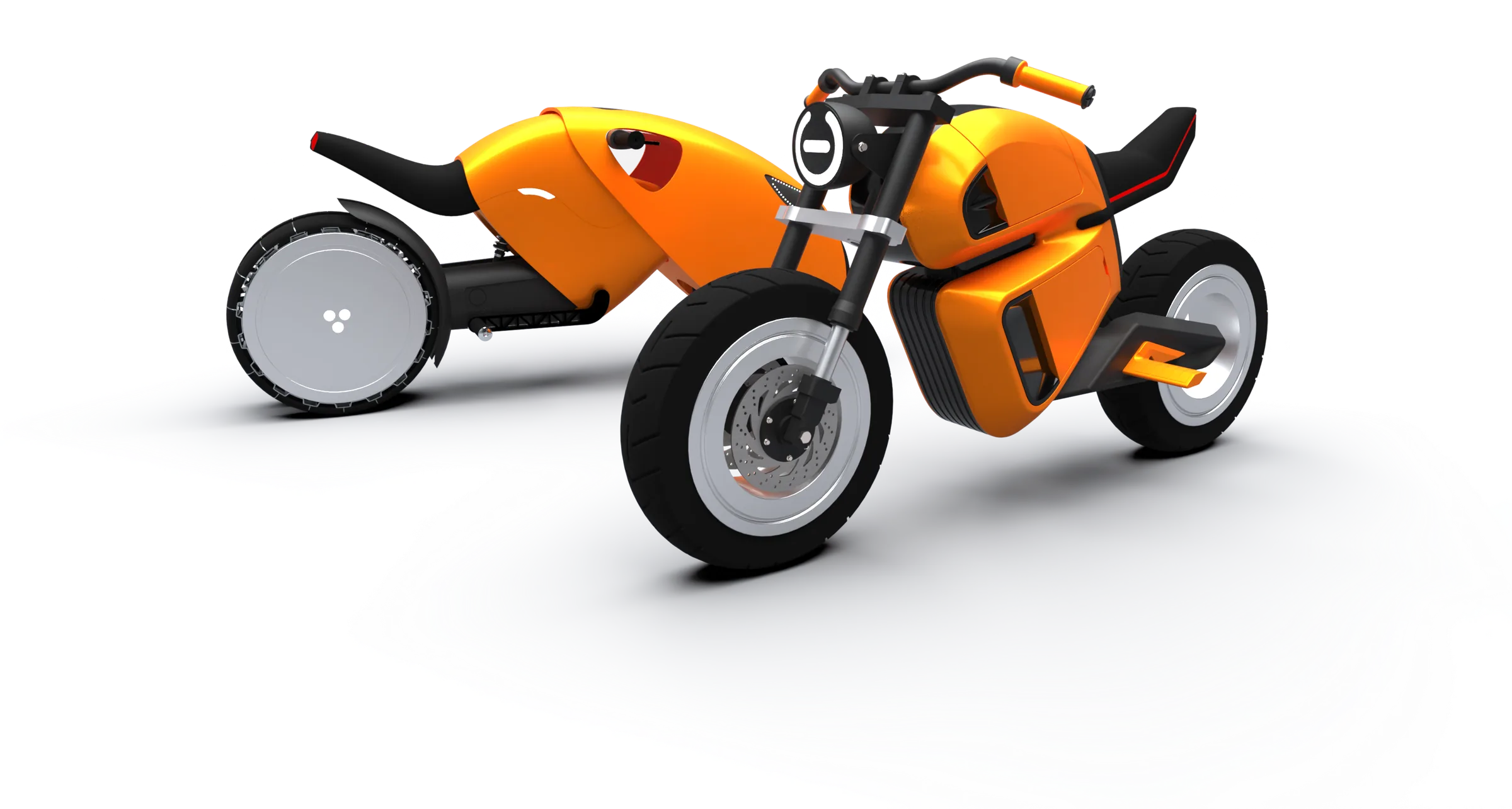
Two existing vehicles, rebuilt surface by surface in two CAD packages. Each was the deliverable that completed a course: the MIMIC after three years of SolidWorks modelling, the NAWA Racer for a one-year elective in Siemens NX.

Both are reconstructions: the designs belong to their makers, the CAD models and renders are mine.

Render of the MIMIC e-bike from the front: one rounded orange body over a fat front wheel.
01 · SolidWorks, three-year course

MIMIC e‑bike

Design by Roman Dolzhenko

Rebuilt in SolidWorks, from one master part to separate panels, wheels and seat in a single assembly.

The focus: complex geometry, smooth transitions between surfaces, and the small details.

Watch the highlight run over the body. It only flows like that when the surfaces meet without a break.

Checking the surfaces

A render can hide a lot. These views can't.

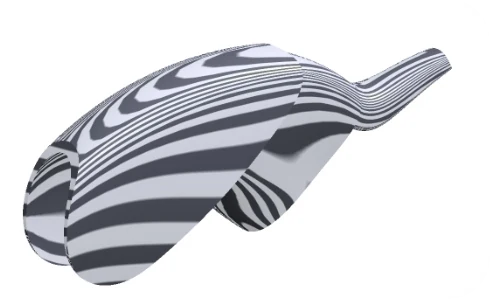
Zebra-stripe analysis on the front body of the MIMIC.
Zebra stripesReflection lines have to run over every patch boundary without a kink.
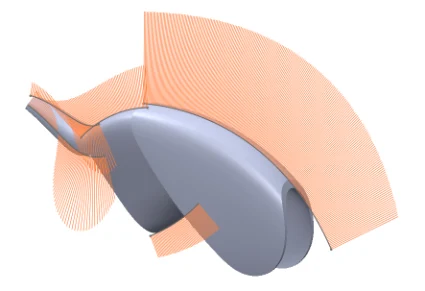
Curvature combs along the edges of the front body.
Curvature combsThe comb shows how curvature changes along an edge; a jump is a visible break in the light.
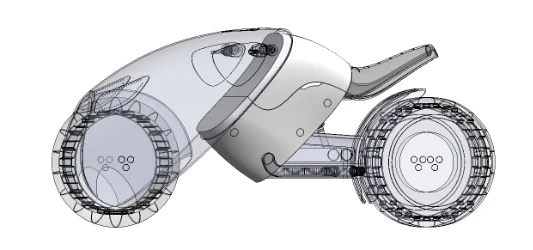
The complete MIMIC model shown transparent, with all its parts.
The full modelEvery part in place, shown transparent.

Close-up renders

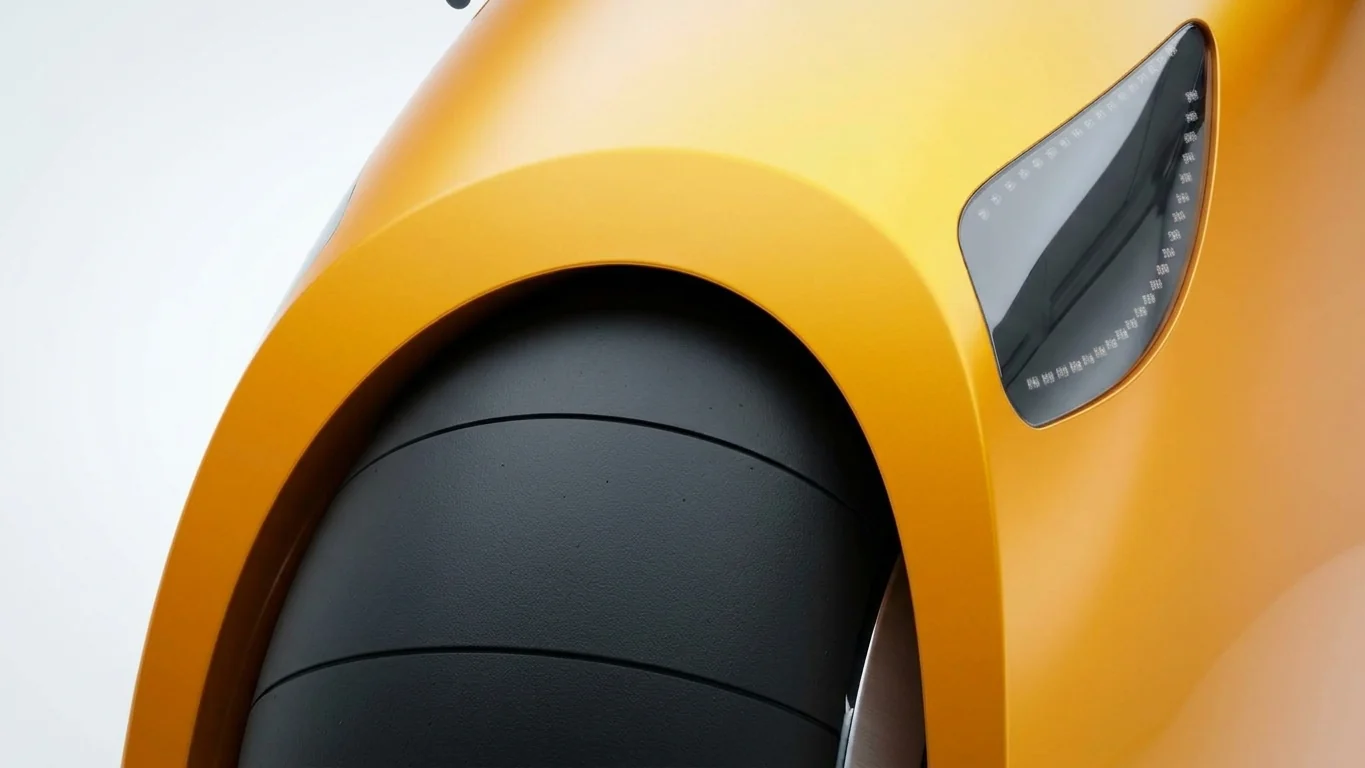
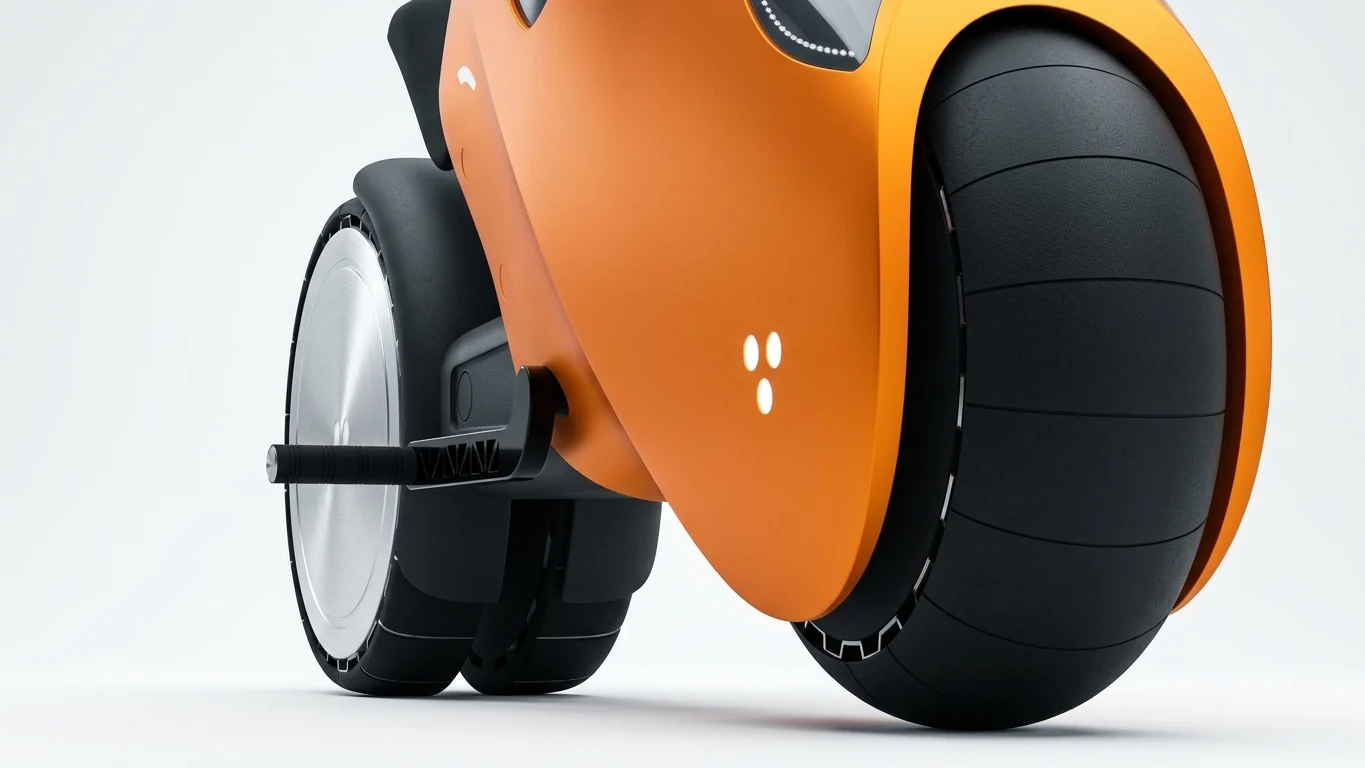
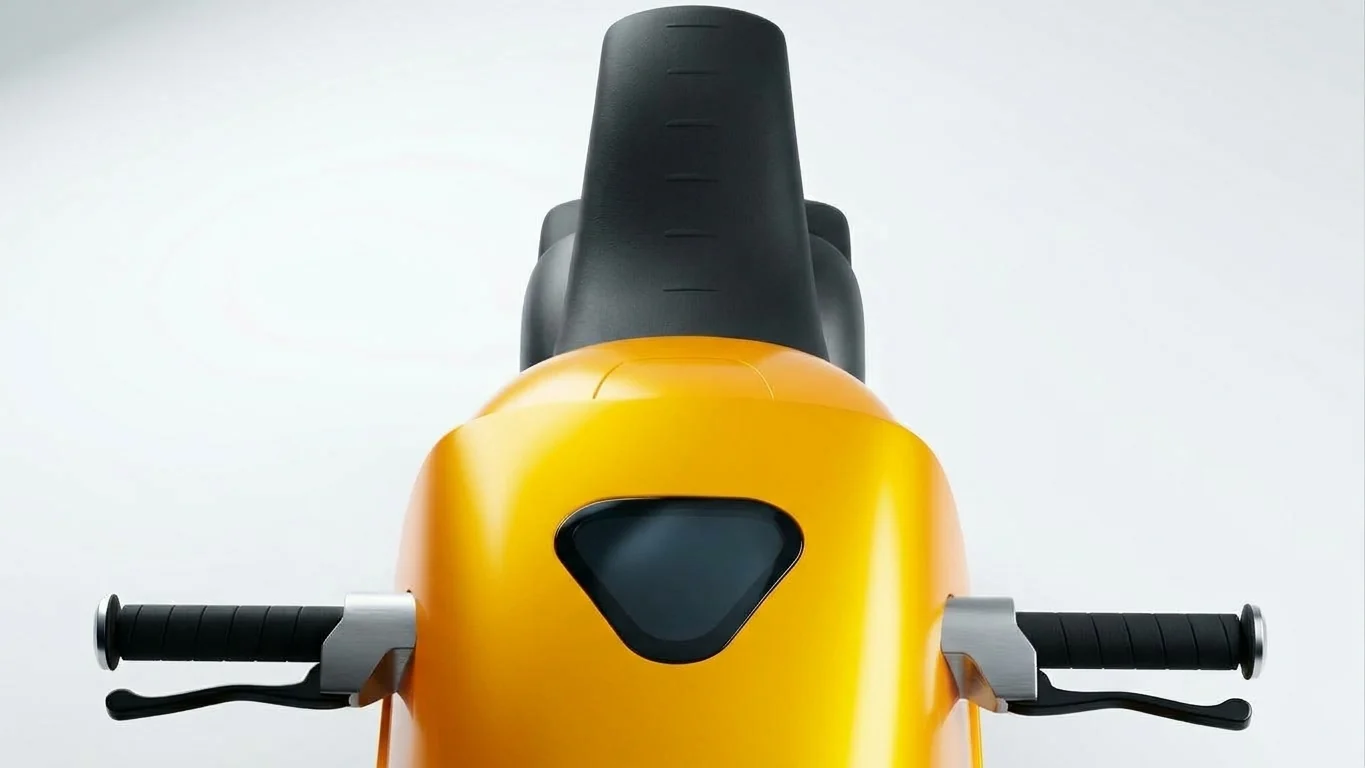
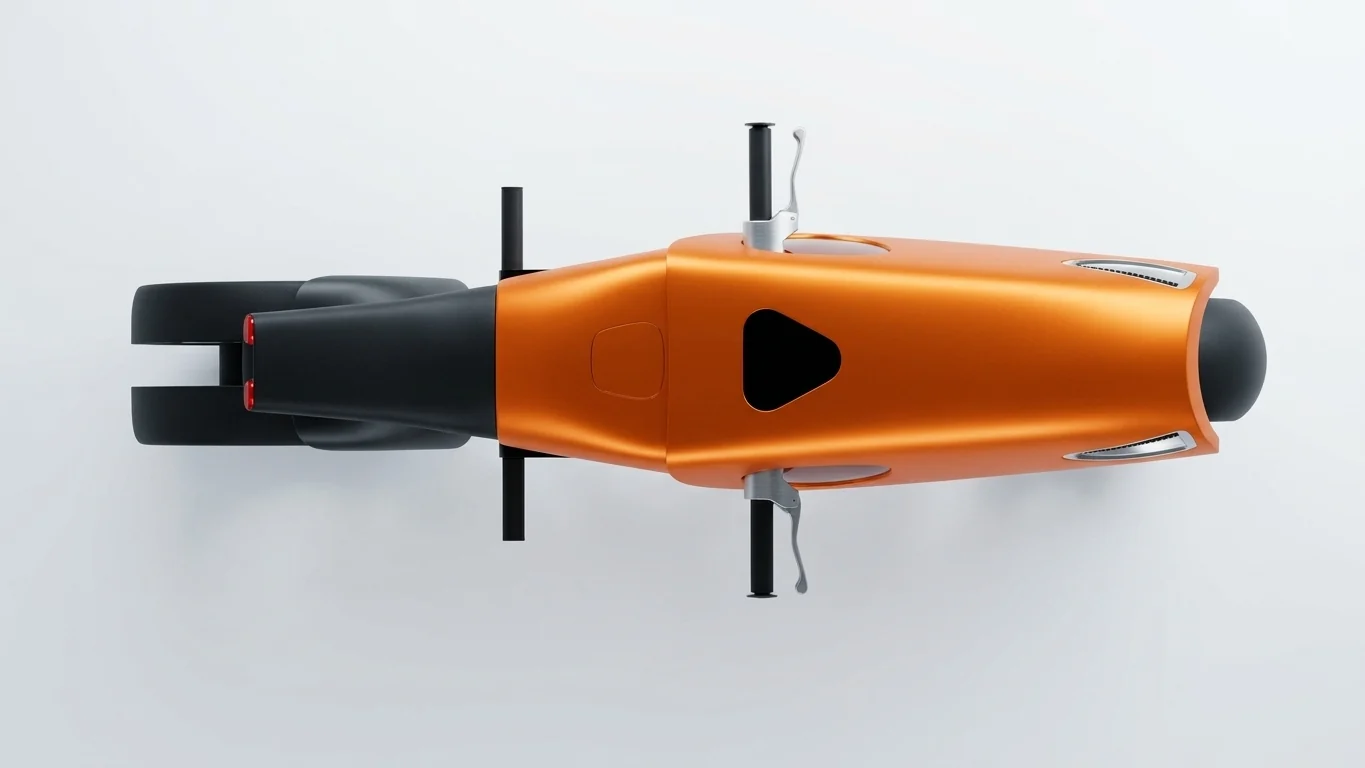
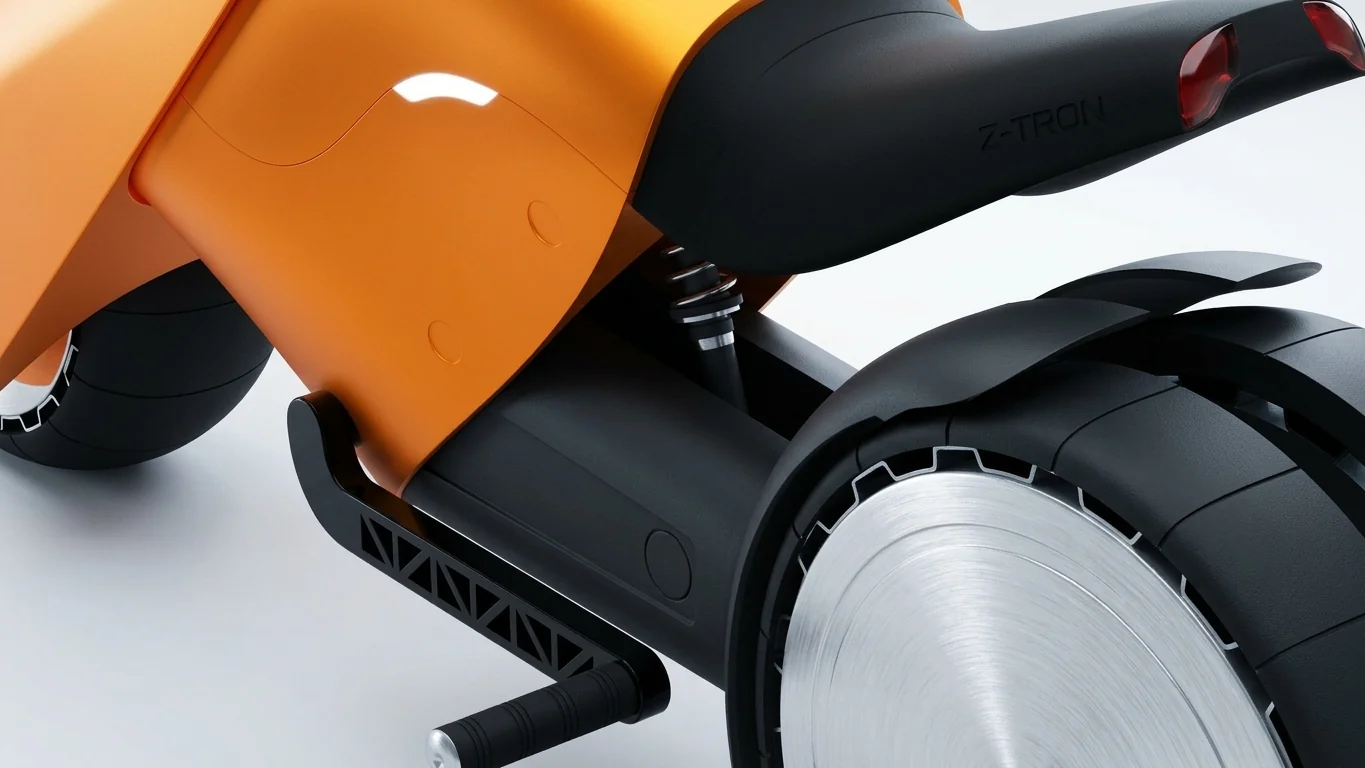
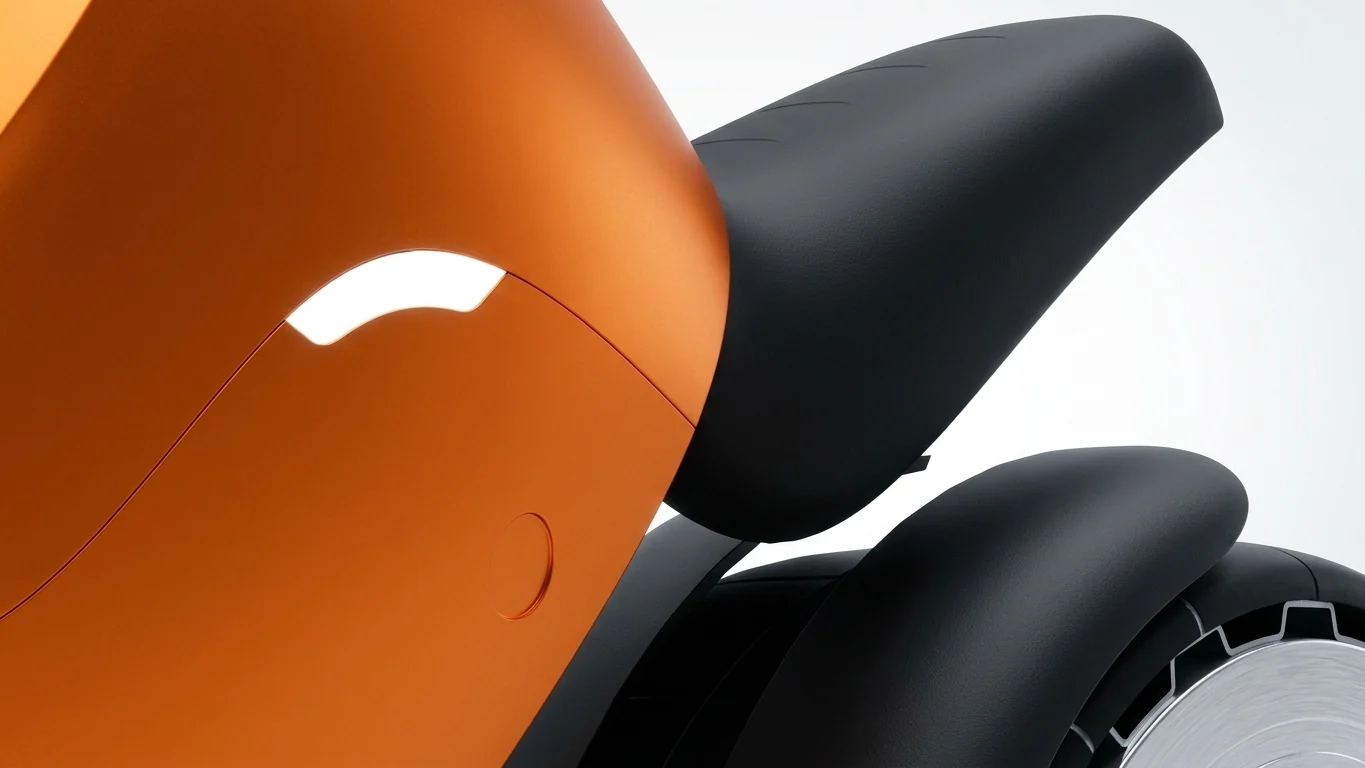
Close-up of the MIMIC headlight, a dotted light strip set into the orange body. The MIMIC from the front quarter, low: the fat front wheel half covered by the body. The MIMIC straight from the front, with the handlebar and the dark front window. The MIMIC from above, with the triangle in the middle of the body. Close-up of the rear of the MIMIC: the seat, the rear light and the swingarm. Close-up of a side panel of the MIMIC where it meets the black seat.
Render of the NAWA Racer from the front quarter, with the MIMIC behind it.
02 · Siemens NX, one-year elective

NAWA Racer

Design by NAWA Technologies

Rebuilt in Siemens NX, the CAD package of much of the automotive industry.

The focus: complex surfacing, the right proportions and refined detailing.

A new program for the same skill: turning a designed form into an accurate digital model.

Inside NX

The same checks, in a different program.

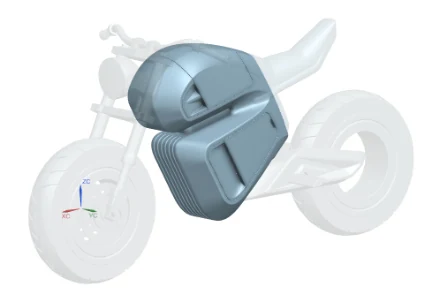
The NAWA model in NX with the tank highlighted and the rest shown transparent.
The tankBuilt as its own body inside the full model.
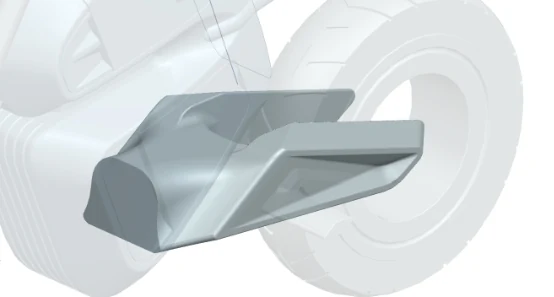
A rear detail of the NAWA modelled as a surface body.
Rear detailEach part modelled to the same standard as the bodywork.
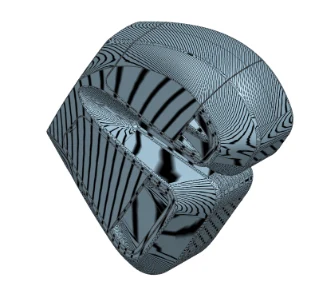
Zebra-stripe analysis on the NAWA tank.
Zebra stripesChecking the tank's surfaces for continuity.

Close-up renders

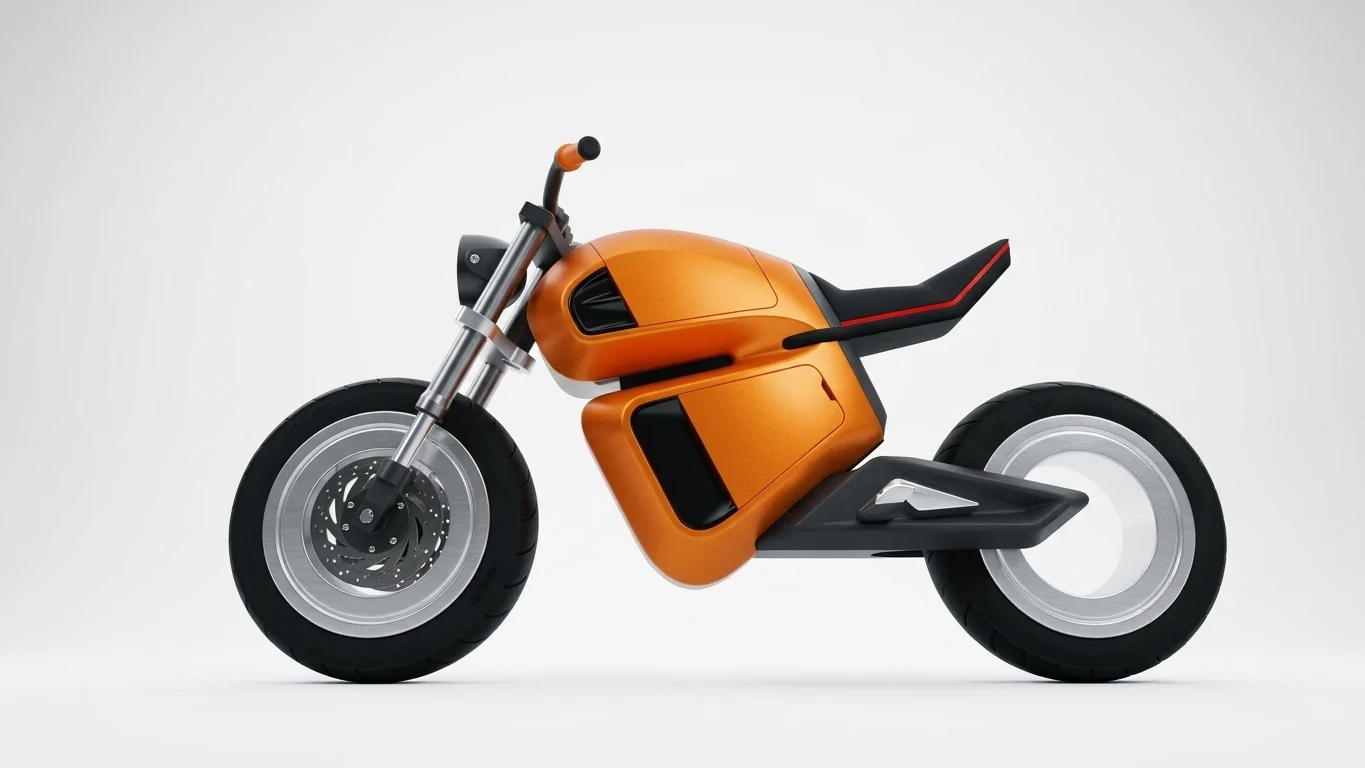
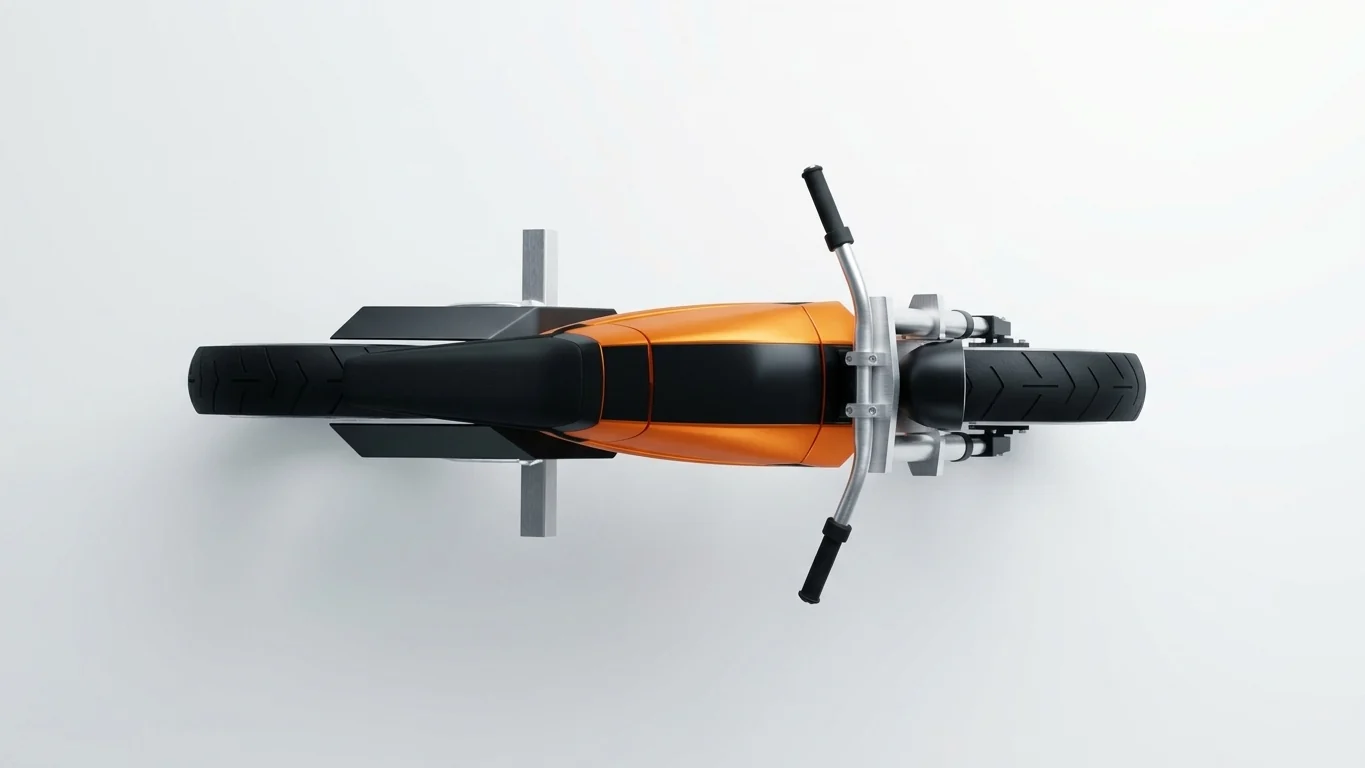
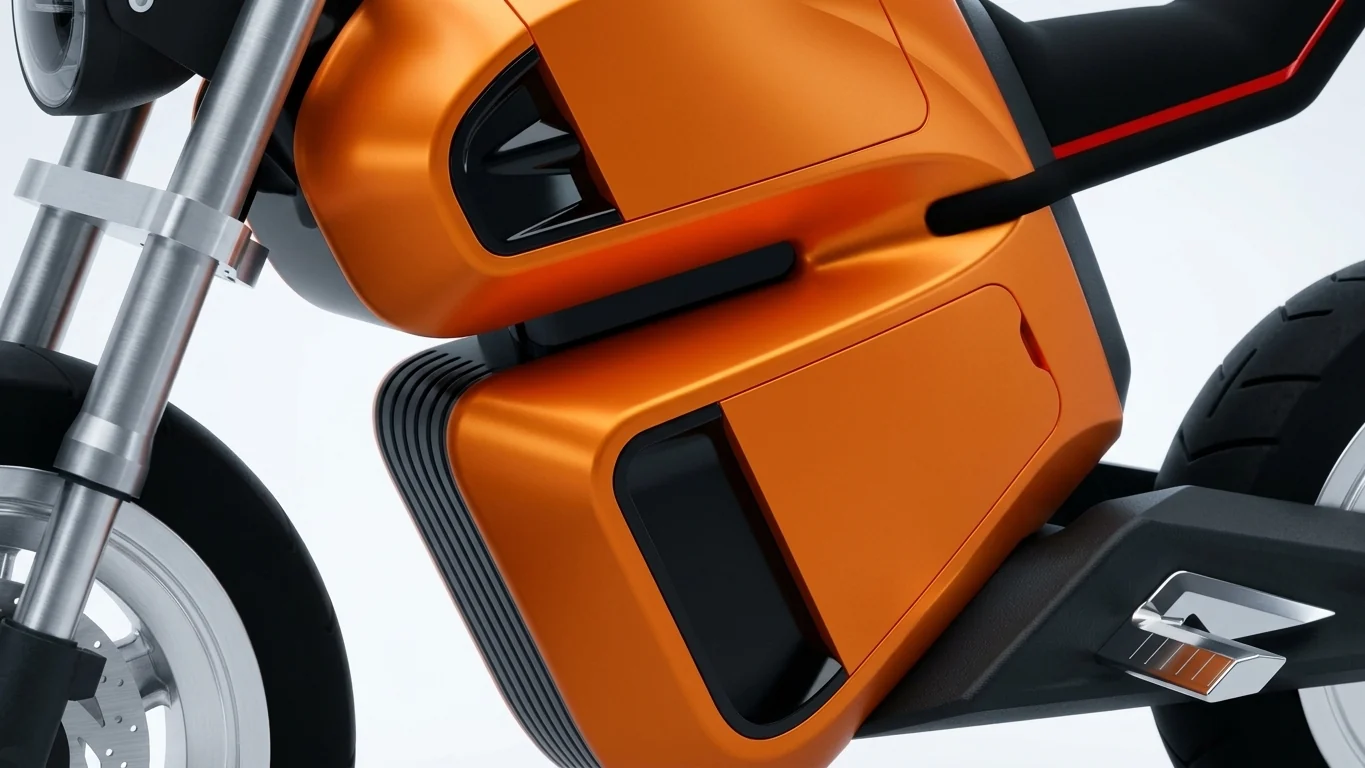
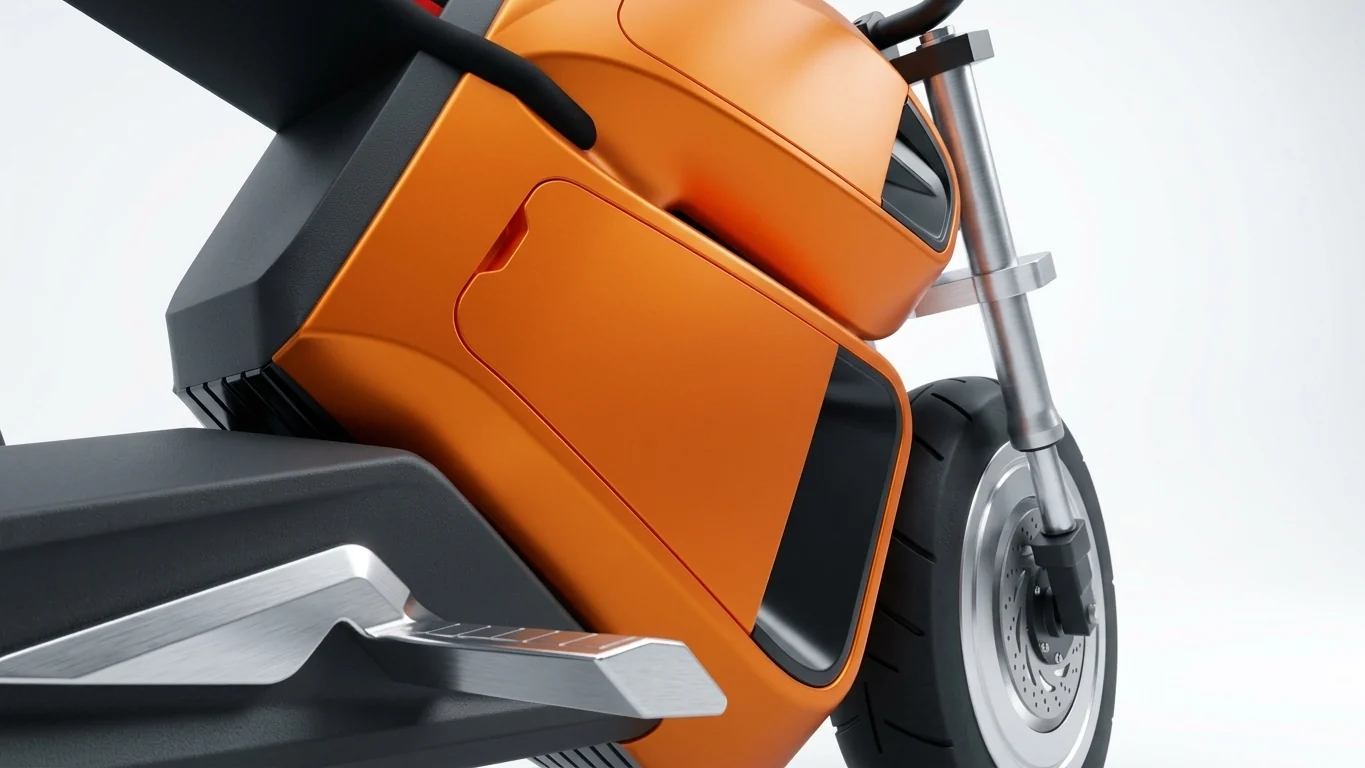
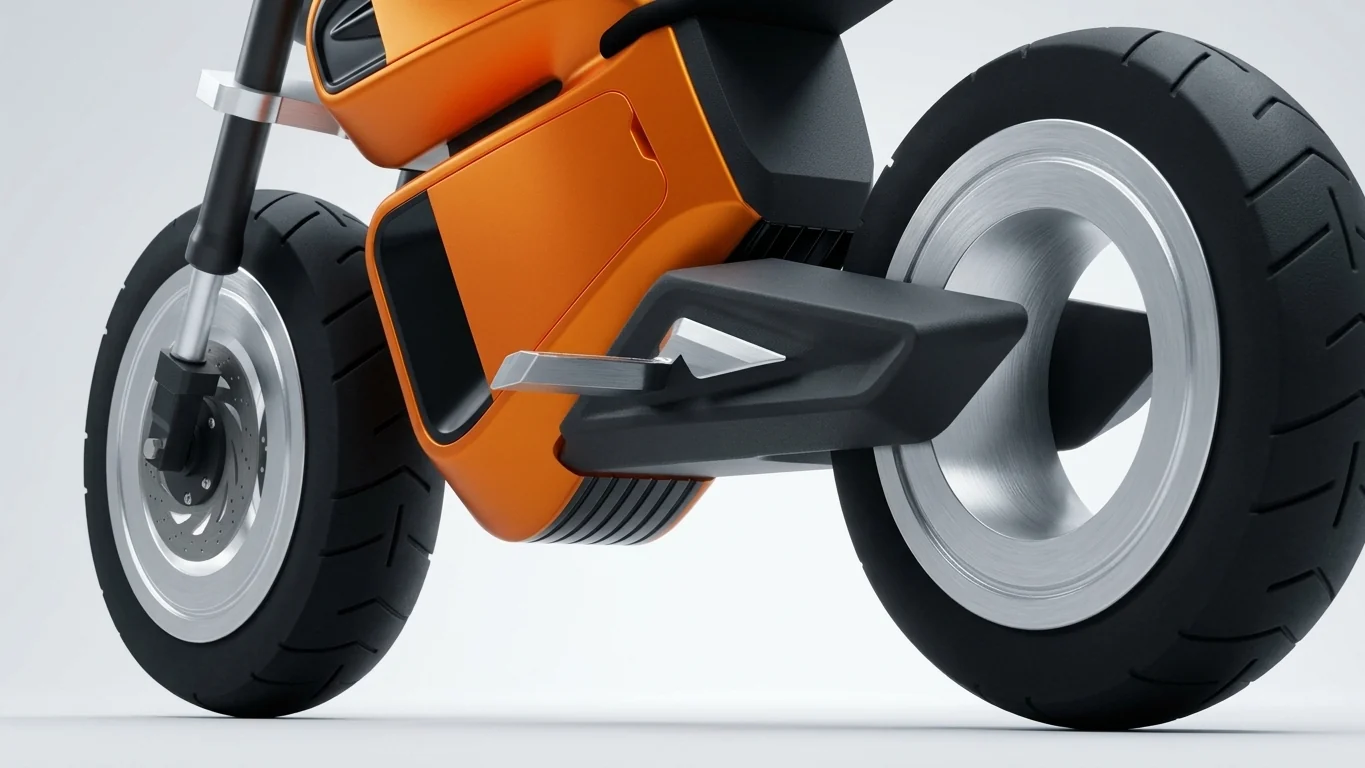
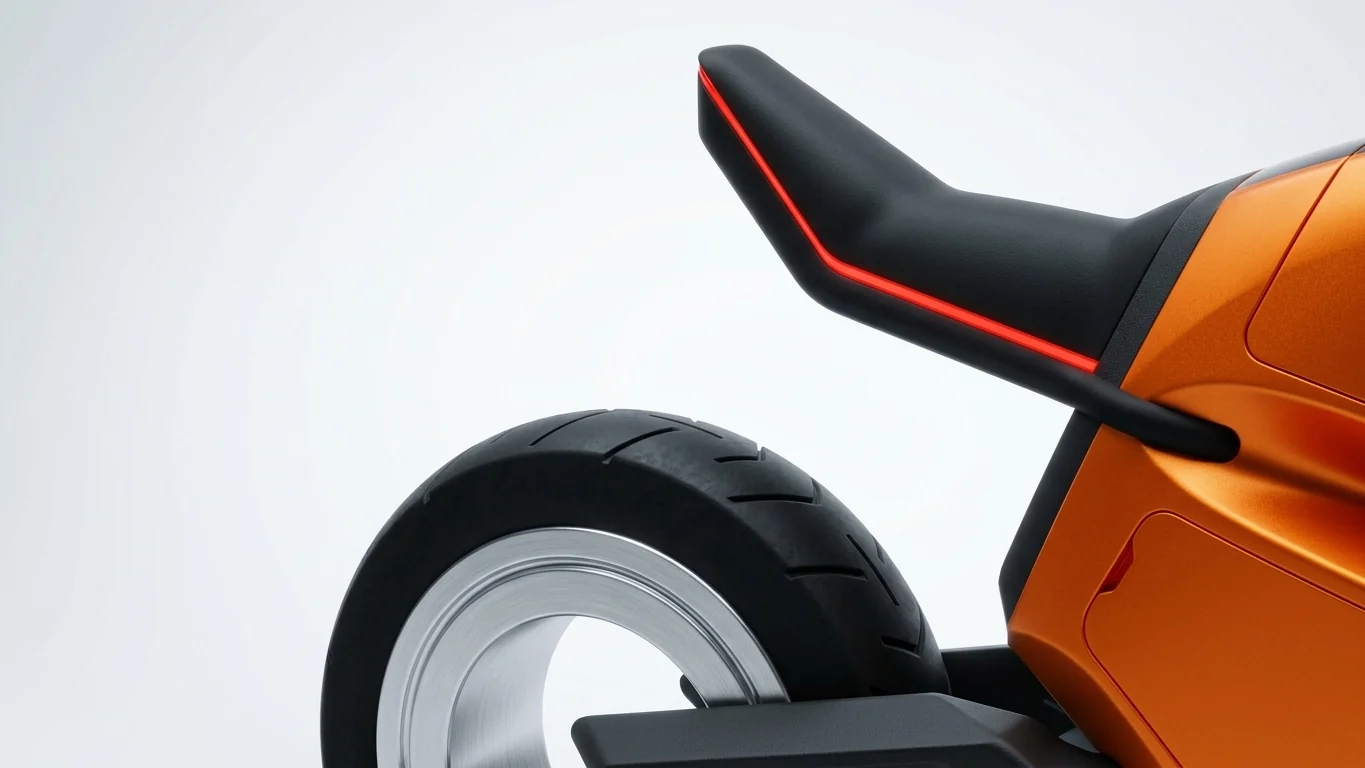
The NAWA Racer from the side. The NAWA Racer from above. Close-up of the NAWA tank and battery block, from the front. Close-up of the NAWA battery block and footrest, from low down. Low view of the NAWA wheels and footrest. Close-up of the NAWA seat with its red accent line.
The two rebuilt bikes on a road at sunset, mountains behind them, with sketched figures standing around them.

Two bikes, two programsOne standard for the surfaces.

Course deliverables, Product Development, University of Antwerp: SolidWorks modelling (three years) and the Siemens NX elective (one year). Reconstructions of the MIMIC e-bike by Roman Dolzhenko and the NAWA Racer by NAWA Technologies. CAD models and renders by Arne Jonckheere.

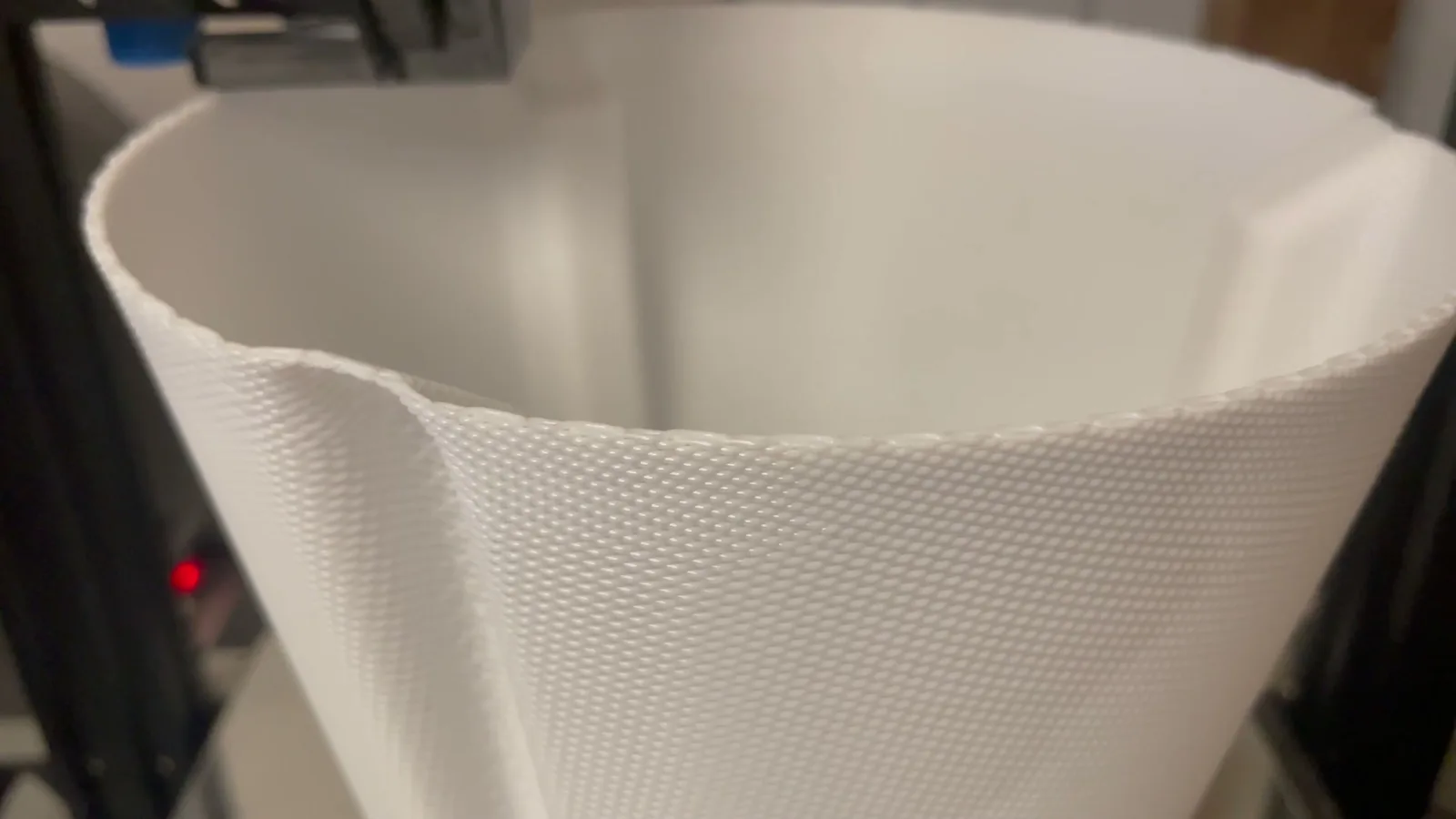
Close-up of a white 3D-printed shade with a woven texture, on the printer.FilamentFDM printing
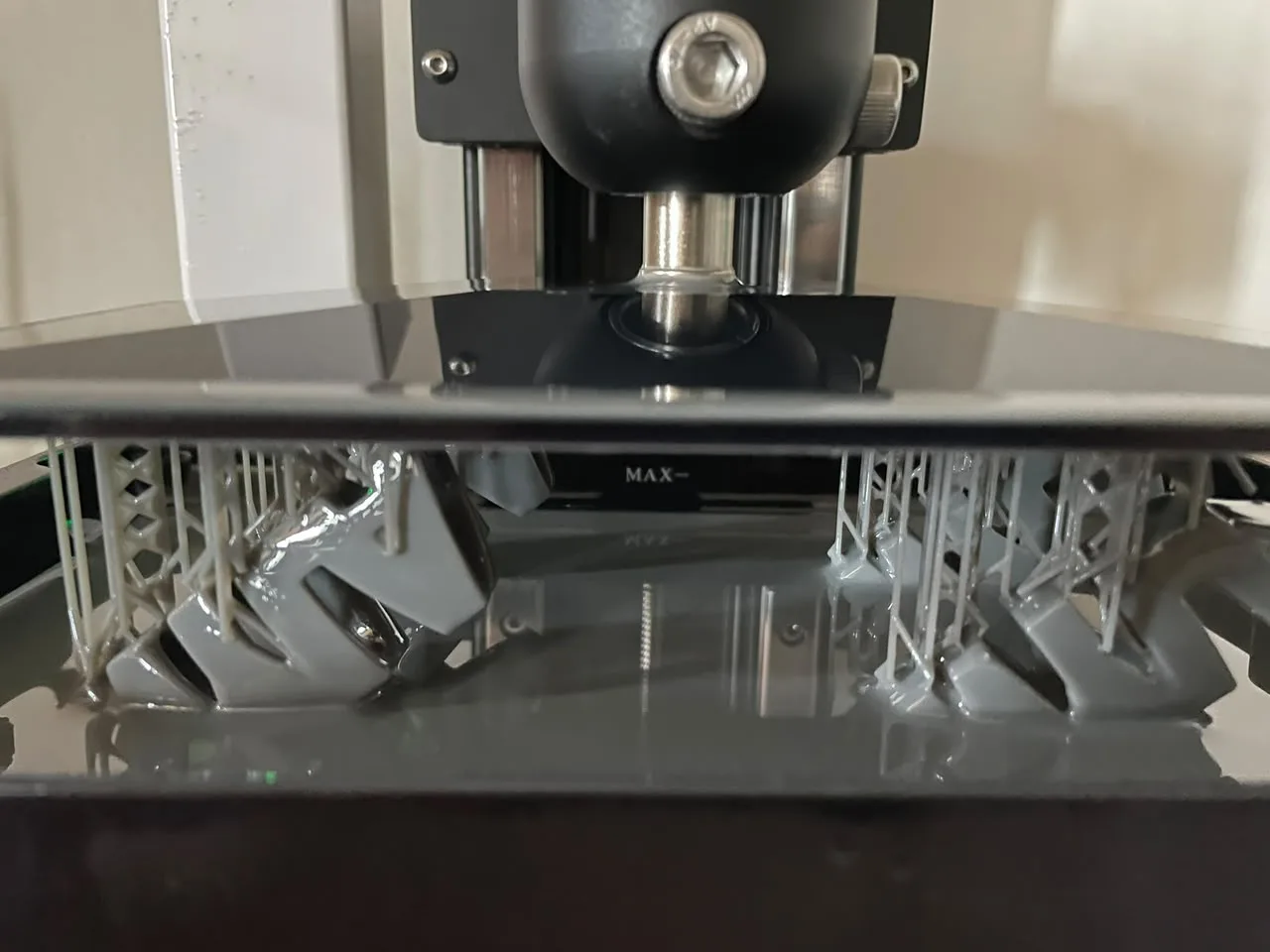
Grey resin prints on their supports, hanging from the build plate above the resin.ResinSLA printing
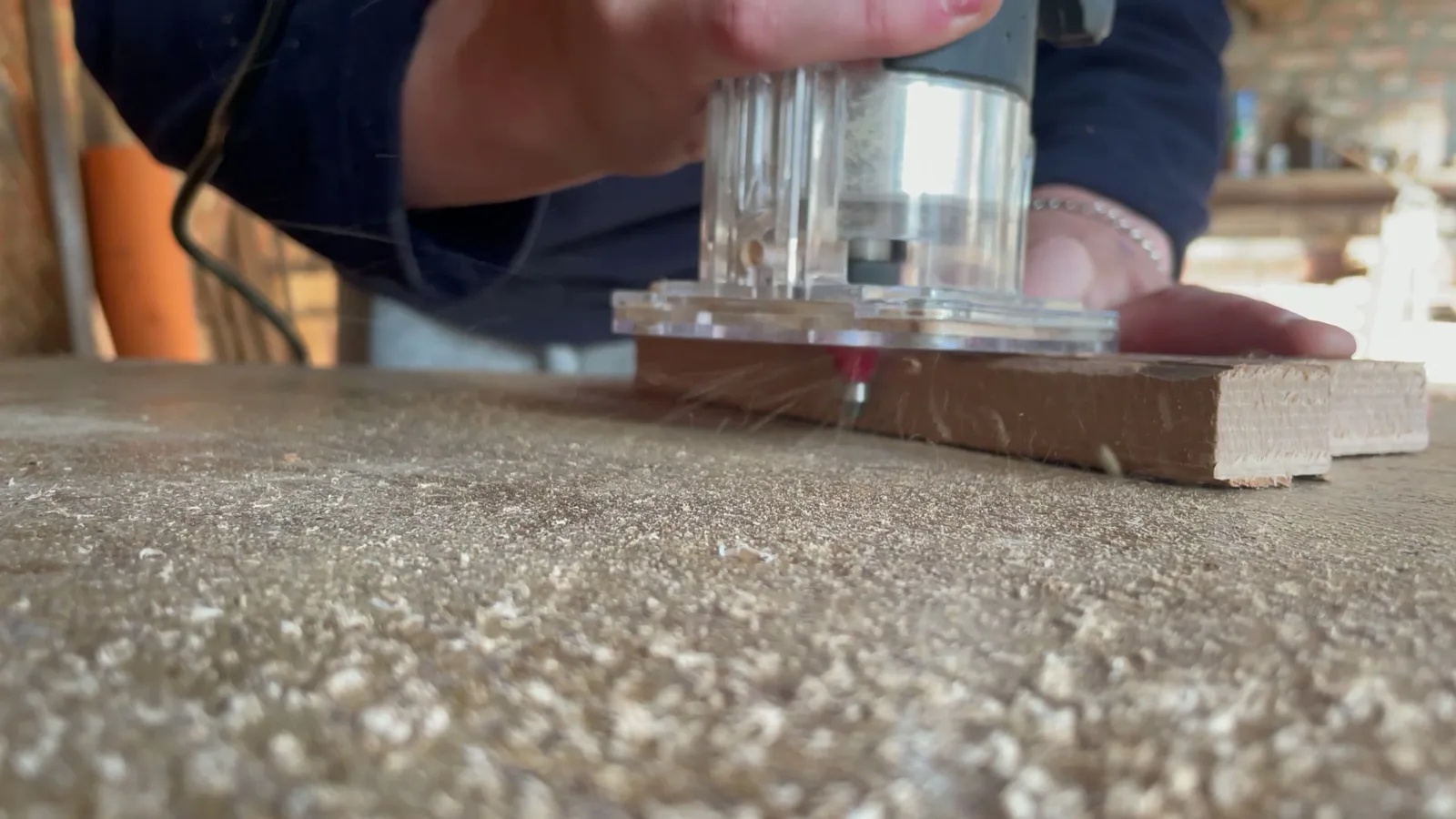
A router cutting a fillet on a piece of wood, chips flying over the workbench.WoodCNC and router

States of Matter

Designing for FDM, CNC and SLA in my own studio.

Context
My own maker brand
Role
Design, CAD, renders, production
Processes
FDM, CNC and SLA
Status
Zephyra is market-ready, more in development

A Form Studio

Because I have a workshop full of prototyping equipment, I started my own maker brand. It is where ideas get tested by making them.

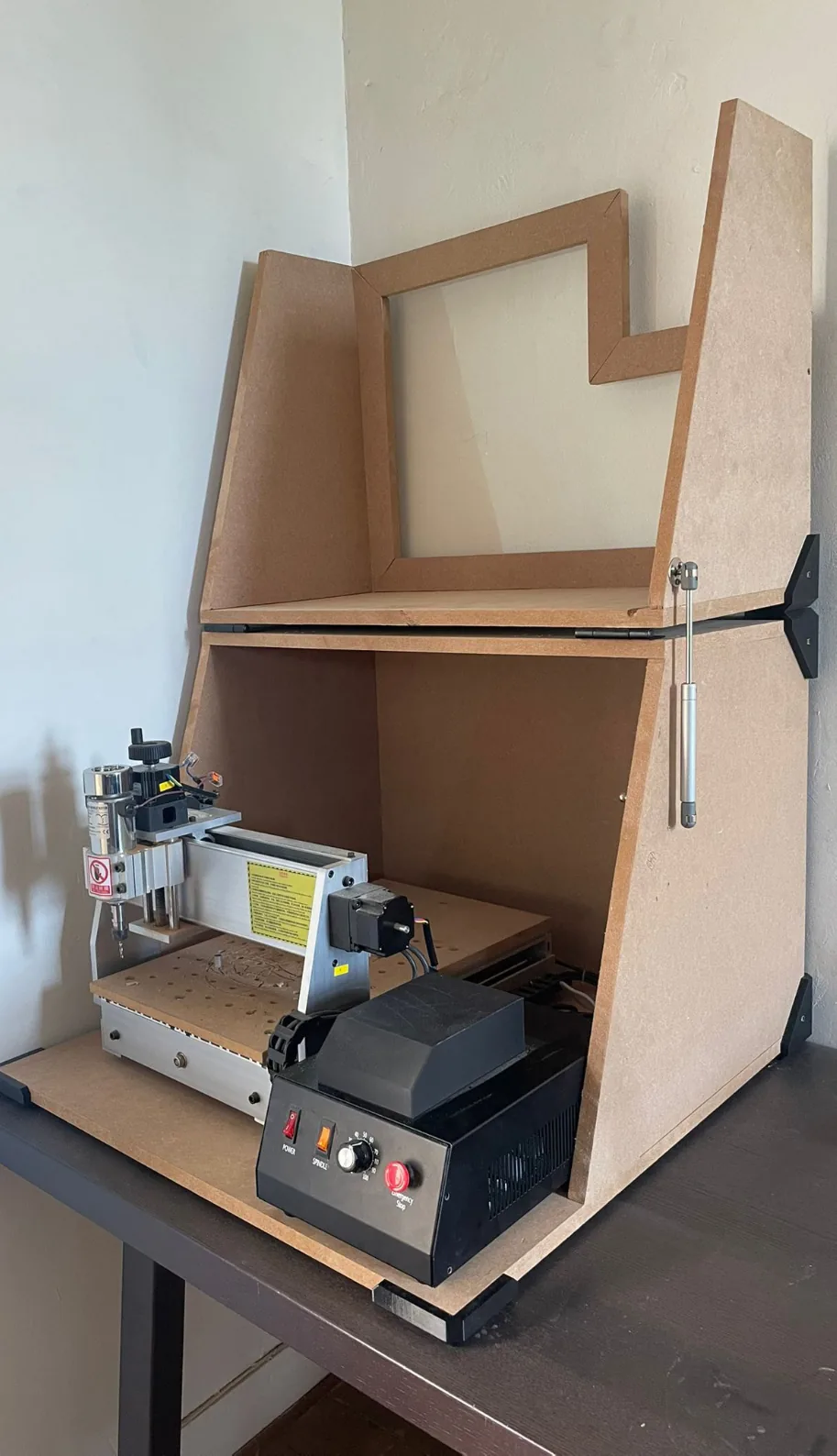
Several 3D printers and a 3040 desktop CNC take a concept from the screen to a physical prototype. A lot of the work goes into the printers themselves: maintaining, repairing, modifying and upgrading them so they print more reliably and can do more. Zephyra is the first market-ready product to come out of the studio; others are in development.

The 3040 desktop CNC machine in its home-built enclosure.The 3040 desktop CNC, in its own enclosure.
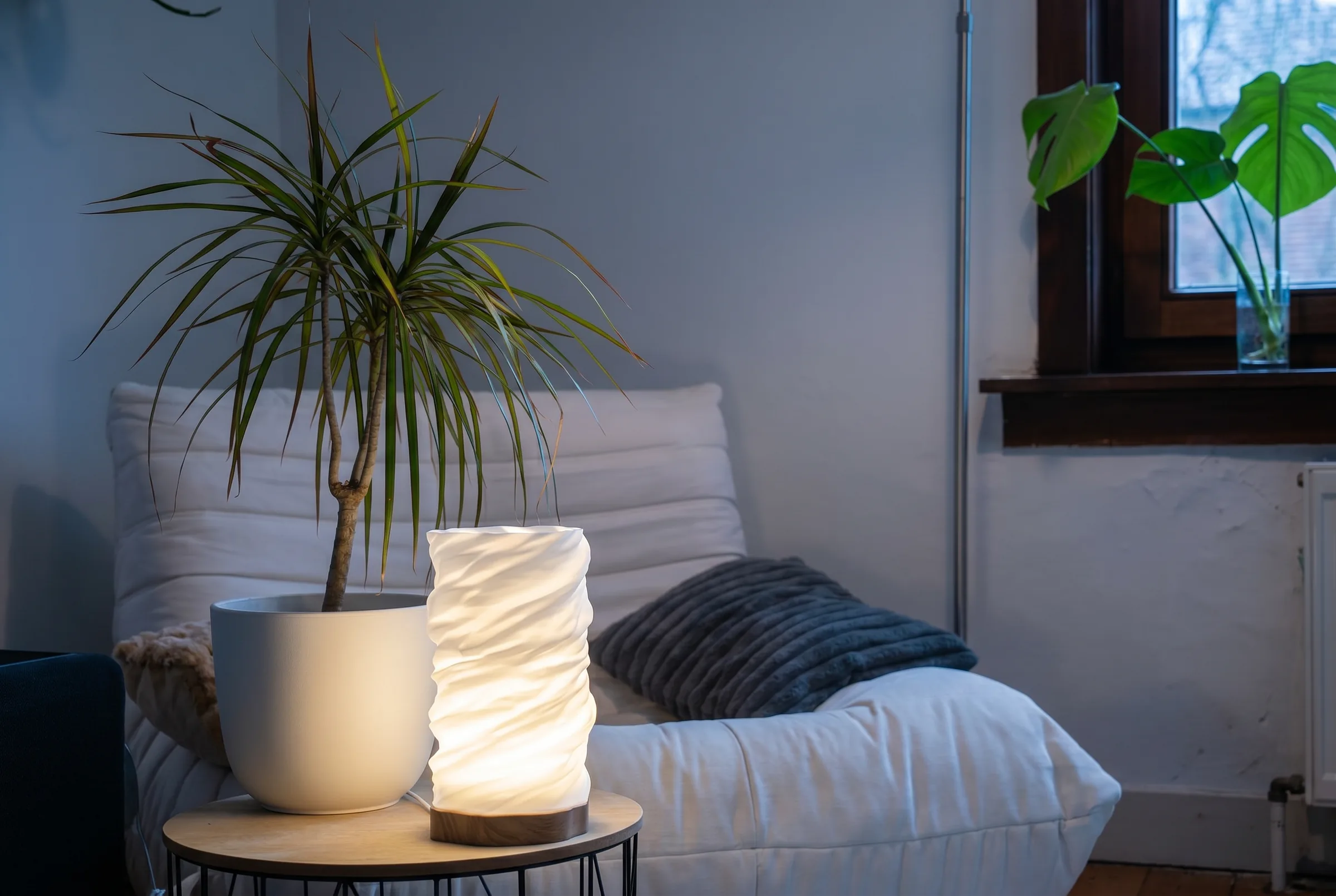
Render of Zephyra on a side table next to a lounge chair and a plant, glowing warm in a dim room.
The first product

Zephyra

Greek for the gentle west wind.

Fabric and wood

Inspired by fabric moving in the wind and the warmth of natural wood, Zephyra turns a fleeting moment into a lighting object.

Flowing geometry over a solid wooden base: a balance between lightness and stability that gives a calm, warm light in a room.

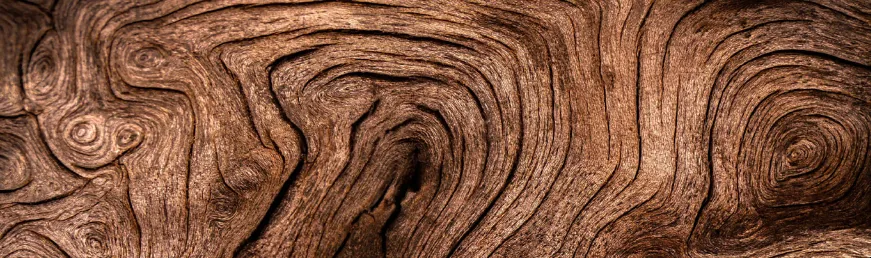
Moodboard: the rings and grain of a cut piece of wood.
Wood
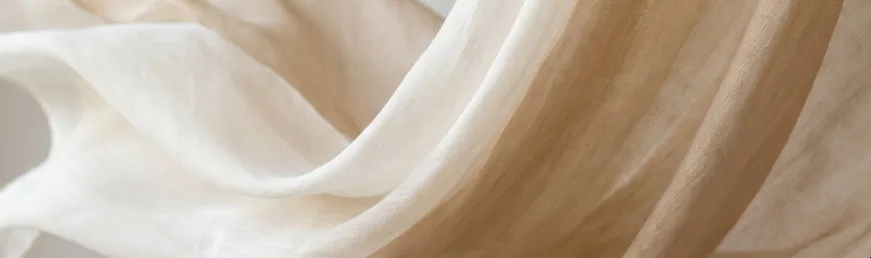
Moodboard: white fabric folding in soft waves.
Fabric
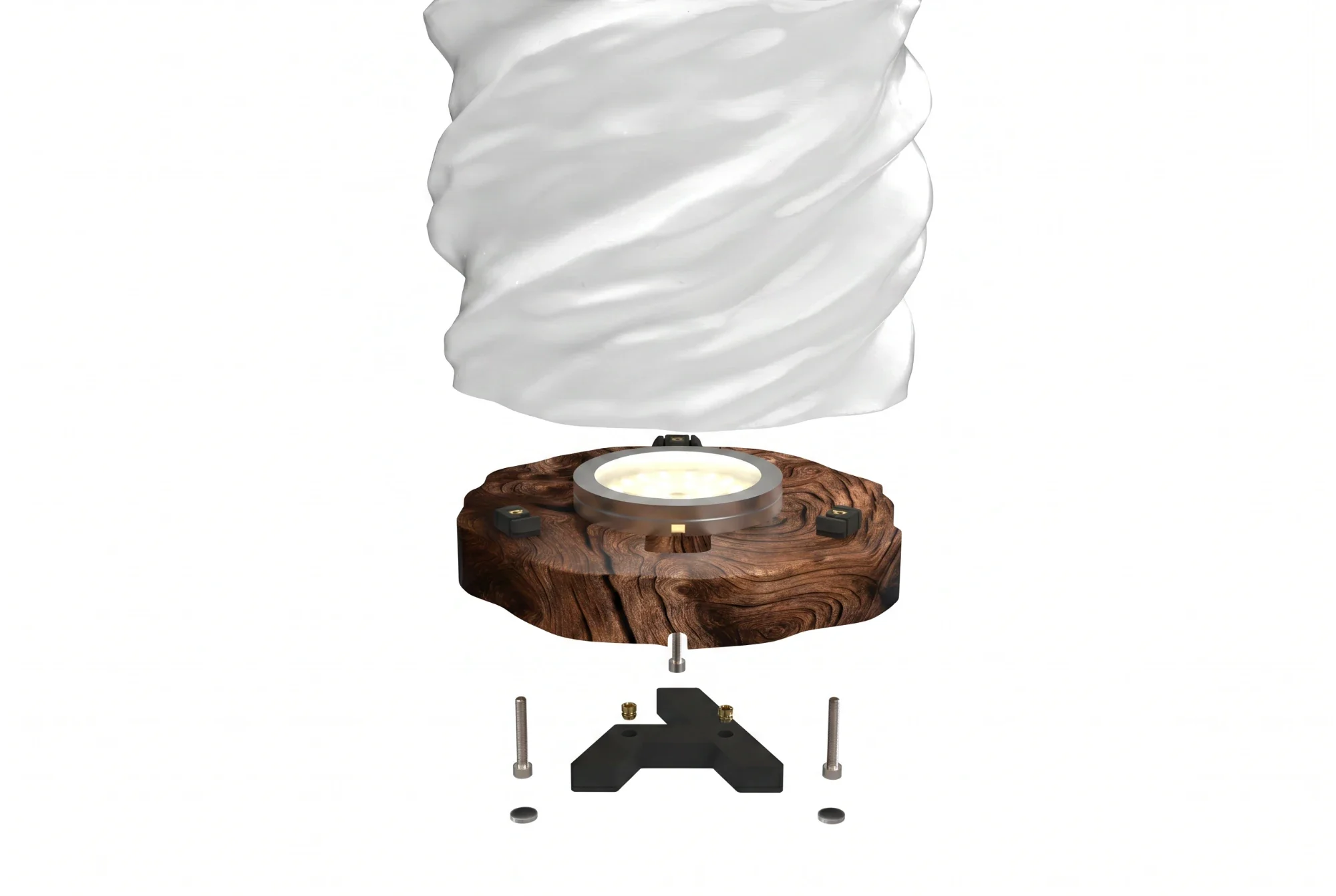
Exploded view of Zephyra: the twisted white shade, the wooden base with its LED, and the black bracket with screws, inserts and feet.
Shade, wooden base with the light, and the bracket.
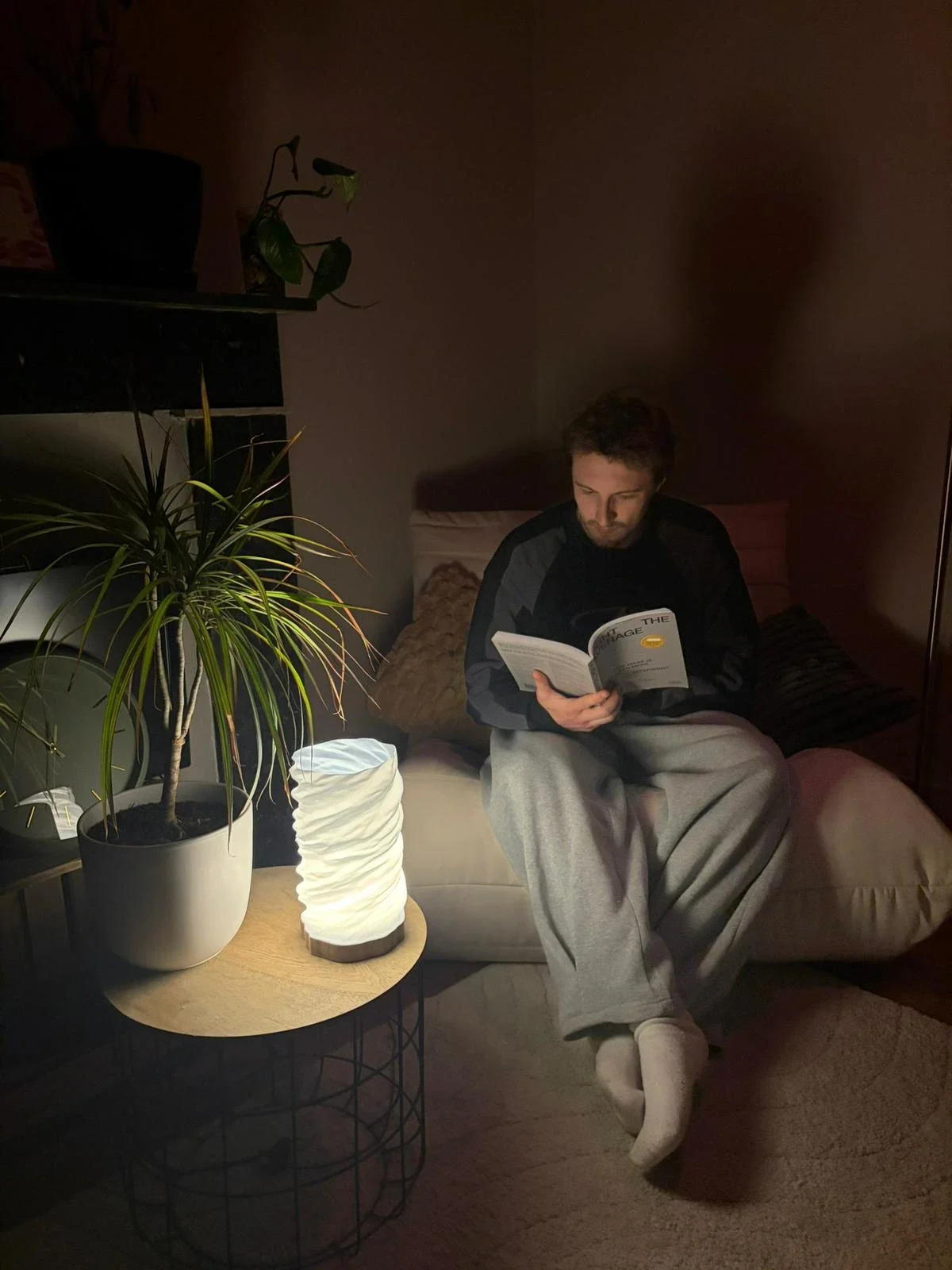
Photo of the finished lamp glowing on a side table in a dark room, someone reading next to it.
The real lamp, in use.
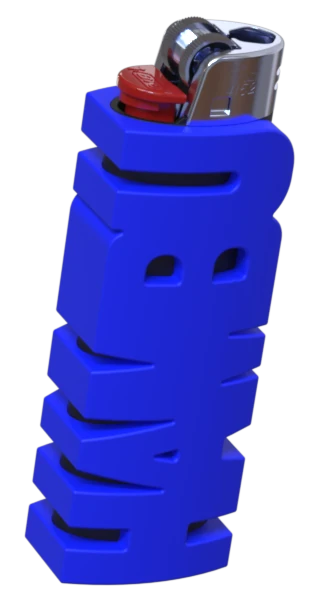
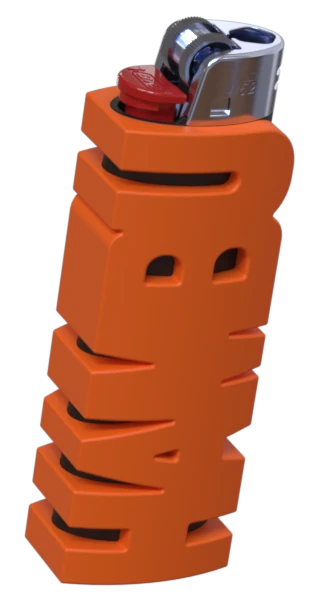
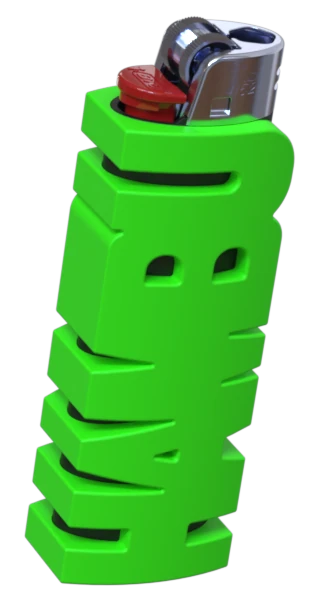
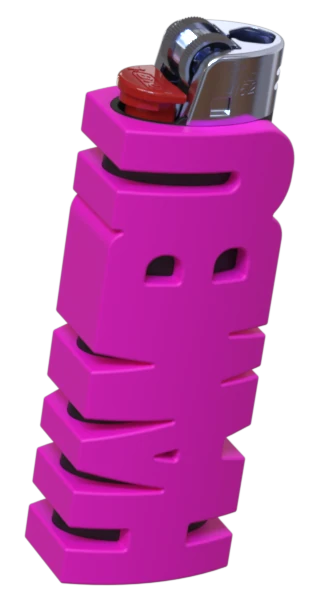
Six colourways

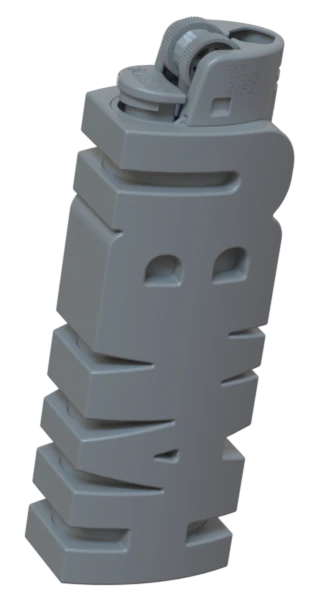
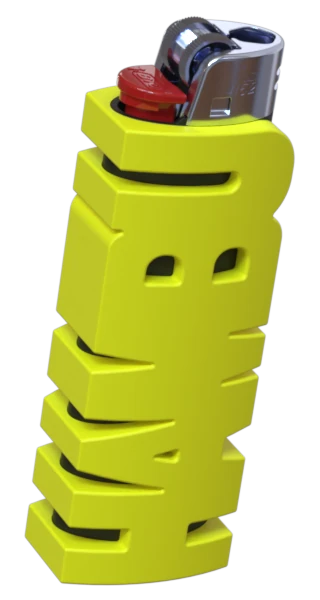
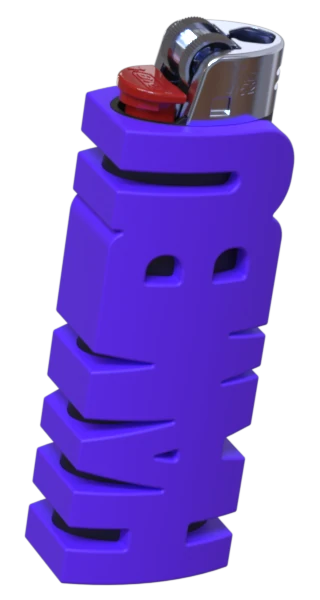
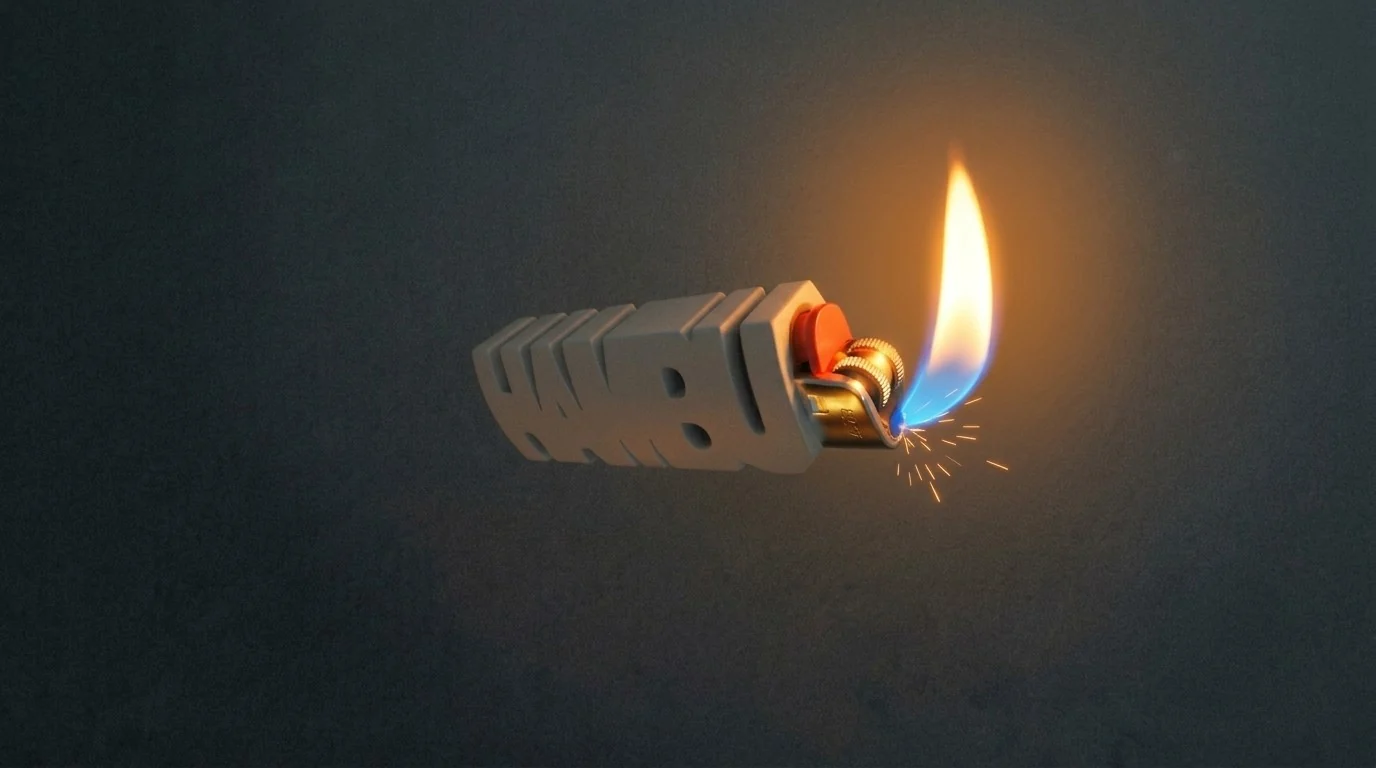
HAMBU lighter case

A sleeve for a standard BIC lighter, with the letters of the name as its wall.

First the form in clay, then the colours.

From one case to any name

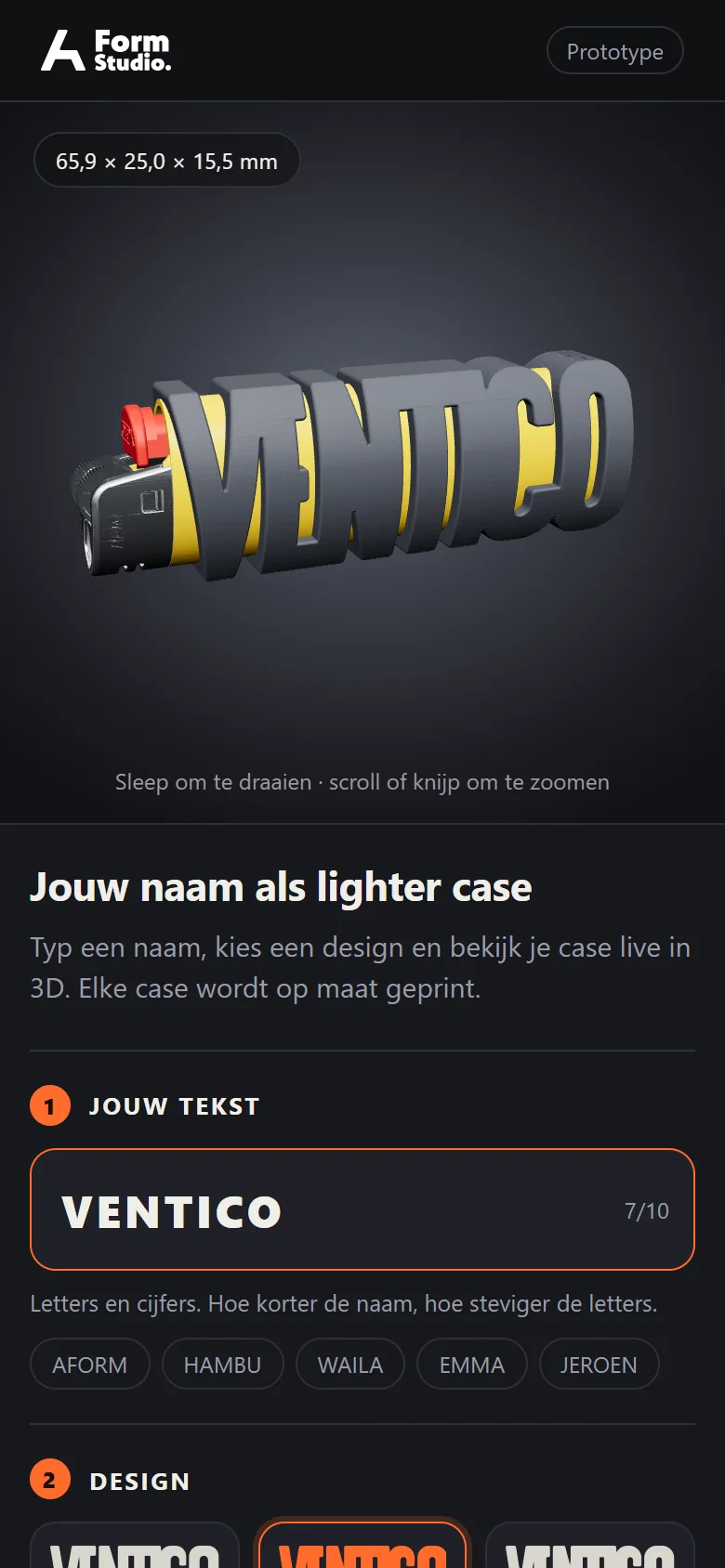
A builder for every name

HAMBU started as one case for one name. To make one for anyone, I built a web tool: type a name, pick a design, and the case is generated live in 3D.

The builder is a working prototype and is not online yet.

The same builder on a phone, with a longer name, VENTICO, in the 3D preview above the text field.

In the builder you drag the case to turn it. Here it turns by itself.

Letters that hold together

A parametric block font in which the letters flow into each other, so the name itself becomes the wall of the case. Every name is stretched to the same outer size, so the lighter always fits.

Live in 3D

The model is built in the browser as you type. You can turn it, zoom in and choose between a light, a medium and a bold design.

From the browser to the printer

A maker mode exports the print file, already turned into its print orientation, with the A Form Studio logo engraved where it fits.

Testing and tuning the slicer

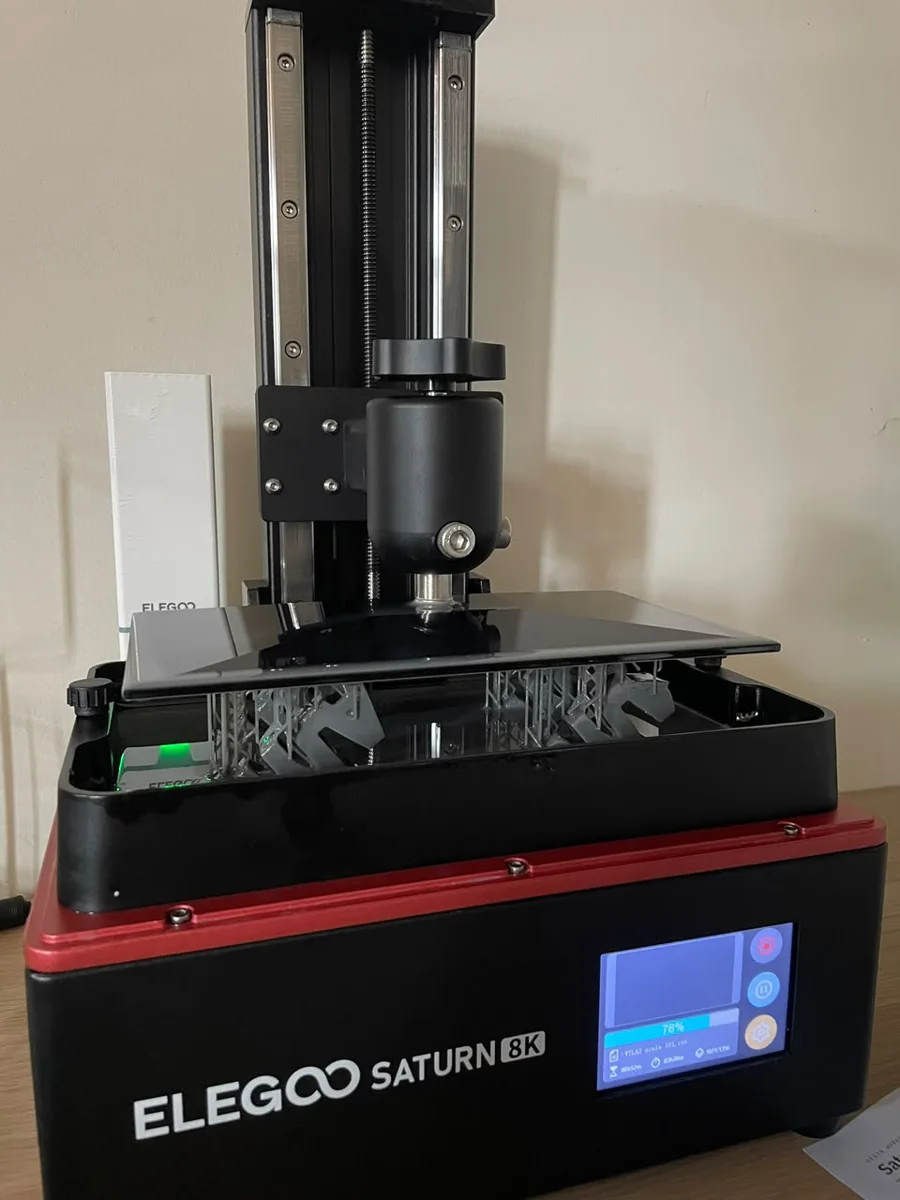
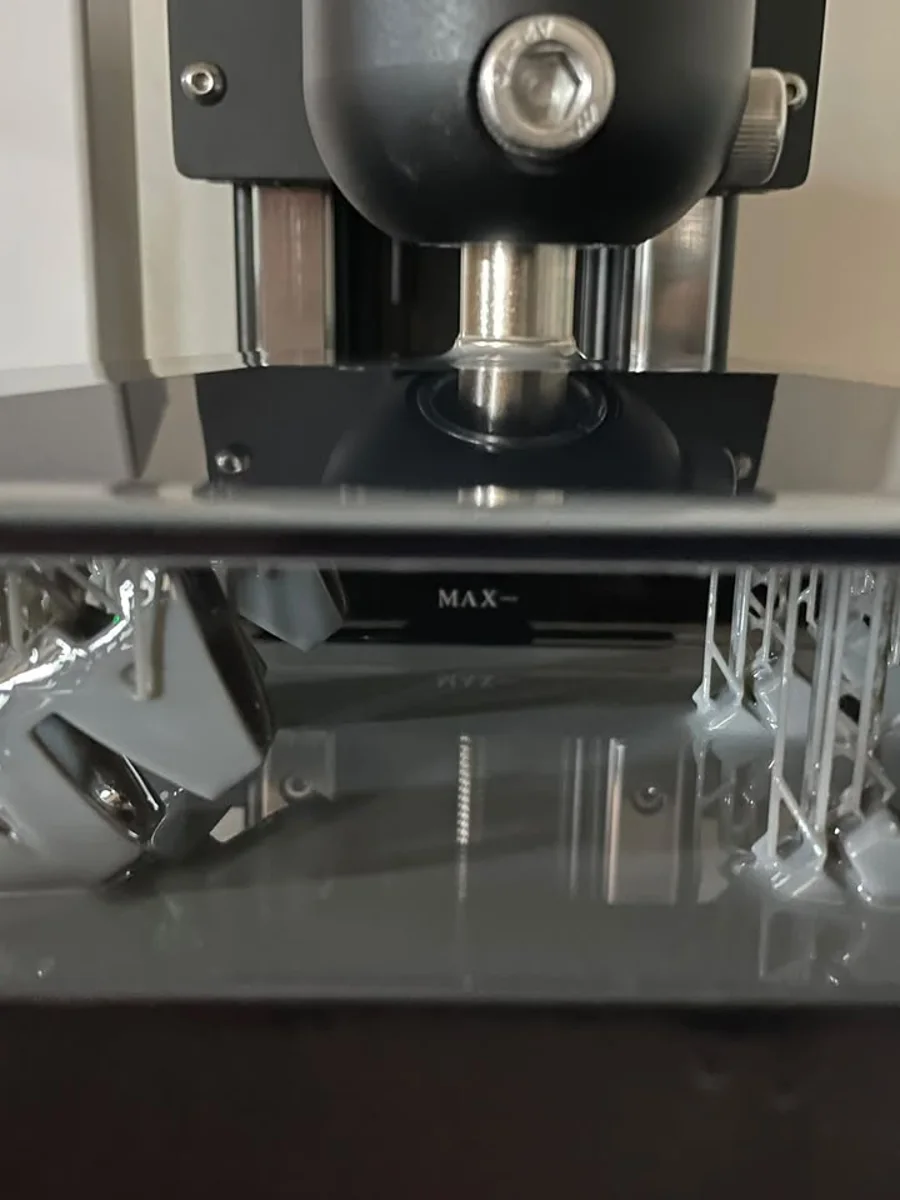
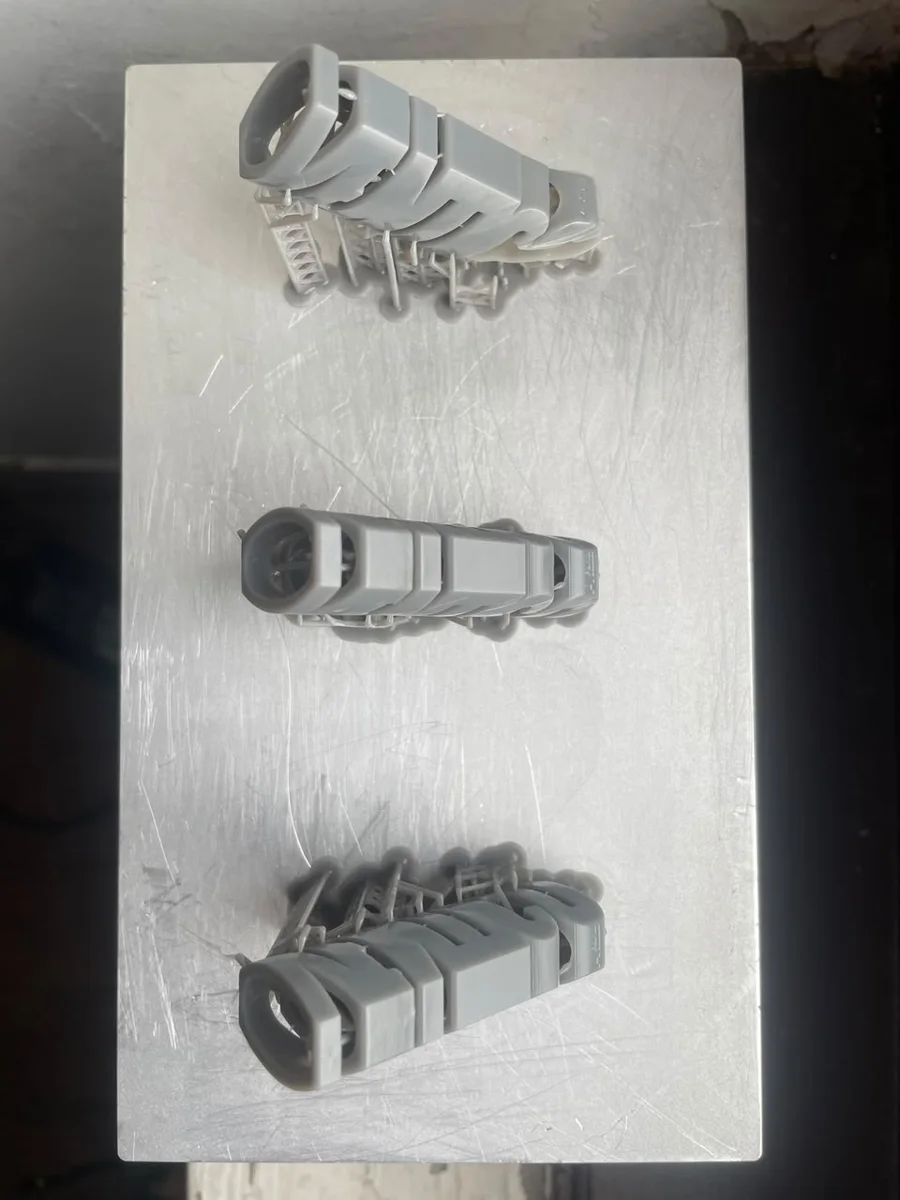
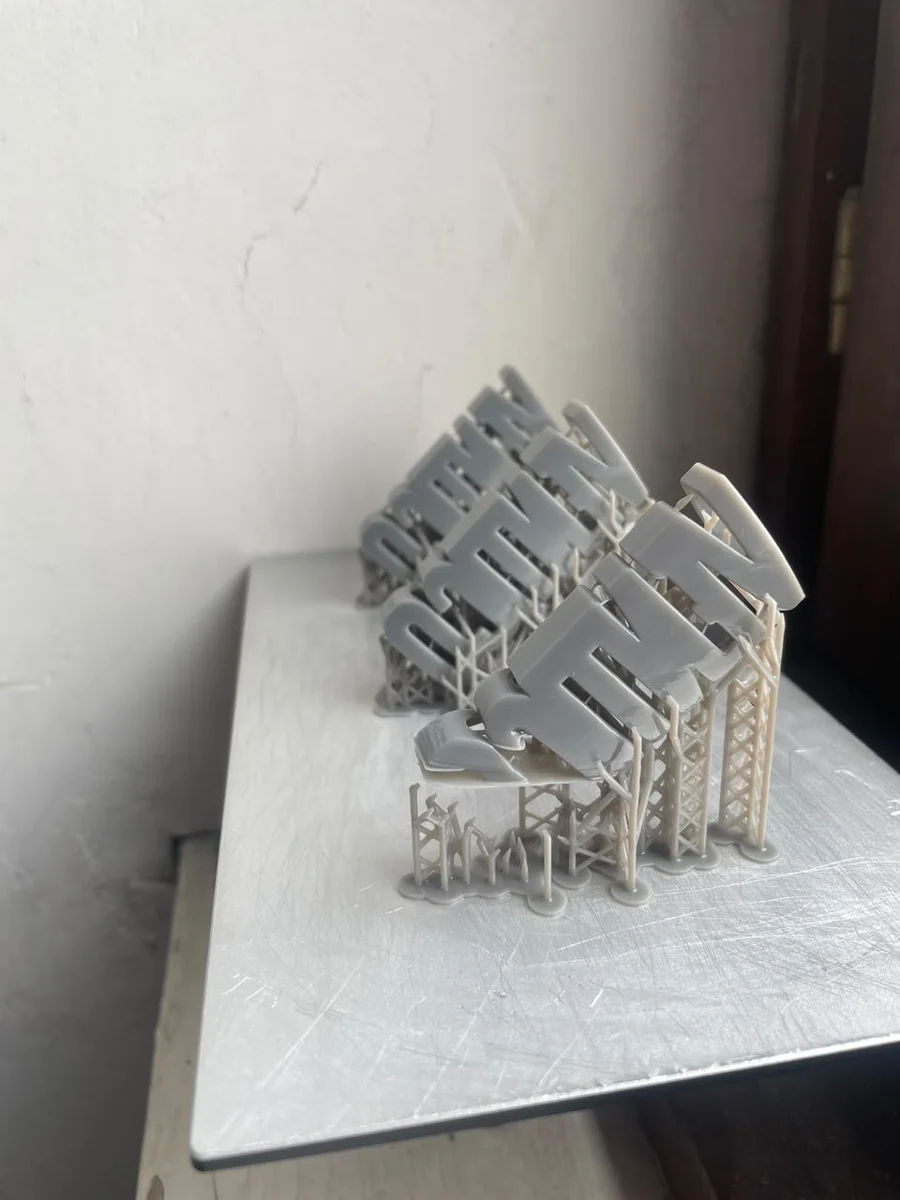
The cases are printed in resin on an Elegoo Saturn 8K. Each test plate carries a few names; between runs I adjust the orientation and the supports in the slicer until the letters come out clean.

Test prints

The Elegoo Saturn 8K resin printer with a plate of cases hanging above the resin.
The resin printer at work.
Close-up of grey cases on their supports, hanging from the build plate just above the resin.
A plate rising out of the resin.
Three grey test cases on the aluminium build plate, seen from above.
Three test cases on the build plate.
Test cases standing at an angle on a lattice of supports on the build plate.
Printed at an angle, on supports.
Render of the grey HAMBU case on a lit lighter, flame and sparks against a dark wall.

A Form Studio is my own maker brand. Design, CAD, renders and production by Arne Jonckheere.

Barmadillo

A pop-up coffee bar under a brand of my own.

Context
My own coffee brand and pop-up bar
First pop-up
24 April 2026, Fameus, Antwerp
Role
Brand, logo animation, menu, promotion, sign, behind the bar
Tools
Illustrator, Photoshop, InDesign, After Effects, CNC

A coffee bar of my own

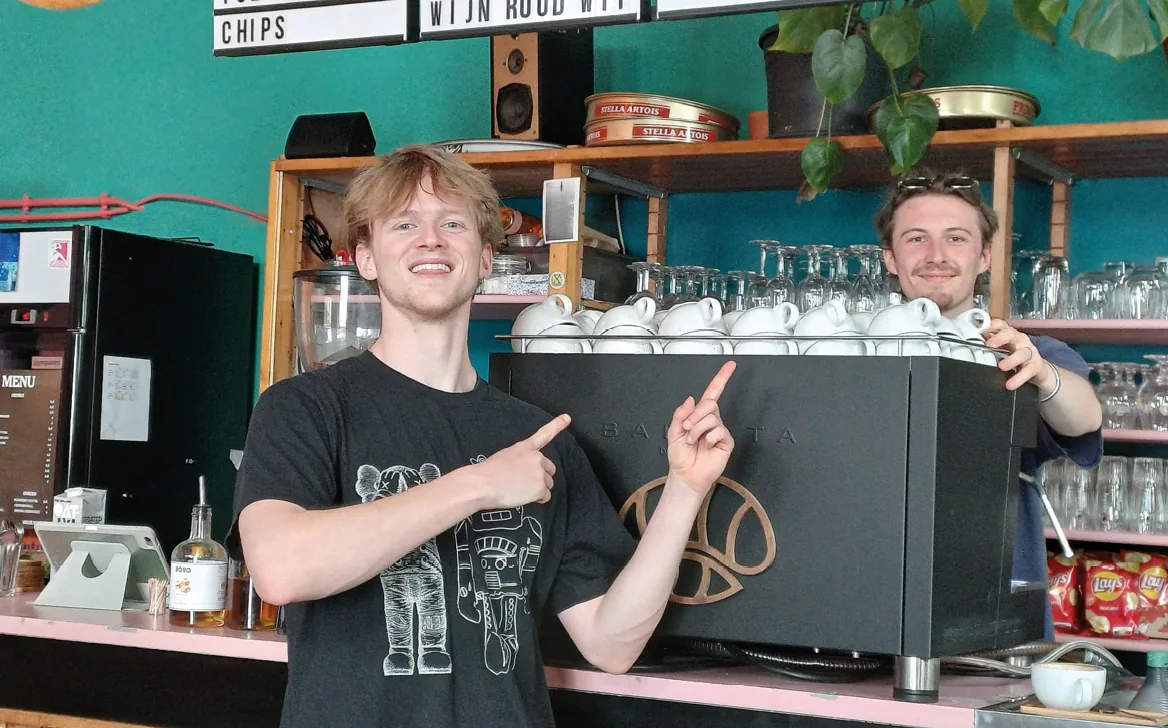
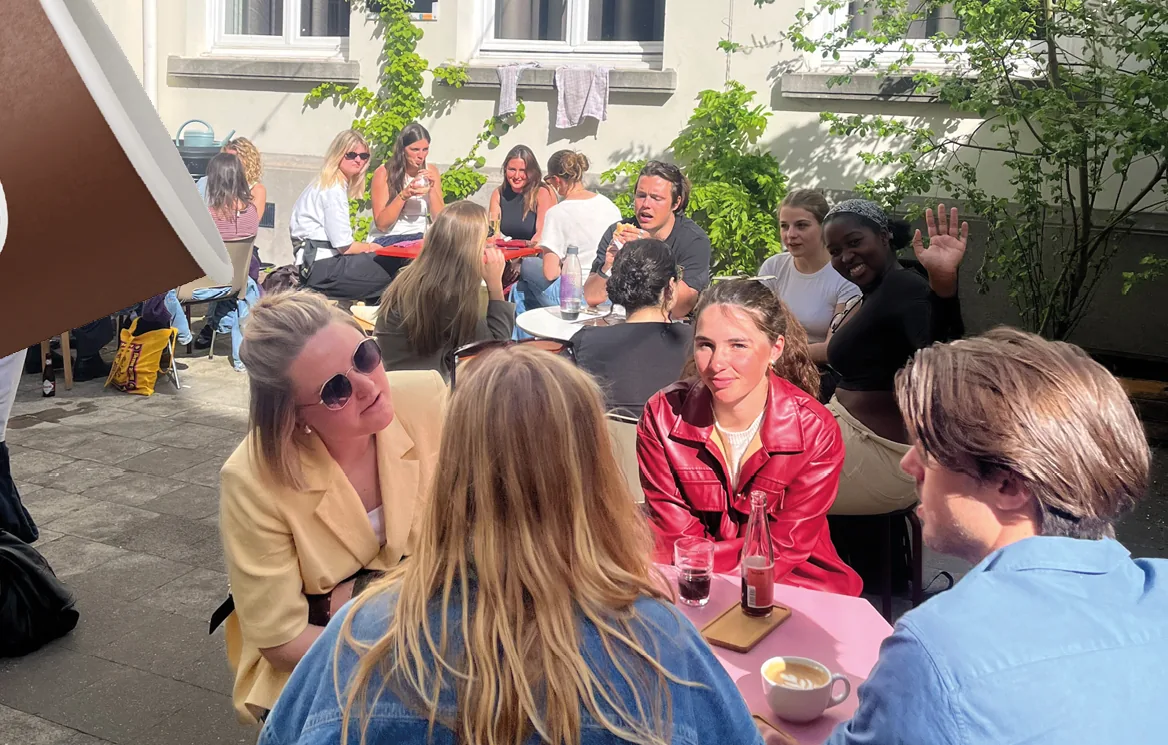
On 24 April 2026 I ran a first pop-up coffee bar under my own brand, Barmadillo. It went well: many people asked when the next one would be.

Everything around the coffee is my own design: the logo and its animation, the menu, the posters and the Instagram posts, down to a sign milled from wood.

Made in the studio

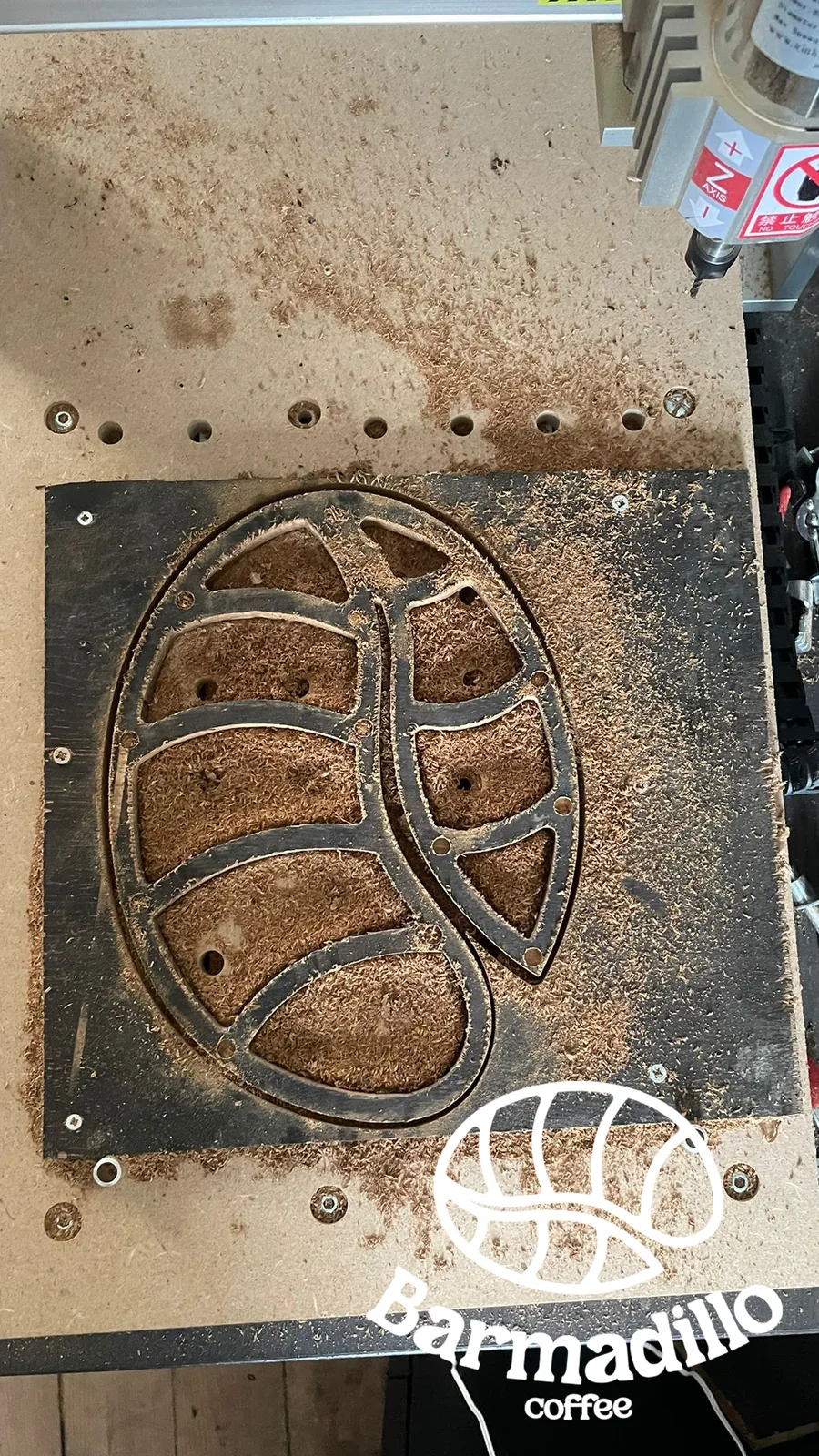
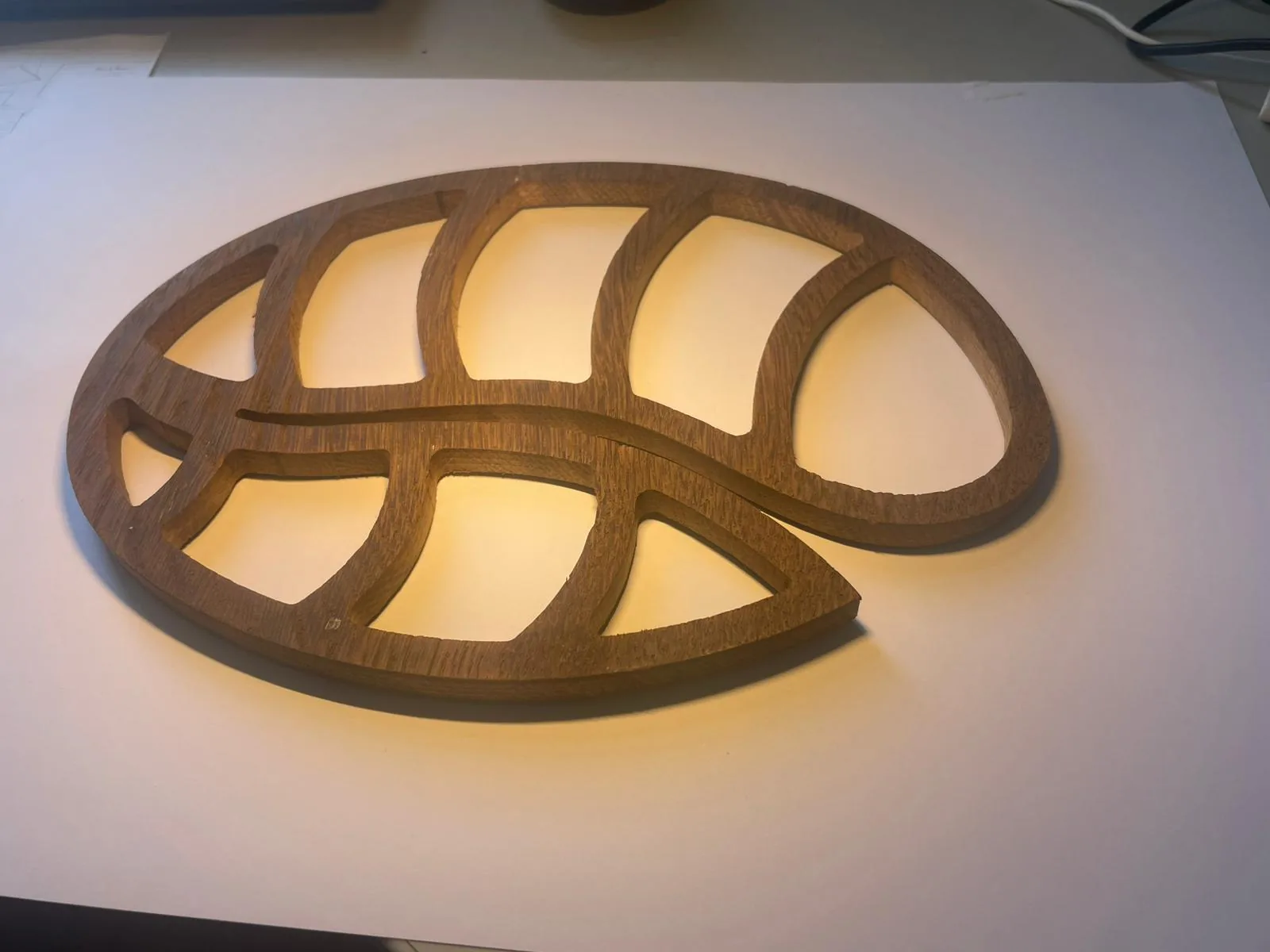
The logo as a sign

Milled from wood on the CNC of A Form Studio, with light behind it.

The logo being milled out of a wooden panel on the CNC, dust all over the bed.
On the CNC.
The finished wooden logo sign on a wall, warm light shining through the gaps between the bands.
The finished sign, lit from behind.

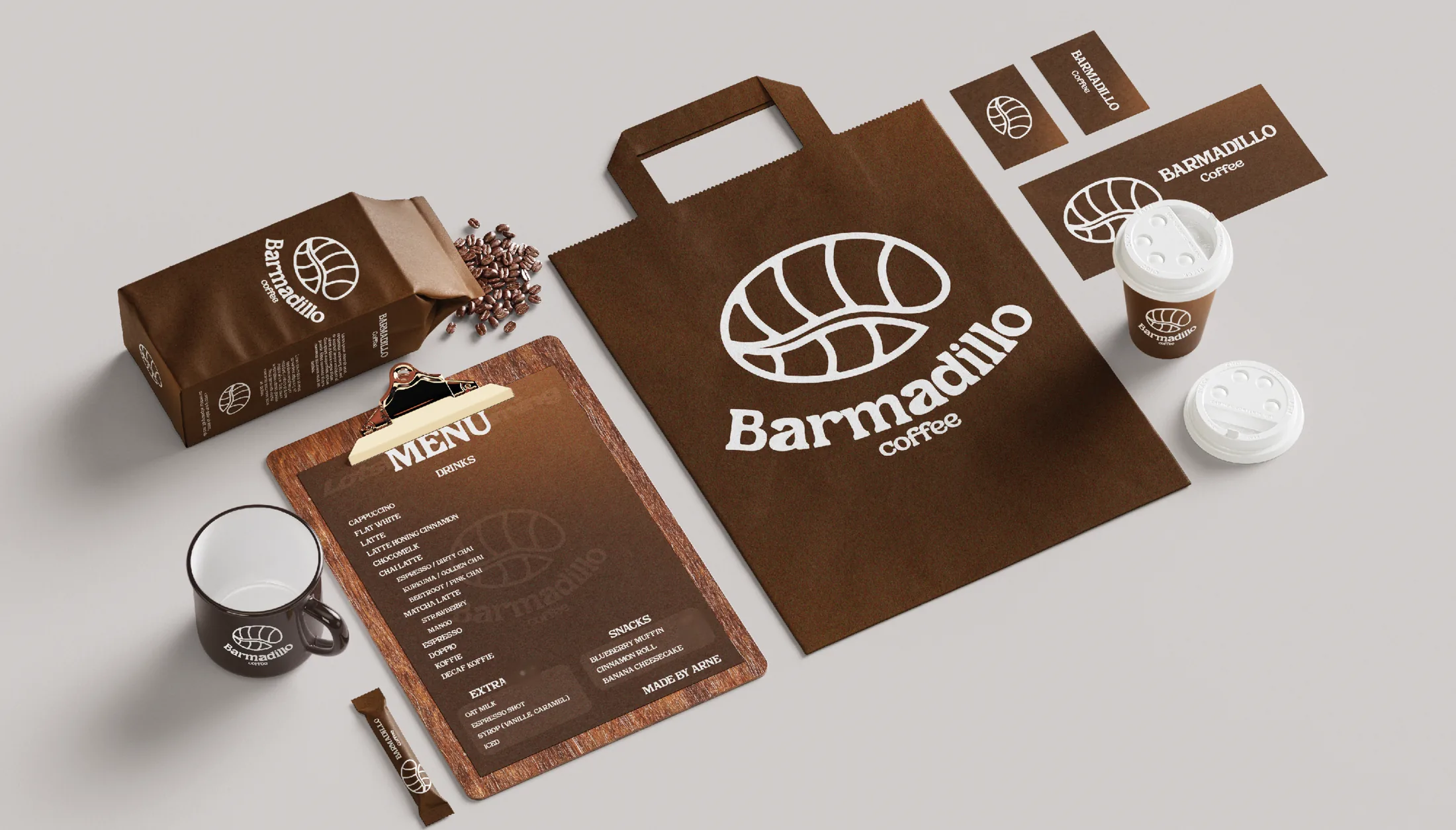
One identity

From the cup to the bag

Mock-up of the Barmadillo identity in brown and white: a paper bag, coffee packaging, cups and lids, a mug, business cards, a sugar stick and the menu on a clipboard.
The identity on a mock-up: bag, packaging, cups, mug, cards and menu.

Getting the word out

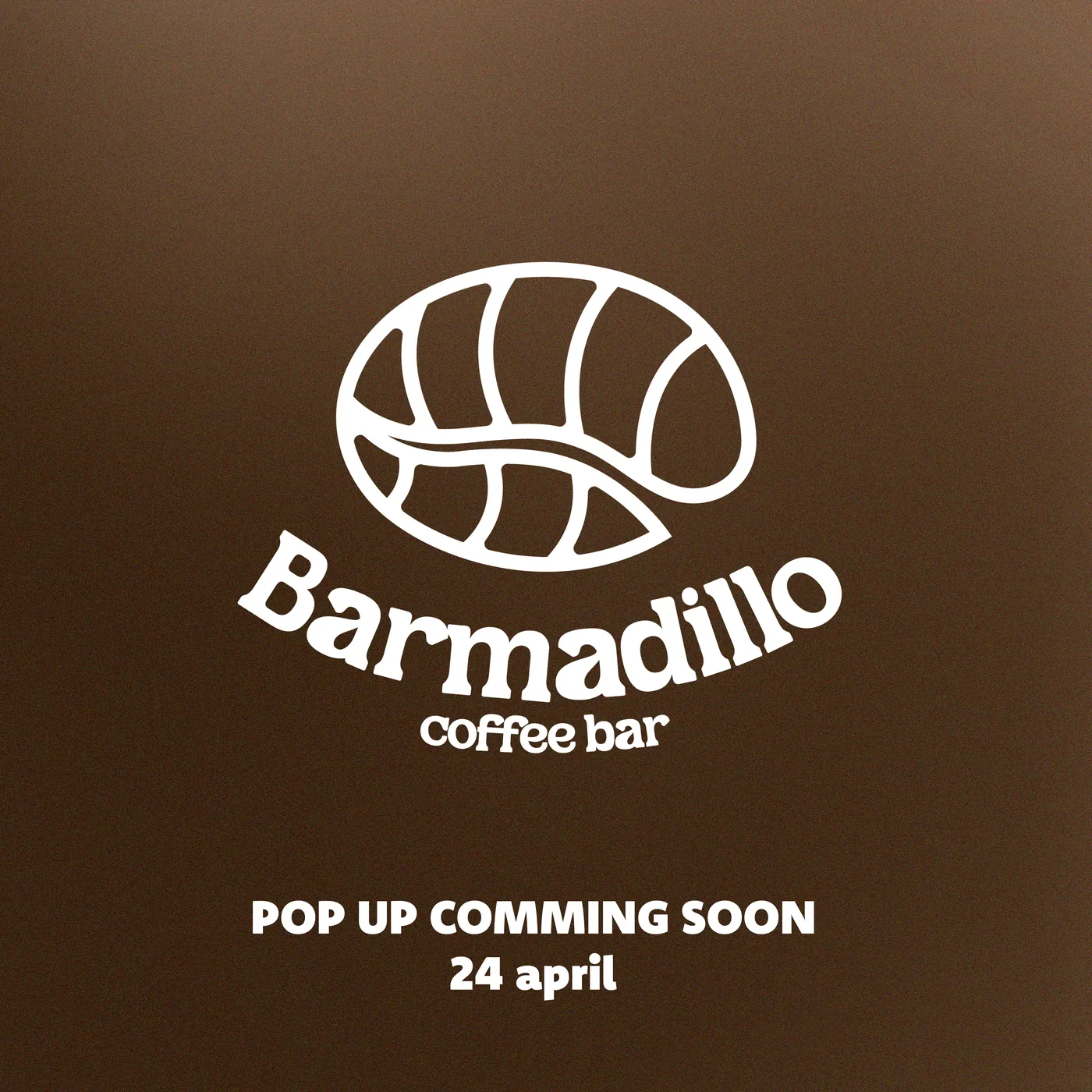
A poster, posts and a teaser

Announcement poster: the white logo on brown, 'Pop up coming soon, 24 april'.
The announcement.
Teaser for Instagram.
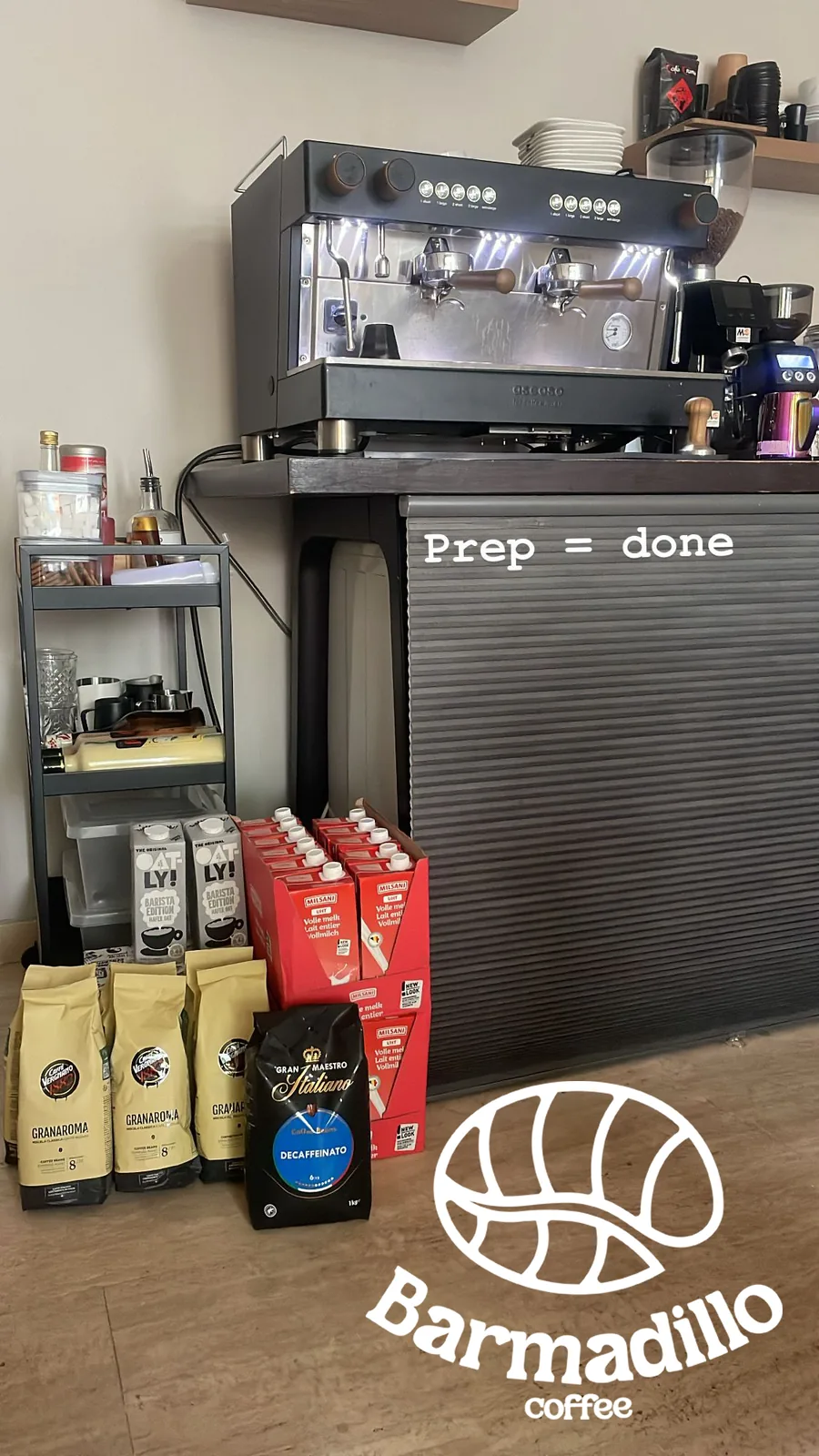
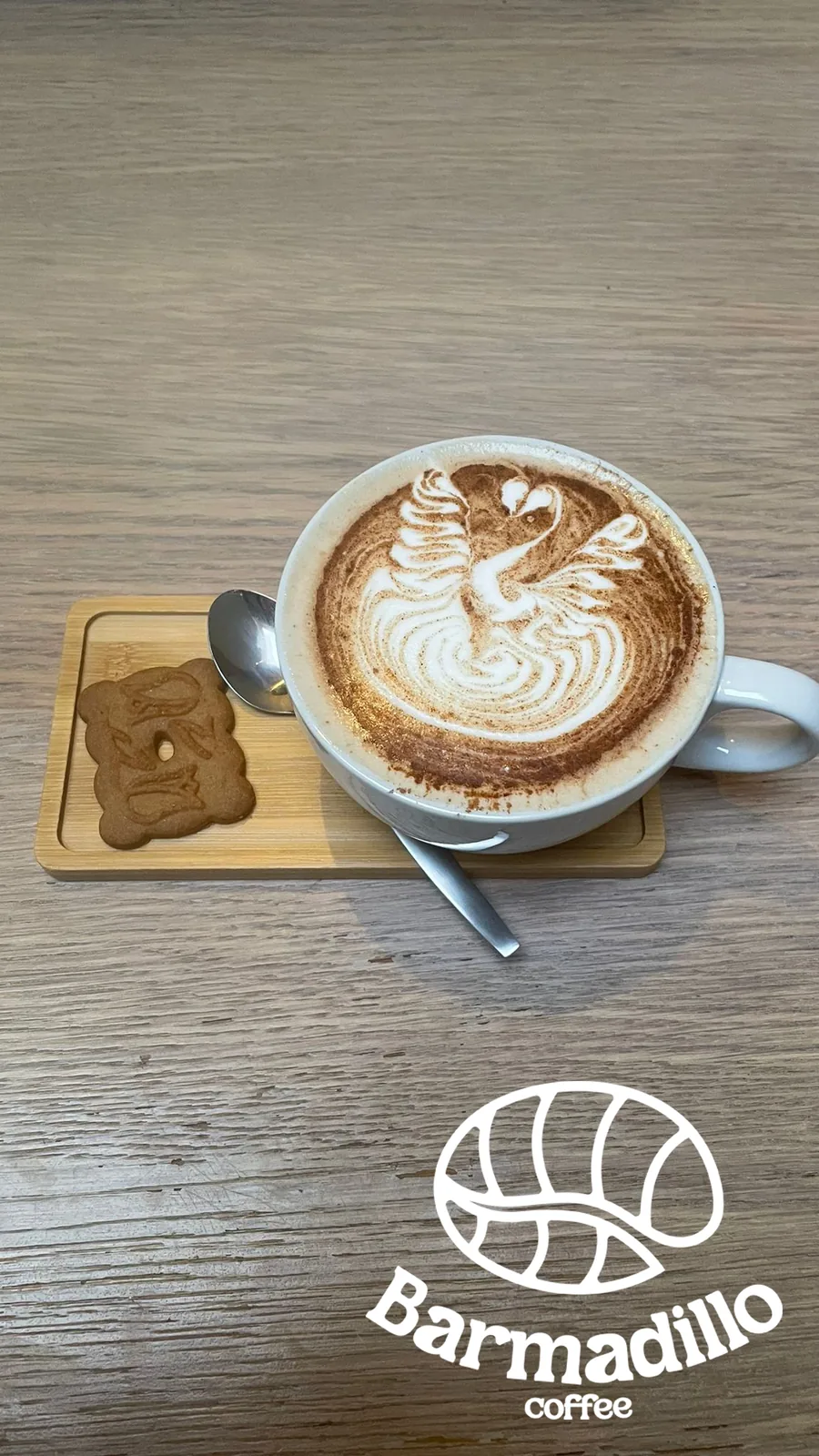
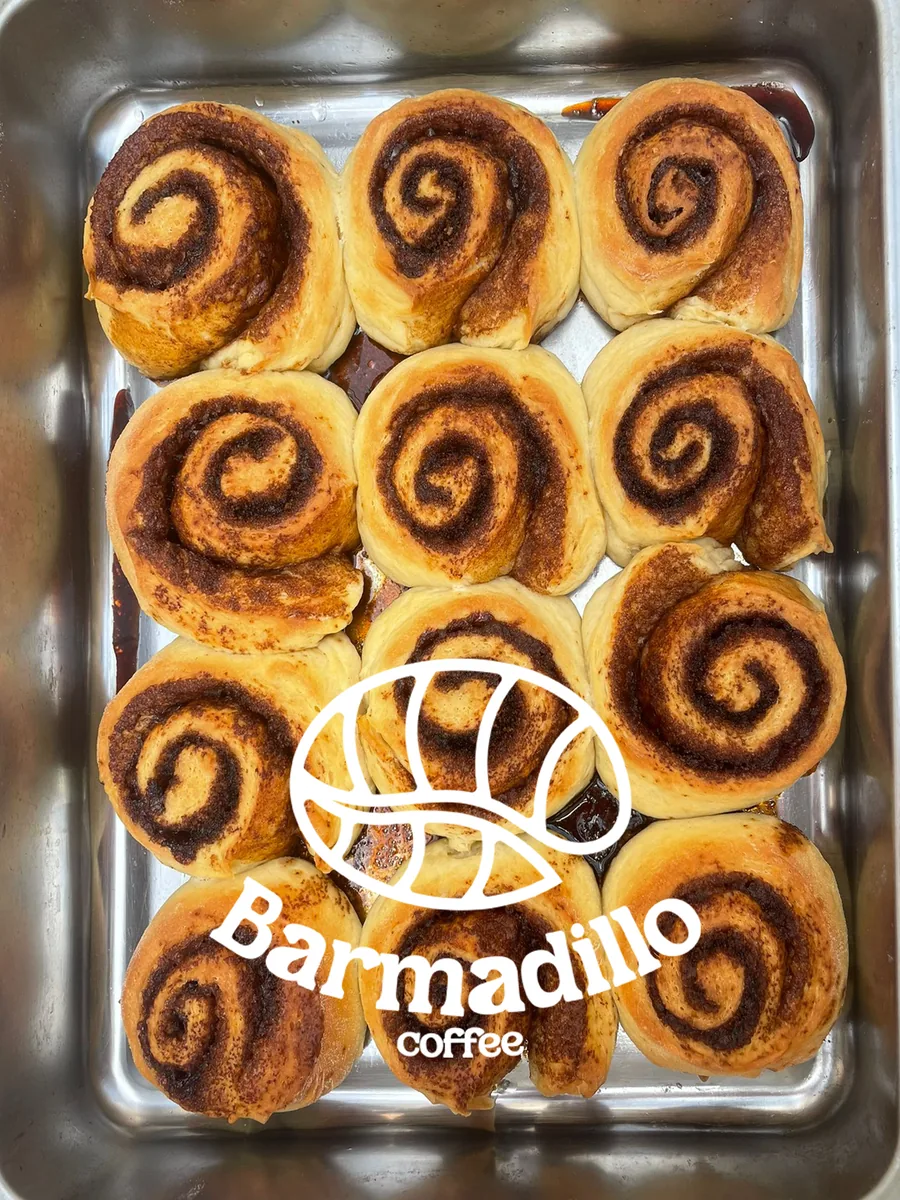
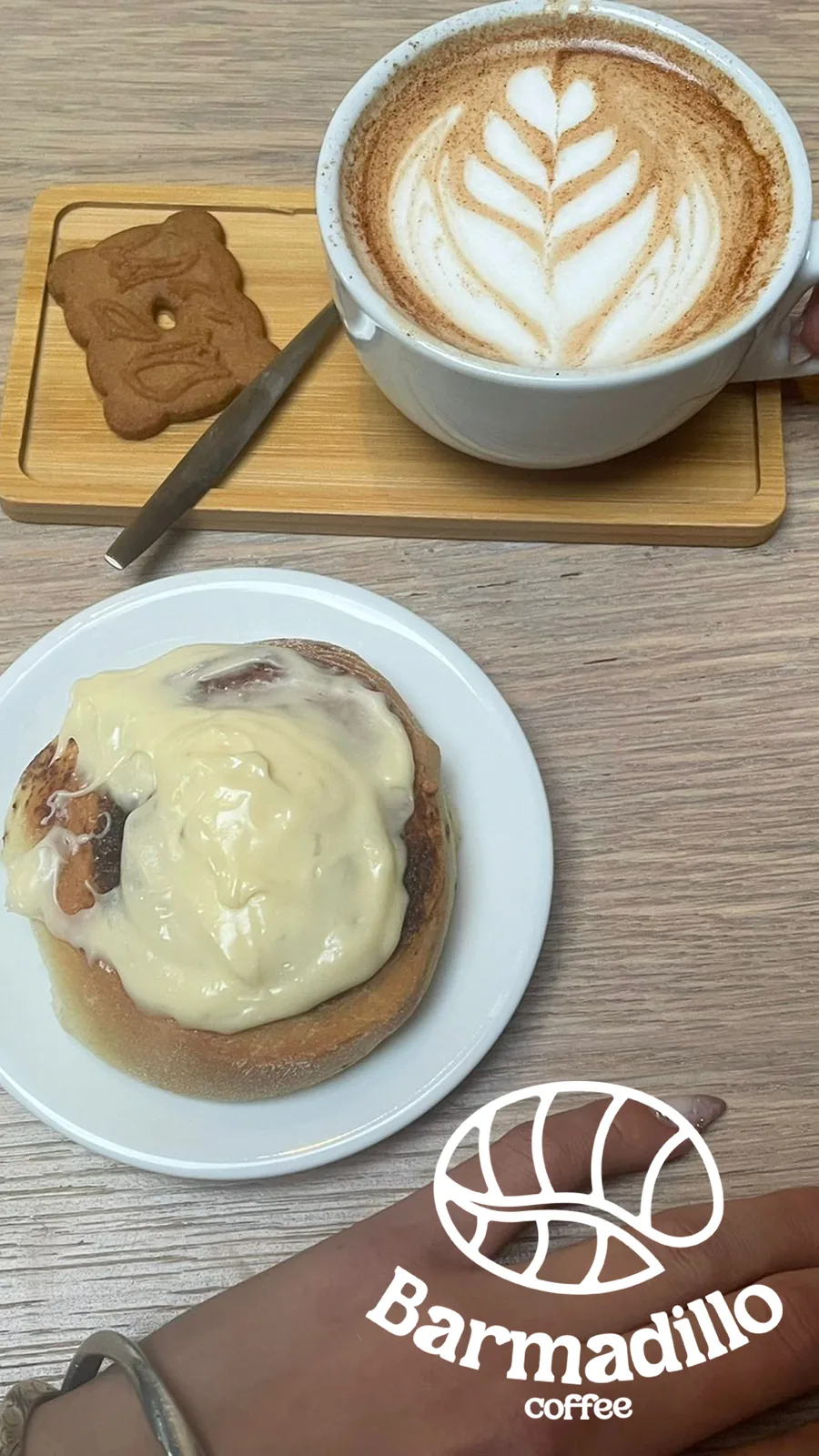
Instagram post: the espresso machine set up behind the bar, 'Prep = done'. Instagram post: a cappuccino with a swan in latte art, on a wooden board. Instagram post: a tray of freshly baked cinnamon rolls. Instagram post: a latte and an iced cinnamon roll on a wooden table.

24 April

The day itself

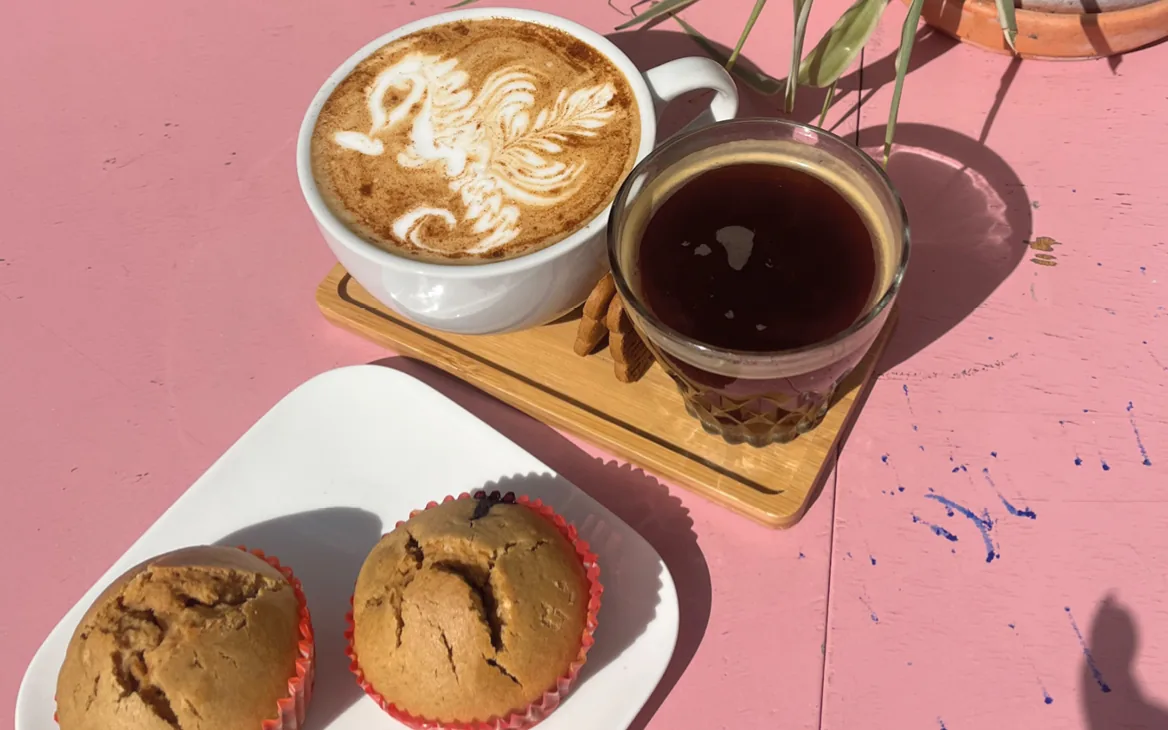
Arne and a friend behind the bar, pointing at the logo on the espresso machine. A full terrace in the sun at Fameus, people talking around the tables. A cappuccino and a black coffee on a wooden board, with two muffins, on a pink table.

Barmadillo is my own brand. Logo, animation, menu, poster, posts and sign by Arne Jonckheere; the identity mock-up is built on a free mock-up template. Hosted at Fameus, Antwerp.

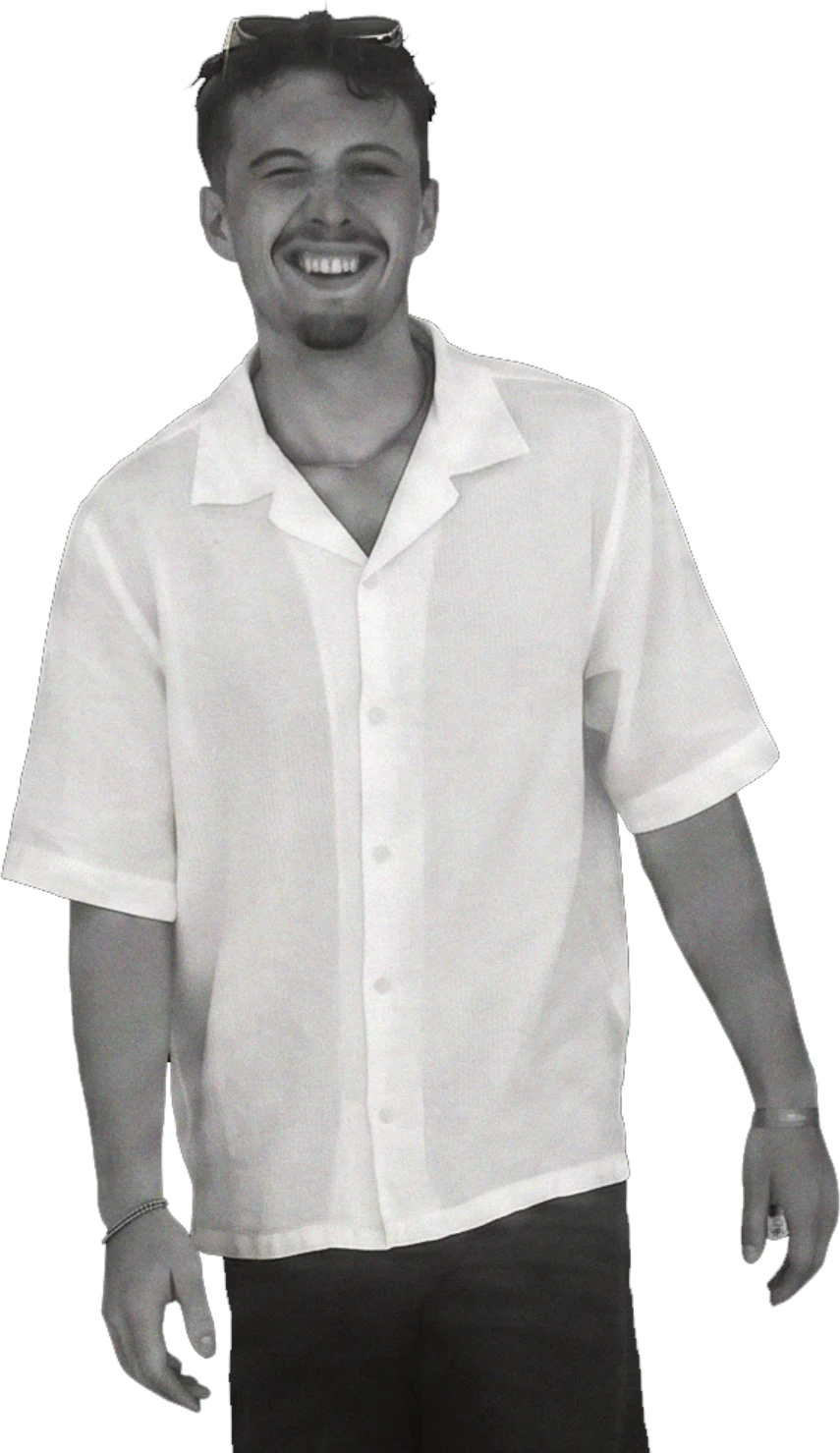
Portrait of Arne Jonckheere, smiling, in a white shirt.

About

I am a junior industrial product designer with a Master in Product Development from the University of Antwerp.

I like the whole cycle, from concept to prototype and from CAD to fabrication, and I am happiest in the workshop. My own studio has several 3D printers and a desktop CNC, so an idea rarely stays on the screen for long. During a ten-week internship at ONAK Design / Foldboys I worked ideas out into designs that could be produced.

Download CV (PDF, Dutch)
Education
MSc Product Development, University of Antwerp, 2024–2026
BSc Product Development, 2021–2024
CAD & 3D
SolidWorks, Siemens NX, Fusion 360, Blender, Shapr3D
Rendering
KeyShot, SolidWorks Visualize
2D
Photoshop, Illustrator, InDesign, Procreate
Making
FDM and SLA printing, non-planar printing, CNC milling (VCarve), assembly and testing
Languages
Dutch (native), English (B2), French (basics)
Based in
Borsbeek, near Antwerp, Belgium