

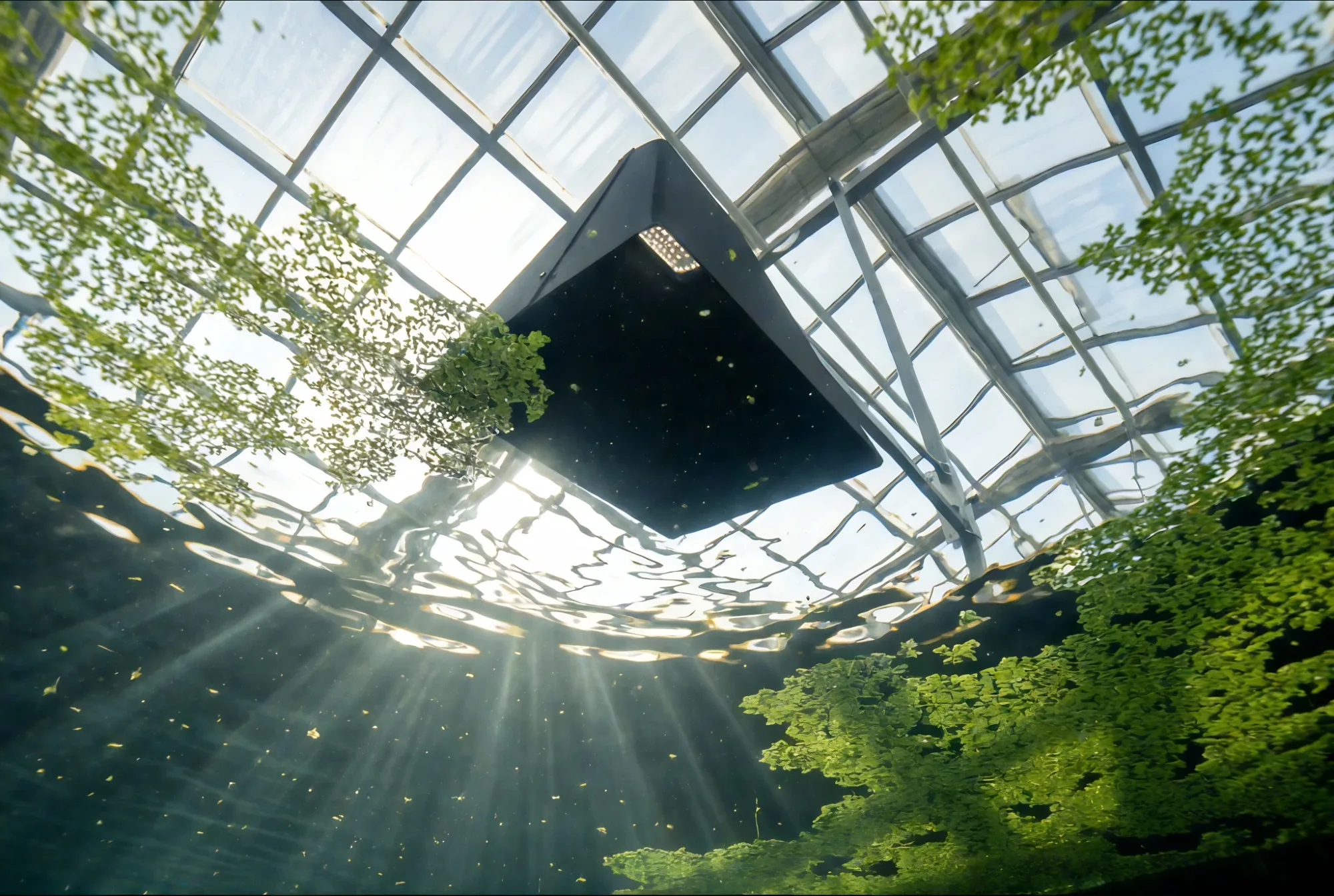
LemnaSense
A sensor that tells duckweed growers when to harvest, without touching the crop.
- Year
- 2025–2026
- Context
- Master's thesis, University of Antwerp
- Team
- Solo, one full year
- Scope
- Field research, concept, testing, CAD, app design
Growers harvest by eye
Since 2025, duckweed is approved in the EU as a novel food: a fast-growing, protein-rich crop. In Flemish greenhouses it yields far less than it could.
The plant doubles its biomass in one to three days, so timing is everything. Harvest too early and light reaches the water, and algae take over. Harvest too late and the layer gets too dense to keep growing. Today growers judge that moment visually or by the calendar.


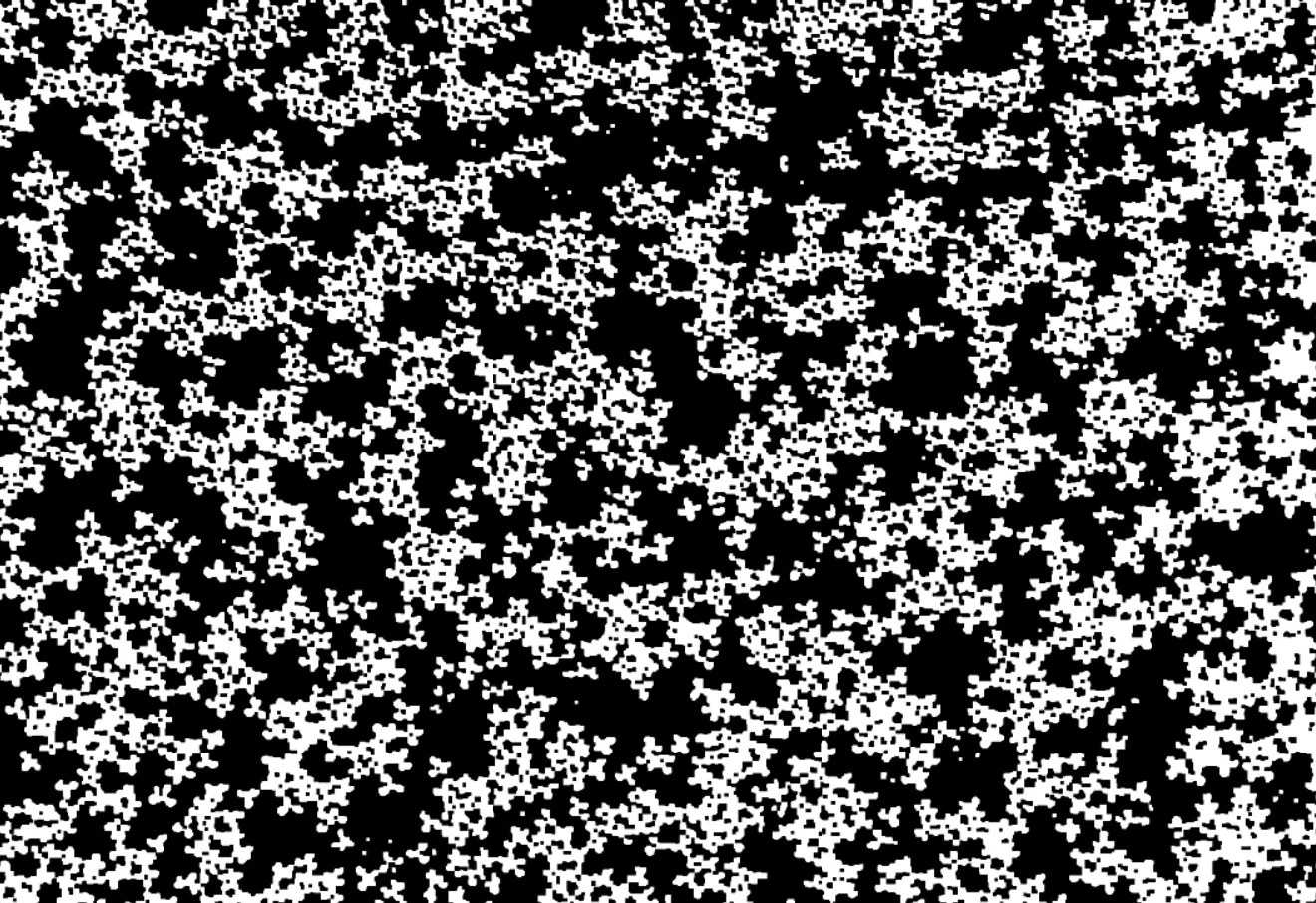
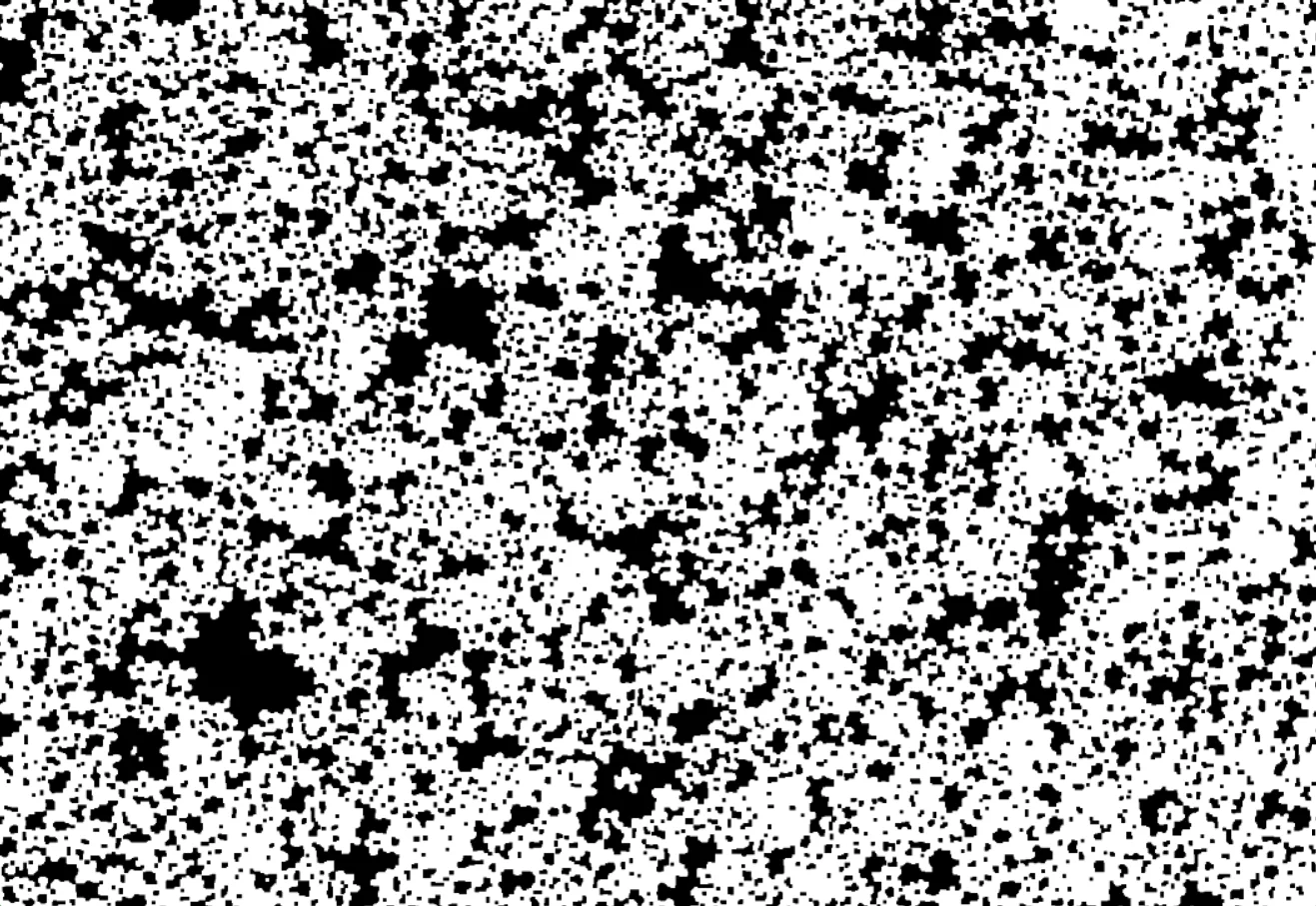 Analysis window, 20 × 30 cm. Day 1
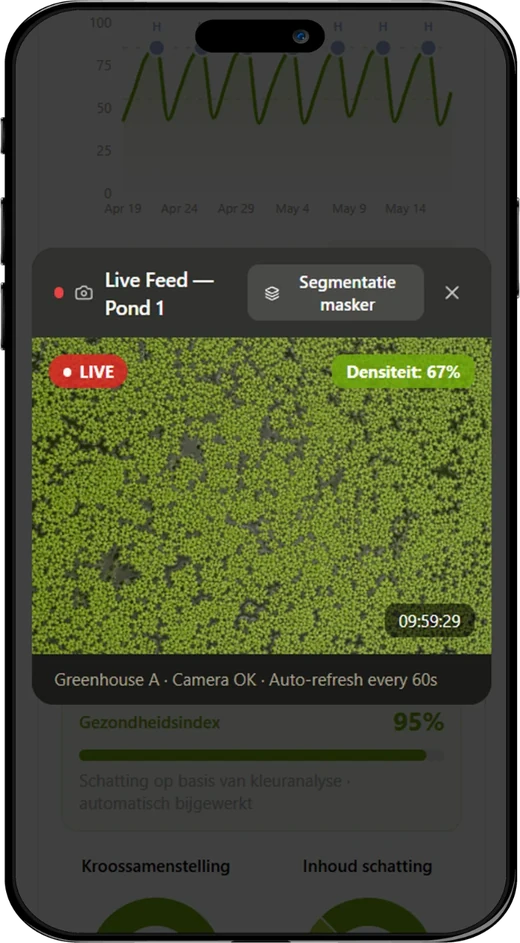
Every five minutes the LEDs switch on and the camera takes one picture of the pond.
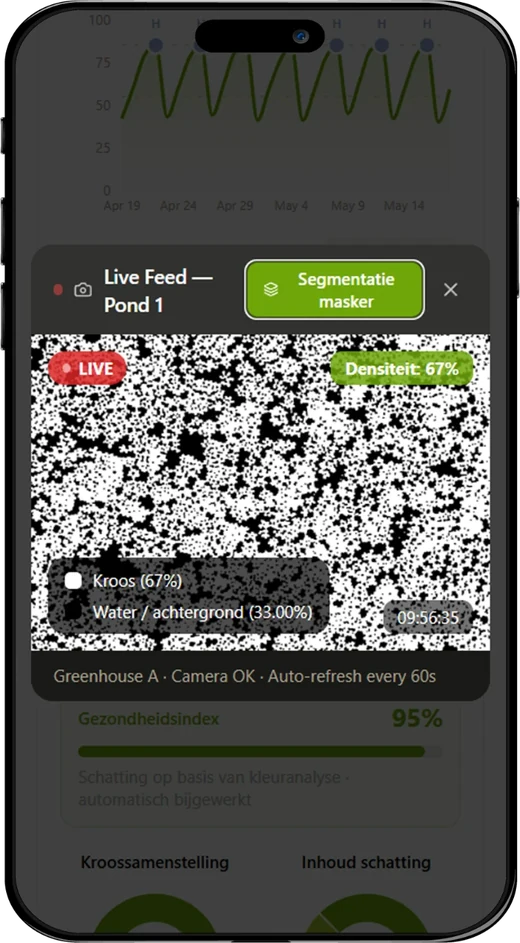
A Python script converts it to HSV and classifies every pixel: duckweed or water.
37.43 % covered. Still early in the growth zone, so no harvest needed yet.
One day later: 64.35 %, just under the top of the zone at 66.3 %.
The average of the last 12 measurements is in the zone, so the grower gets a message: harvest today.
How the design was decided
Research in the field
Interviews and visits with Inagro, VIVES and the pilot grower Azaleakwekerij Van De Steene gave six possible innovation directions. The experts agreed on one priority: an objective way to measure density.
Six concepts, one winner
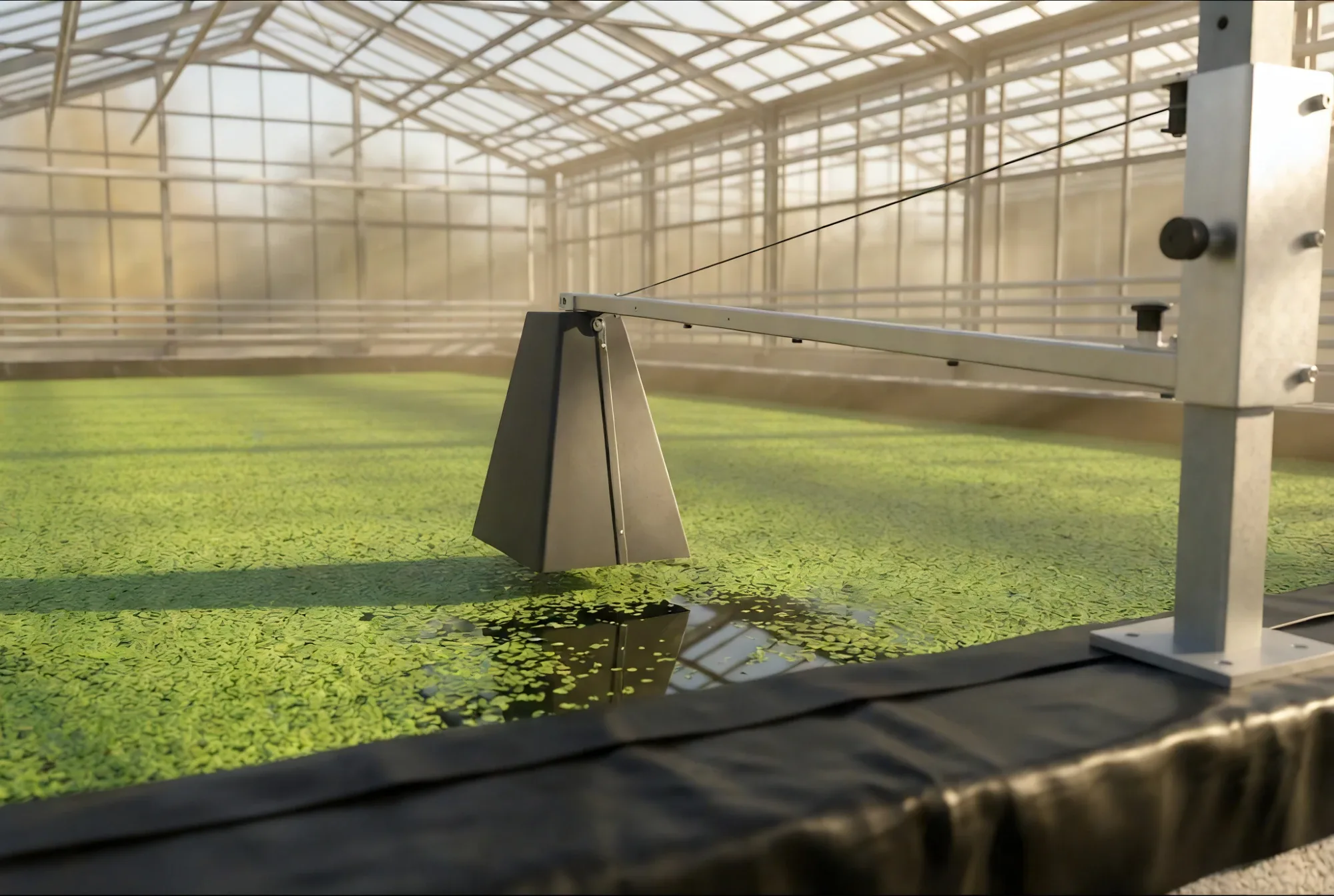
Light transmission buoys, weighing baskets, a camera on a moving arm and more, scored on biology, feasibility, cost, maintenance, robustness and scale. A static camera on a swing arm scored highest. The growers asked for no moving mechanics in a humid greenhouse.
Tested before it was drawn
Split peas first, then real duckweed to calibrate coverage against biomass. Camera heights of 20, 30 and 40 cm under three light settings. Sunlight under the shield at a worst-case solar altitude of 29.8°, with a 28 mm gap above the water.
Technical design
Three parts, one system
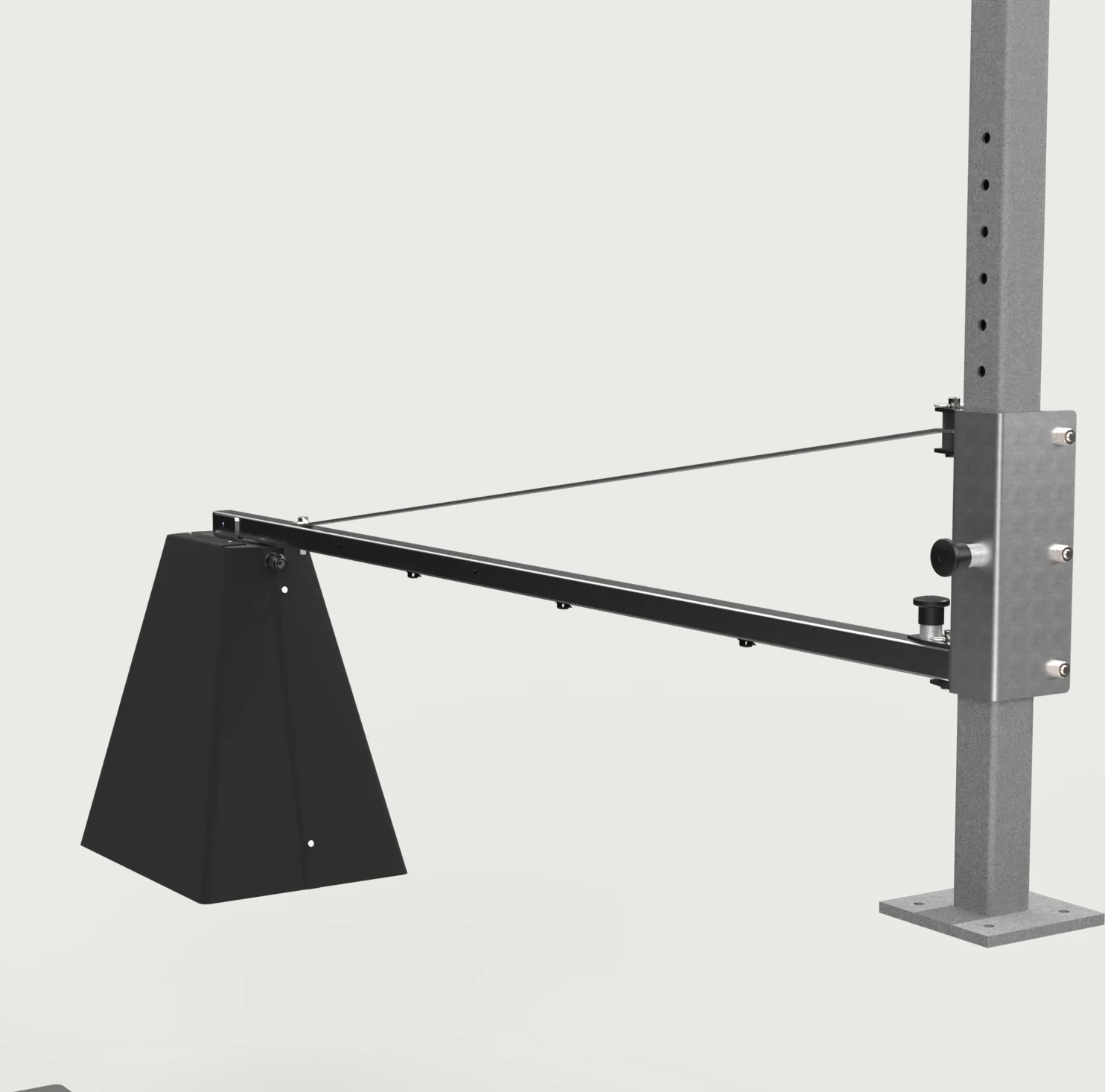
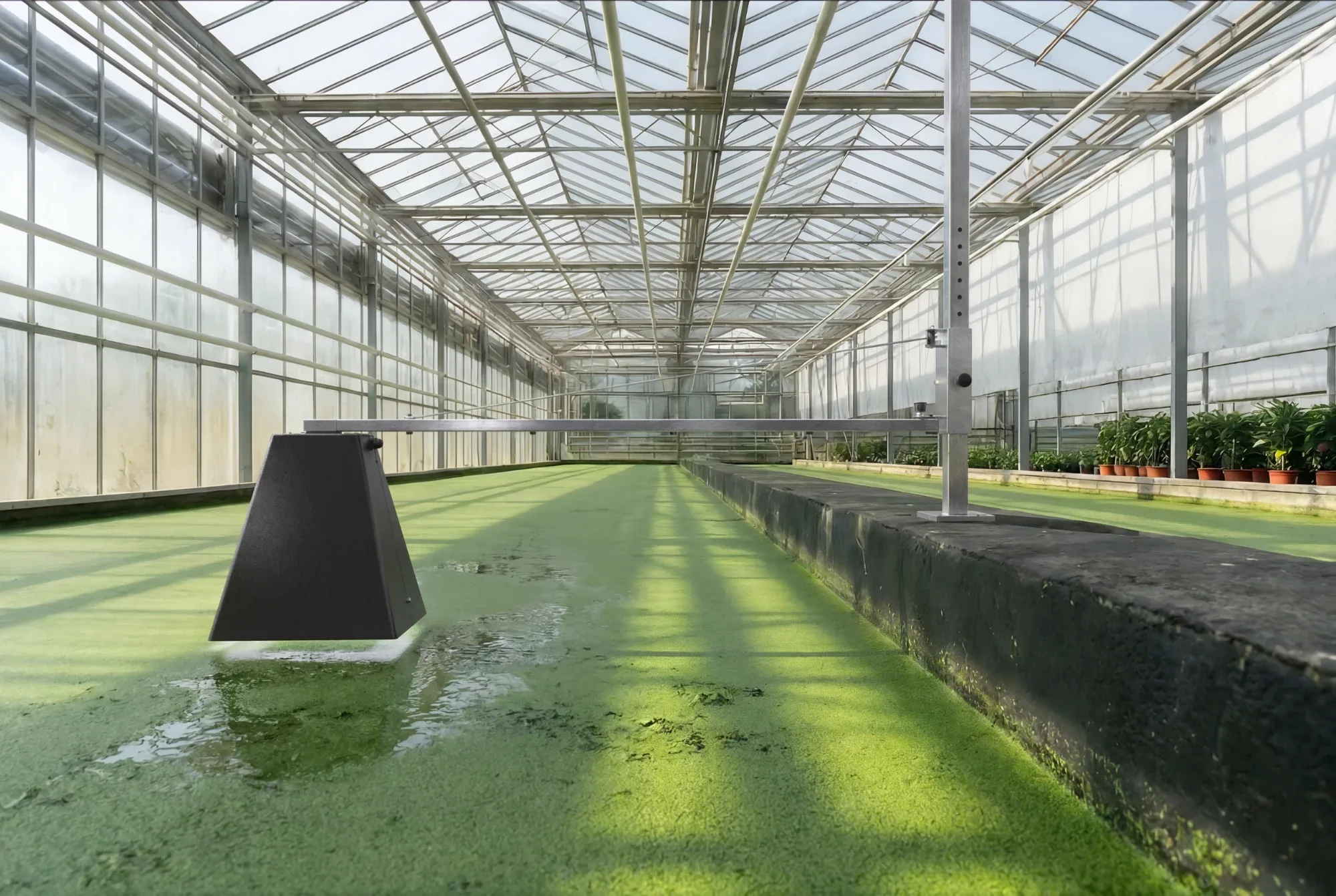
- Sensor unitCamera, LED ring and computer in a printed housing, sealed against a wet greenhouse.
- Light shieldTwo folded halves that keep sun and reflections out of the picture.
- Support structureAn aluminium swing arm on a post: 1.5 m of reach, adjustable in height, turned aside for maintenance.
01 · Sensor unit
Inside the unit
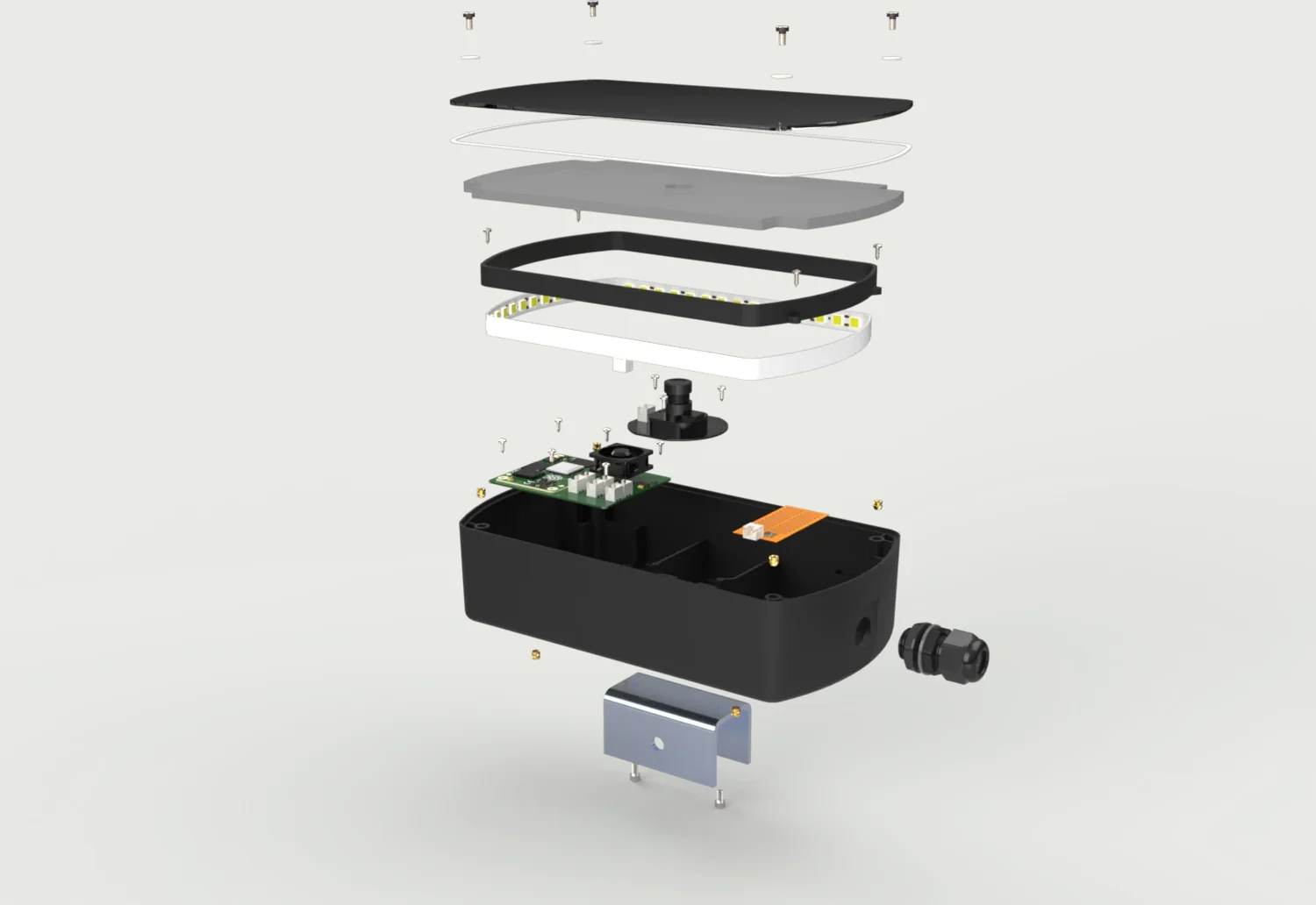
Matte black ASA
ASA withstands the heat and UV of a greenhouse where PLA would not. Matte black absorbs stray light from the LEDs, which keeps reflections out of the camera image.
Sealed to IP65
A printed TPU seal between housing and cover, nylon washers under the bolts and an M16 cable gland. Built for splashing water, not for going under.
Kept above dew point
The air in the greenhouse is at 60–95 % humidity. A PTC heater and a fan keep the camera from fogging.
Made to be opened again
M3 heat-set inserts give the printed housing metal threads that survive repeated assembly.
Four prototypes to get the light right
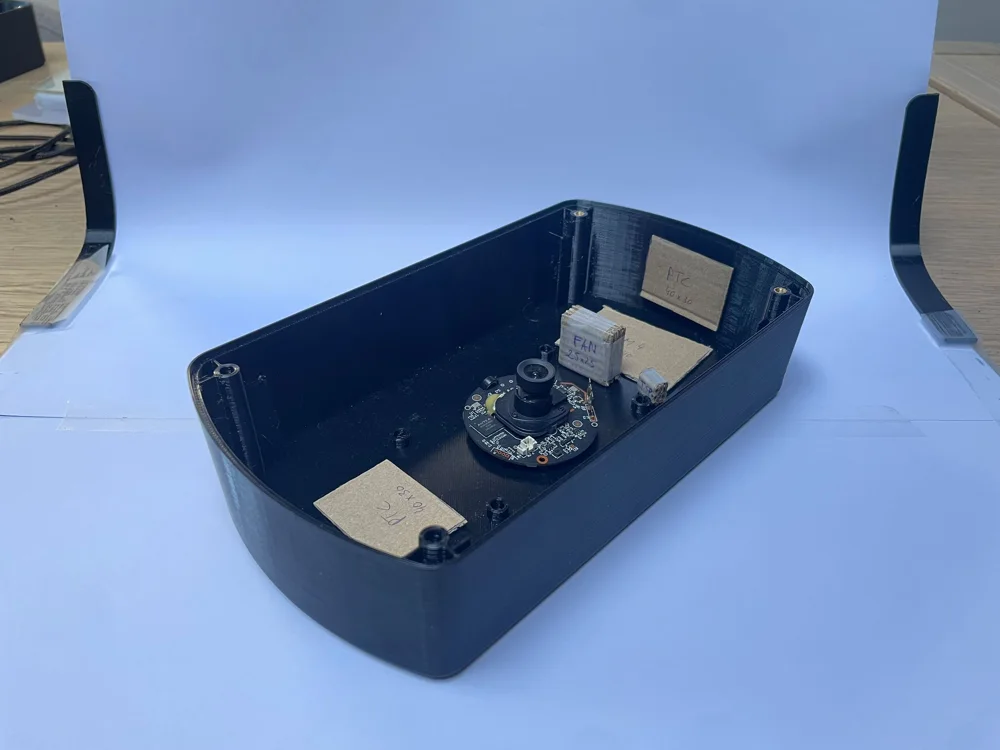
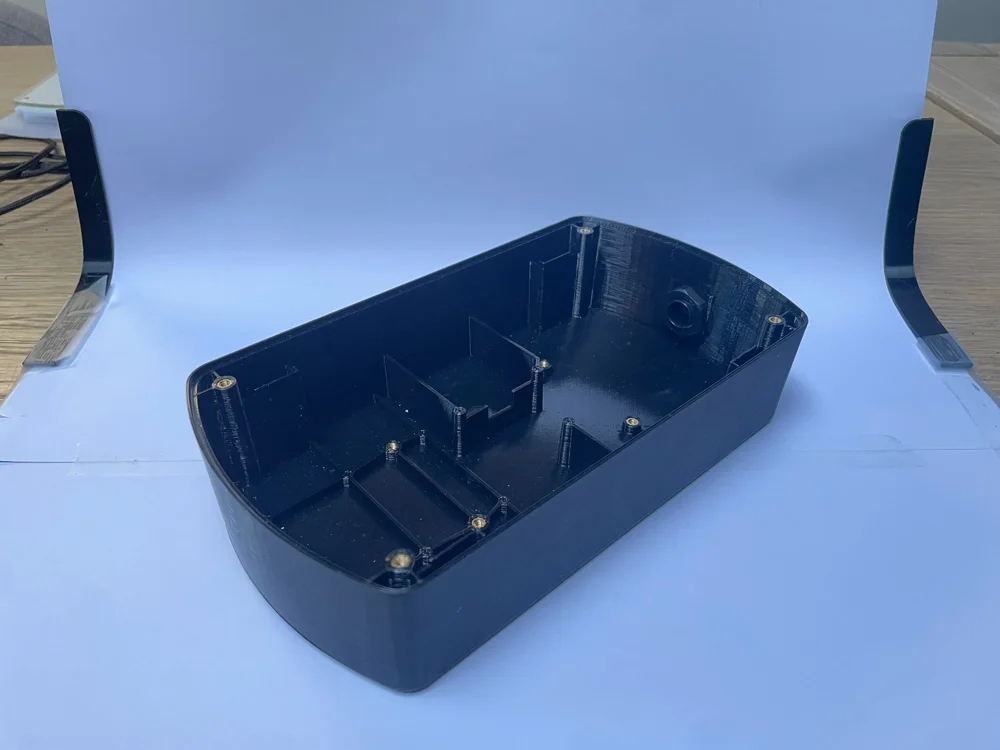
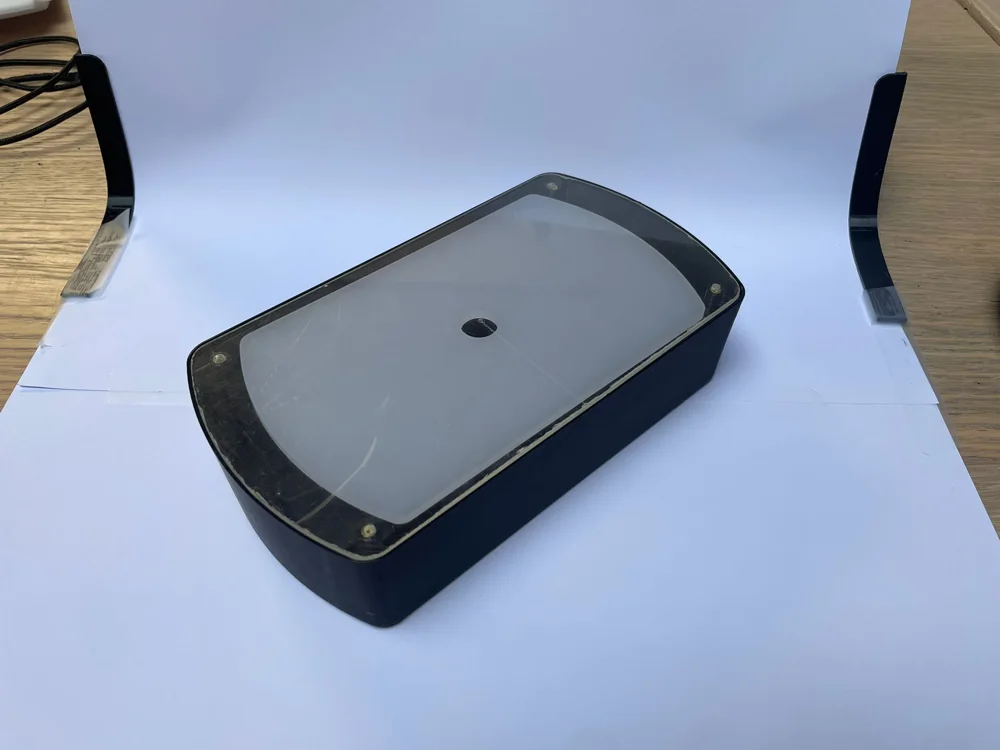
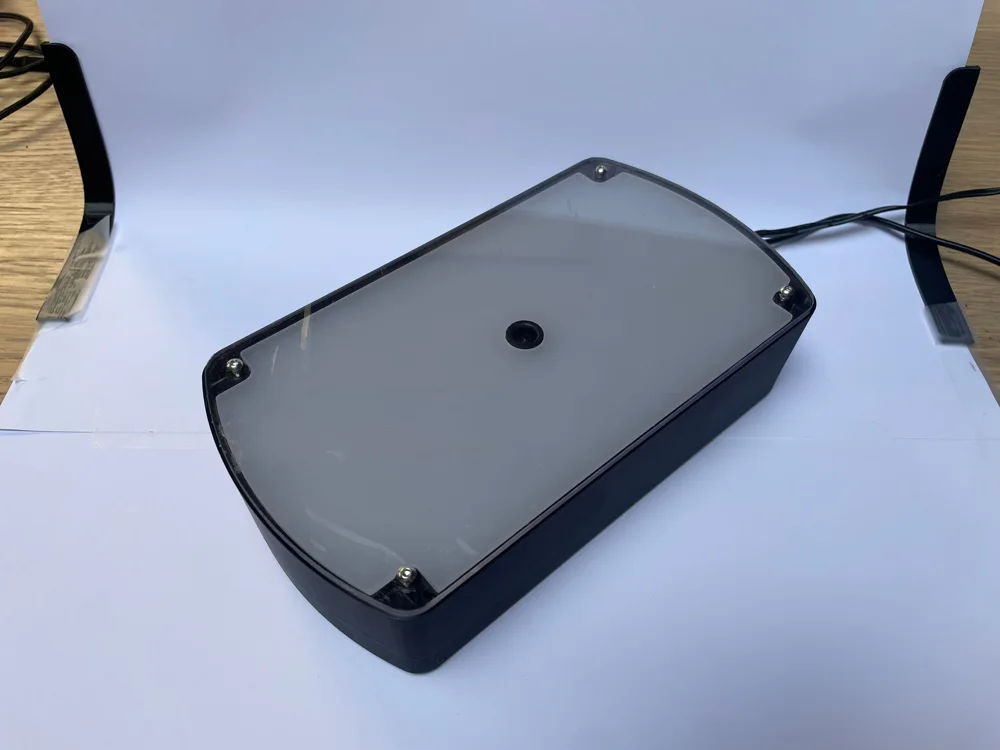
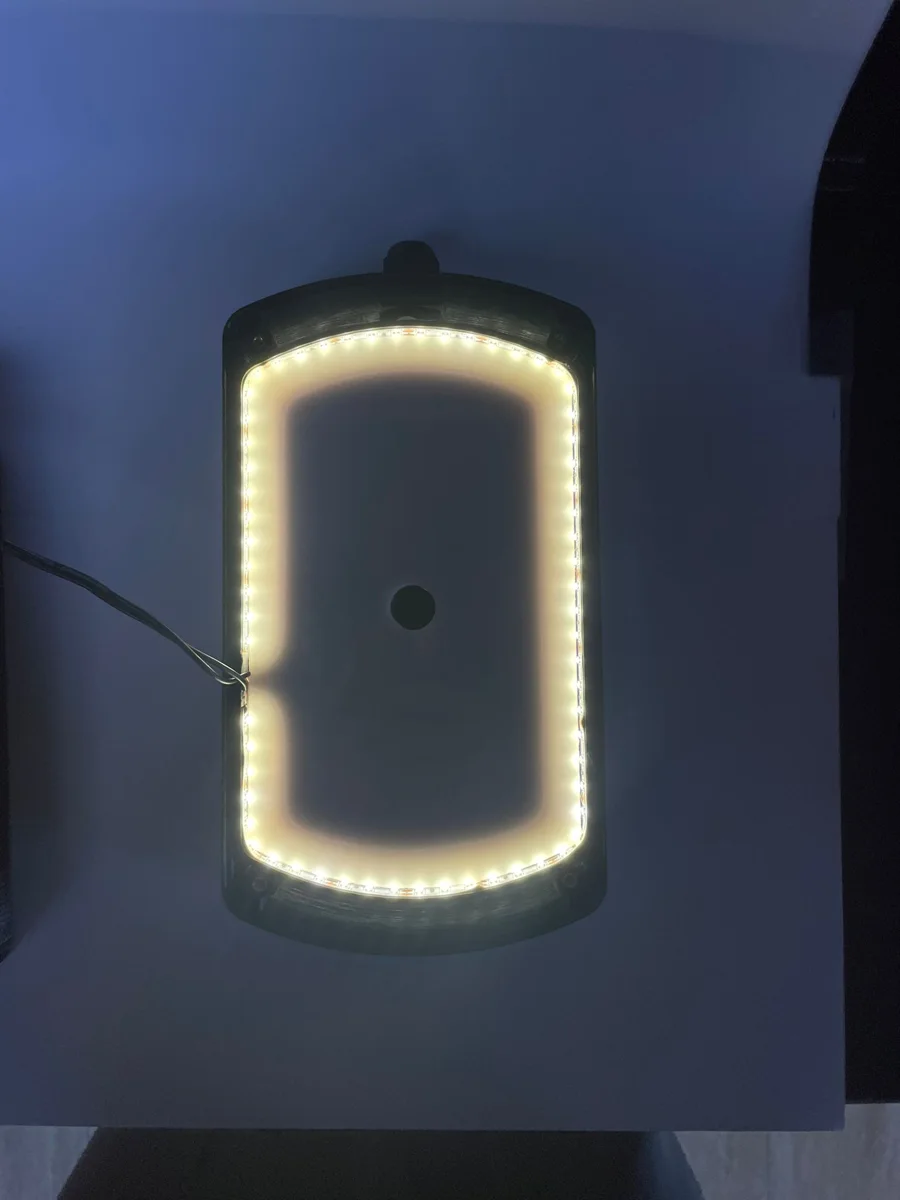
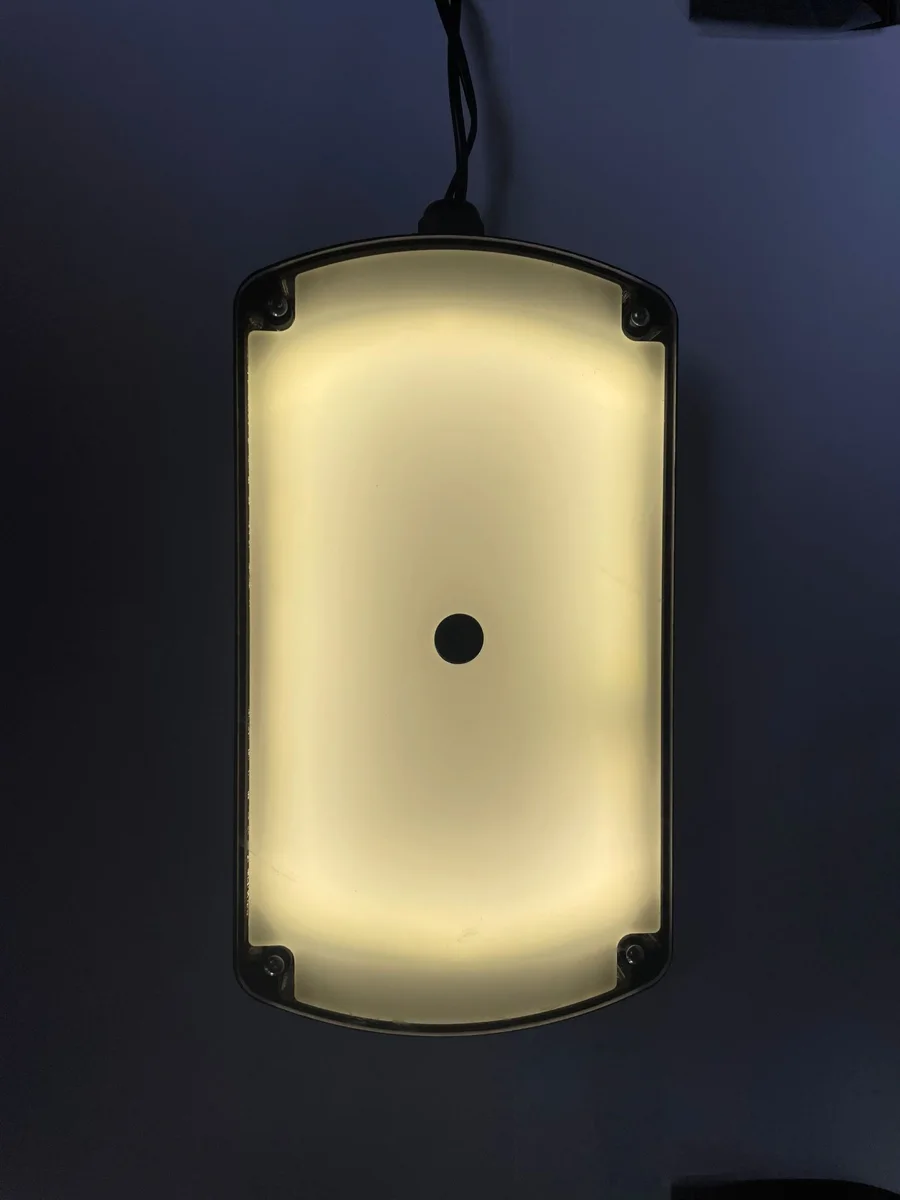
Lit from the edge, the light reached only 20 mm into the diffuser. With the strip 15 mm below it the whole surface glows, and the camera sees an evenly lit pond.
Made in small series
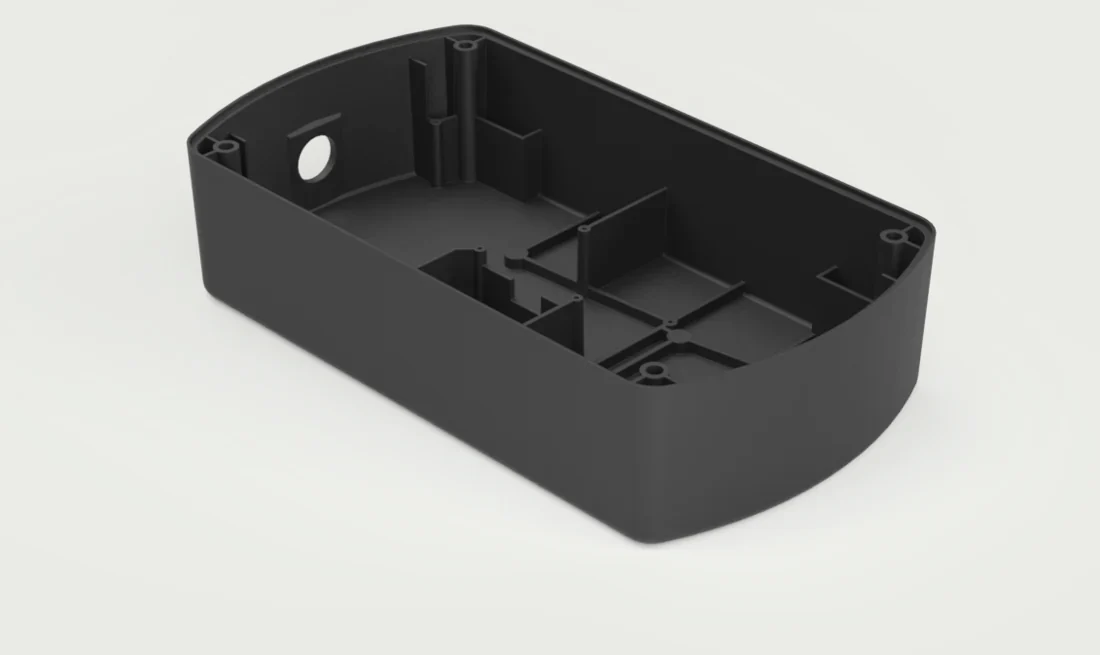
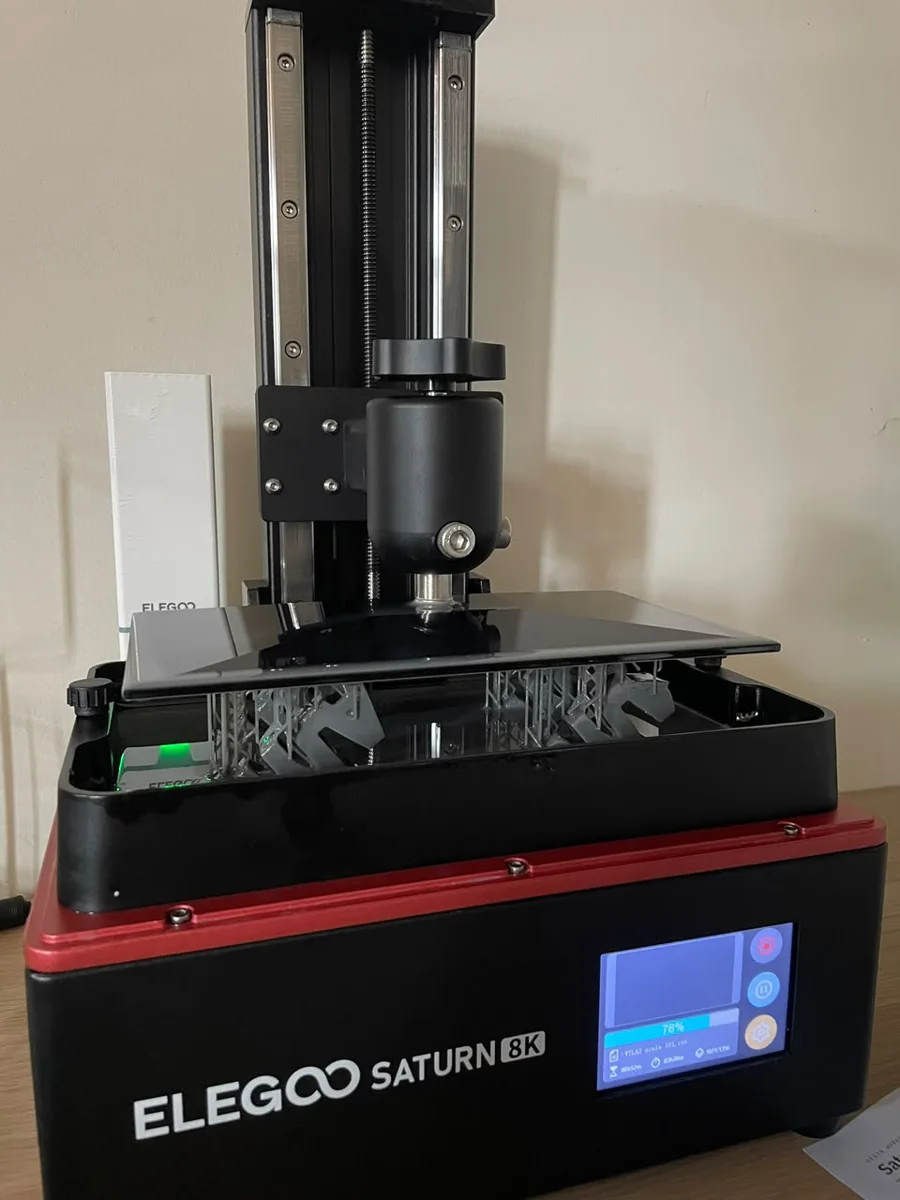
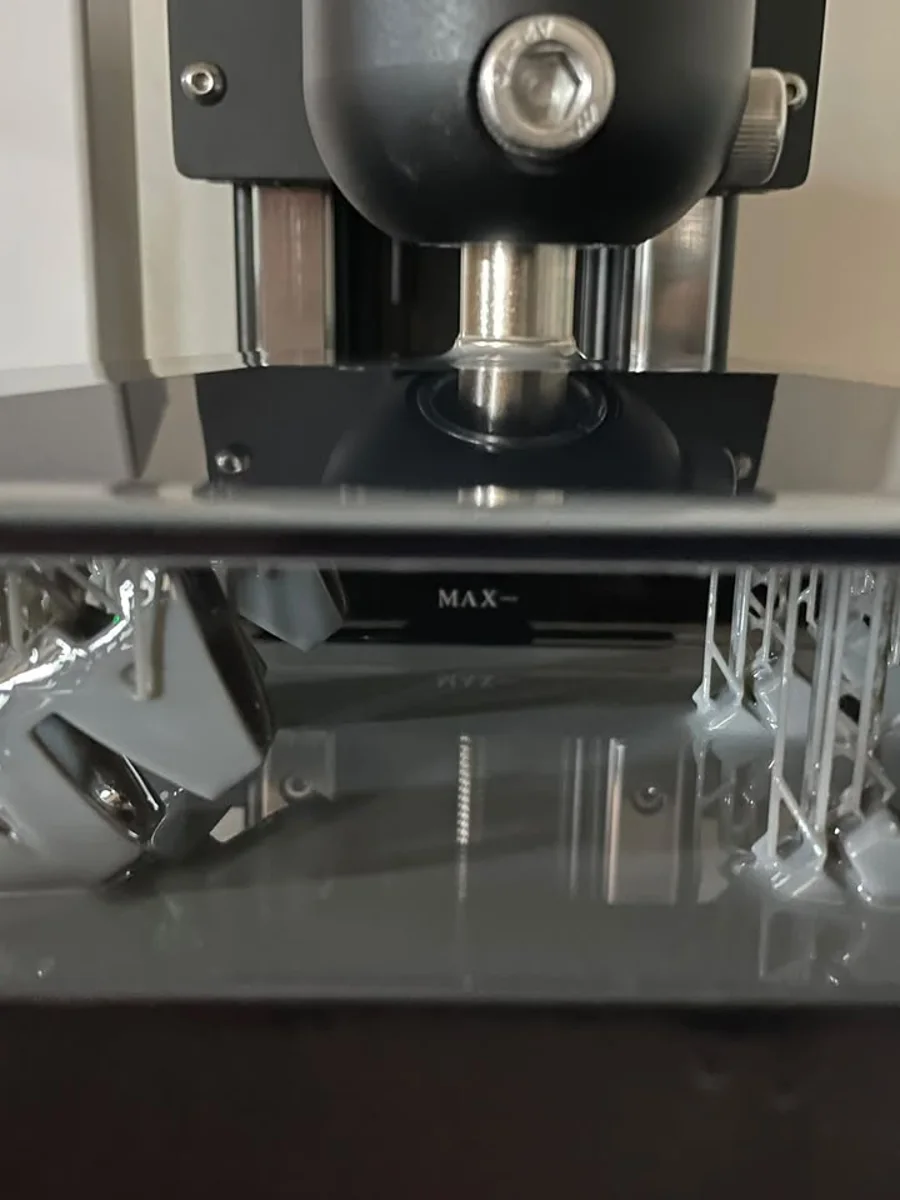
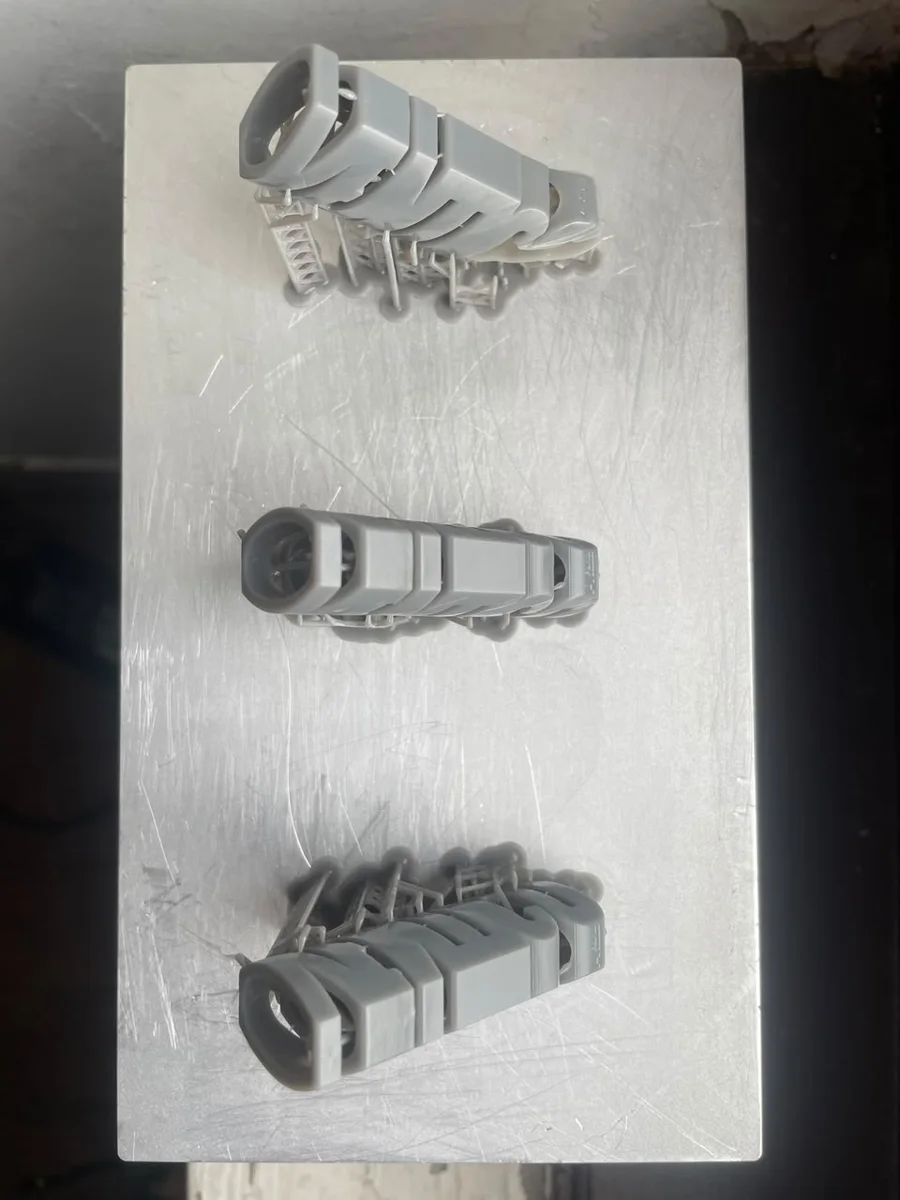
3D printing
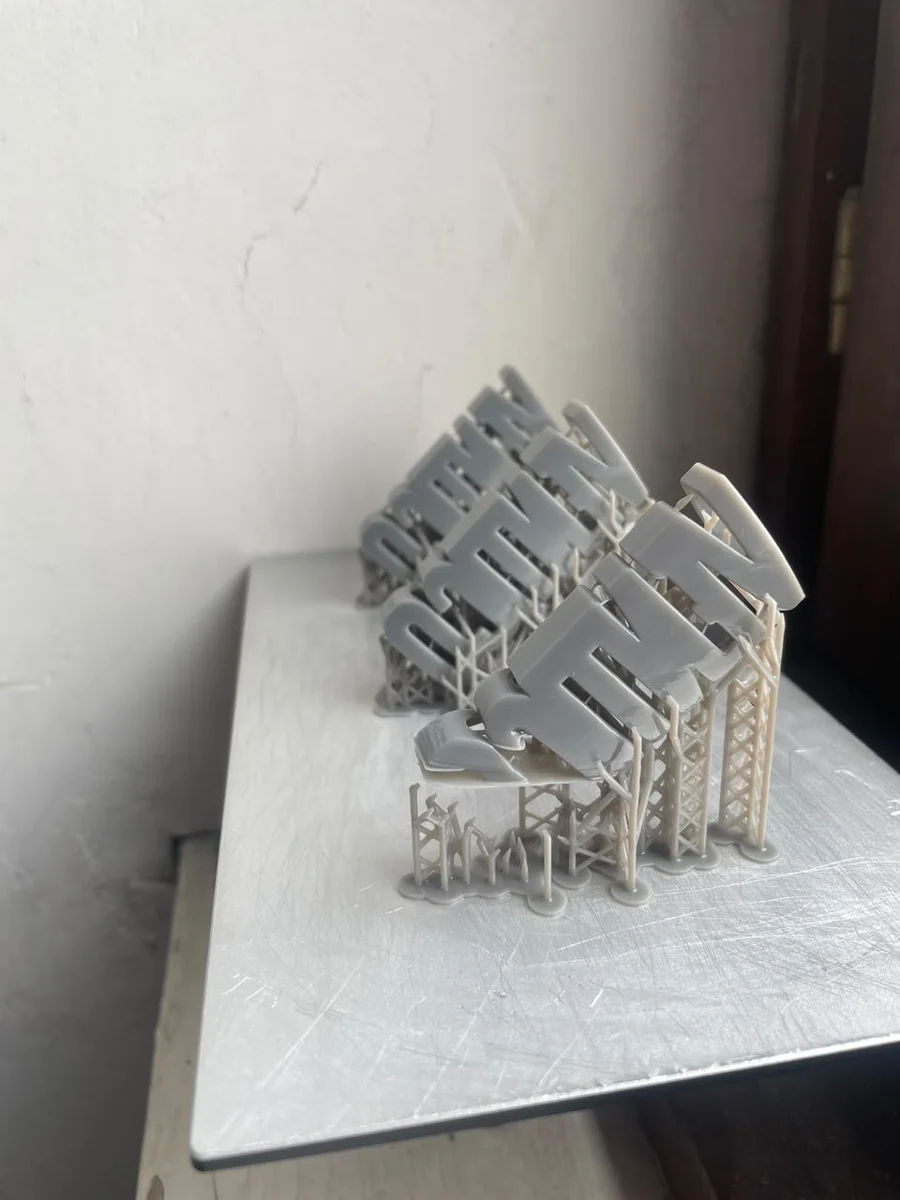
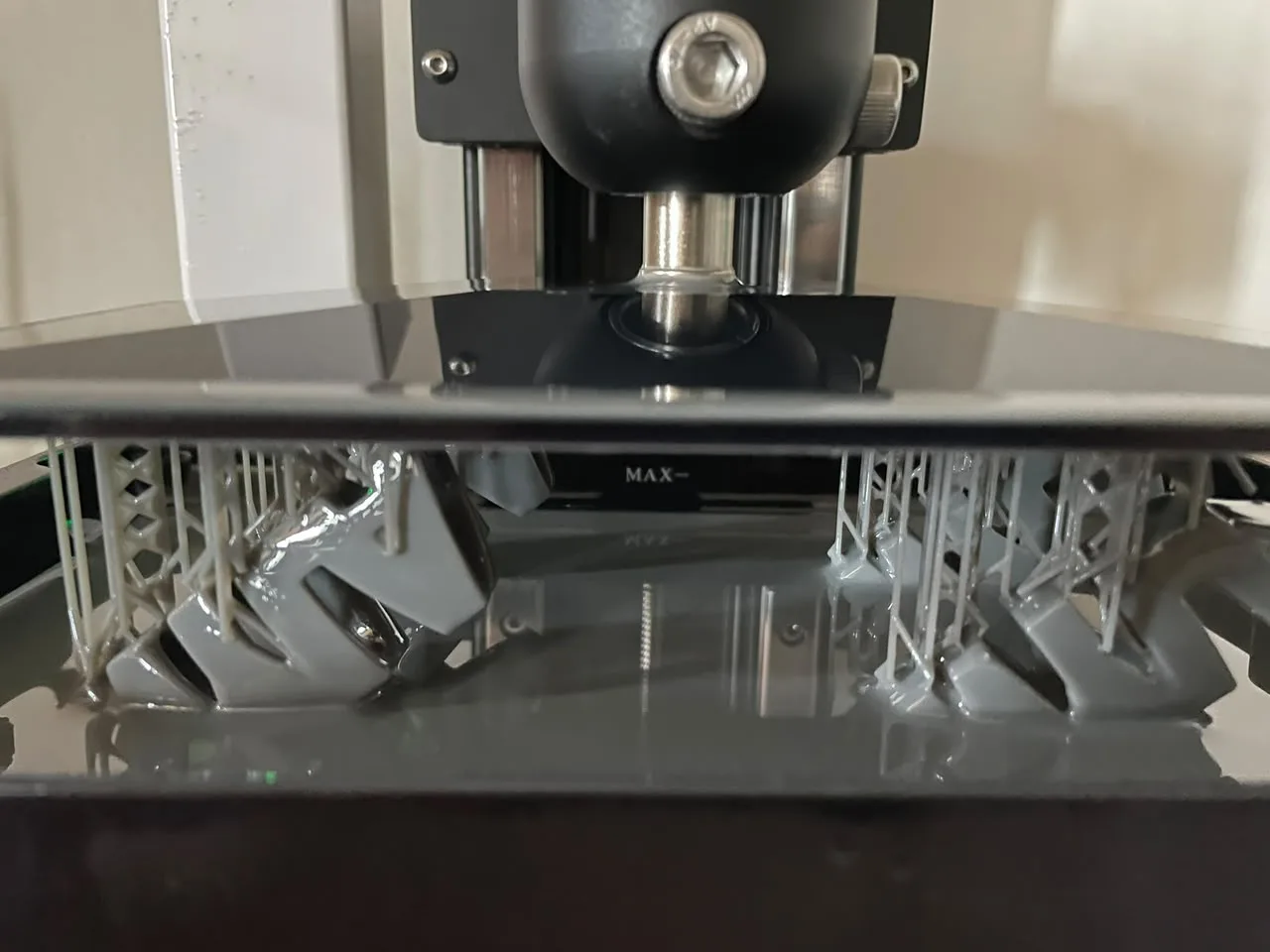
Housing, LED ring holder and seal are printed. The housing takes 7 h 46 min and 184 g of ASA. A 0.6 mm nozzle at 0.2 mm layers gives thicker lines that fuse better, for a tighter wall.
Laser cutting
The clear cover is 2 mm cast acrylic, the diffuser 5 mm opal acrylic. Cutting them in-house on a CO₂ laser reduces the dependence on suppliers and speeds up iterations.
Nesting
Nested with Deepnest, 3 mm apart: 139 covers or 141 diffusers from one 3000 × 1500 mm sheet.
02 · Light shield
A shield in two folded halves
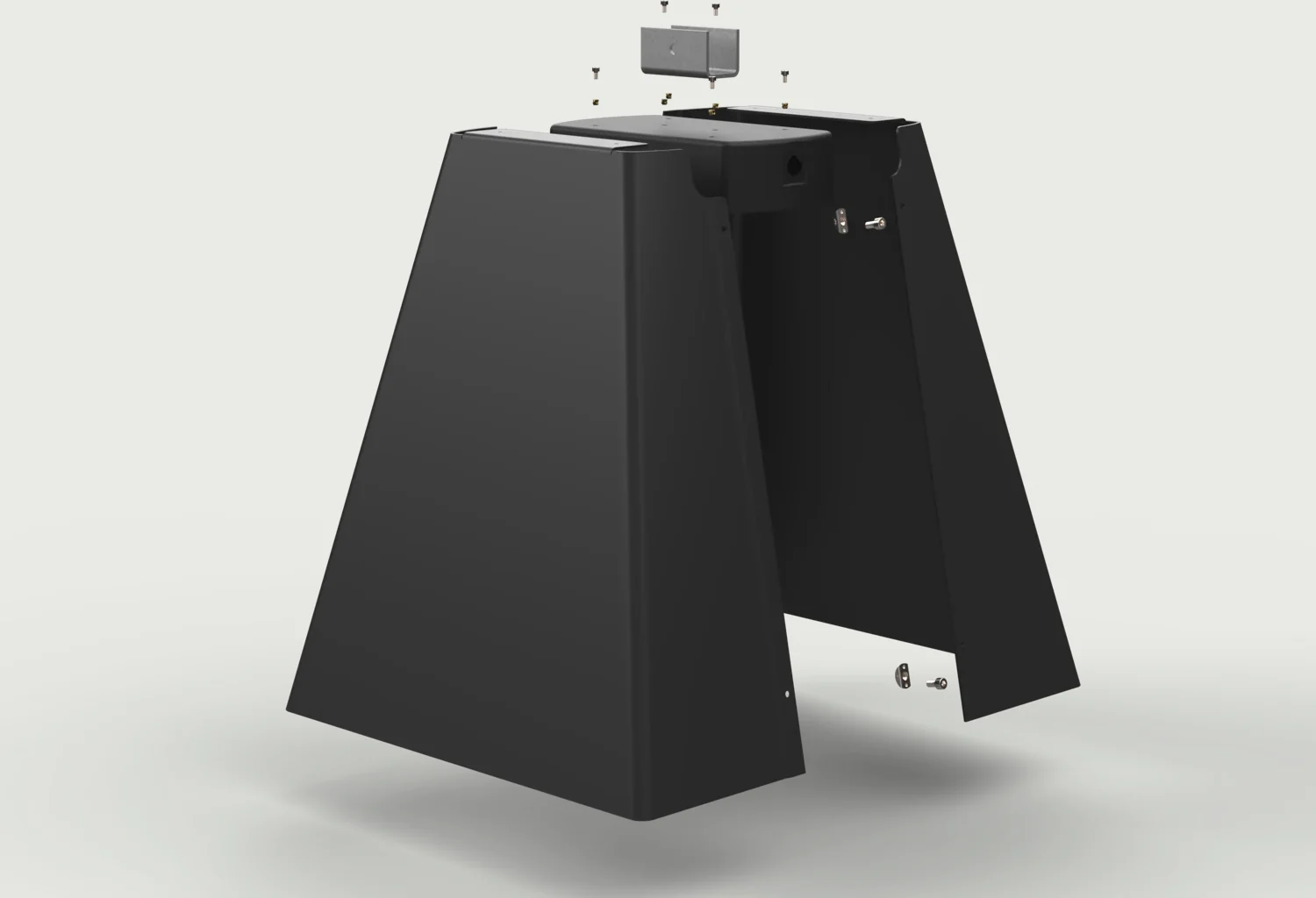
Sunlight, reflections and shadows change what the camera sees. A fixed shield takes them out of the measurement.
Cut flat, then folded
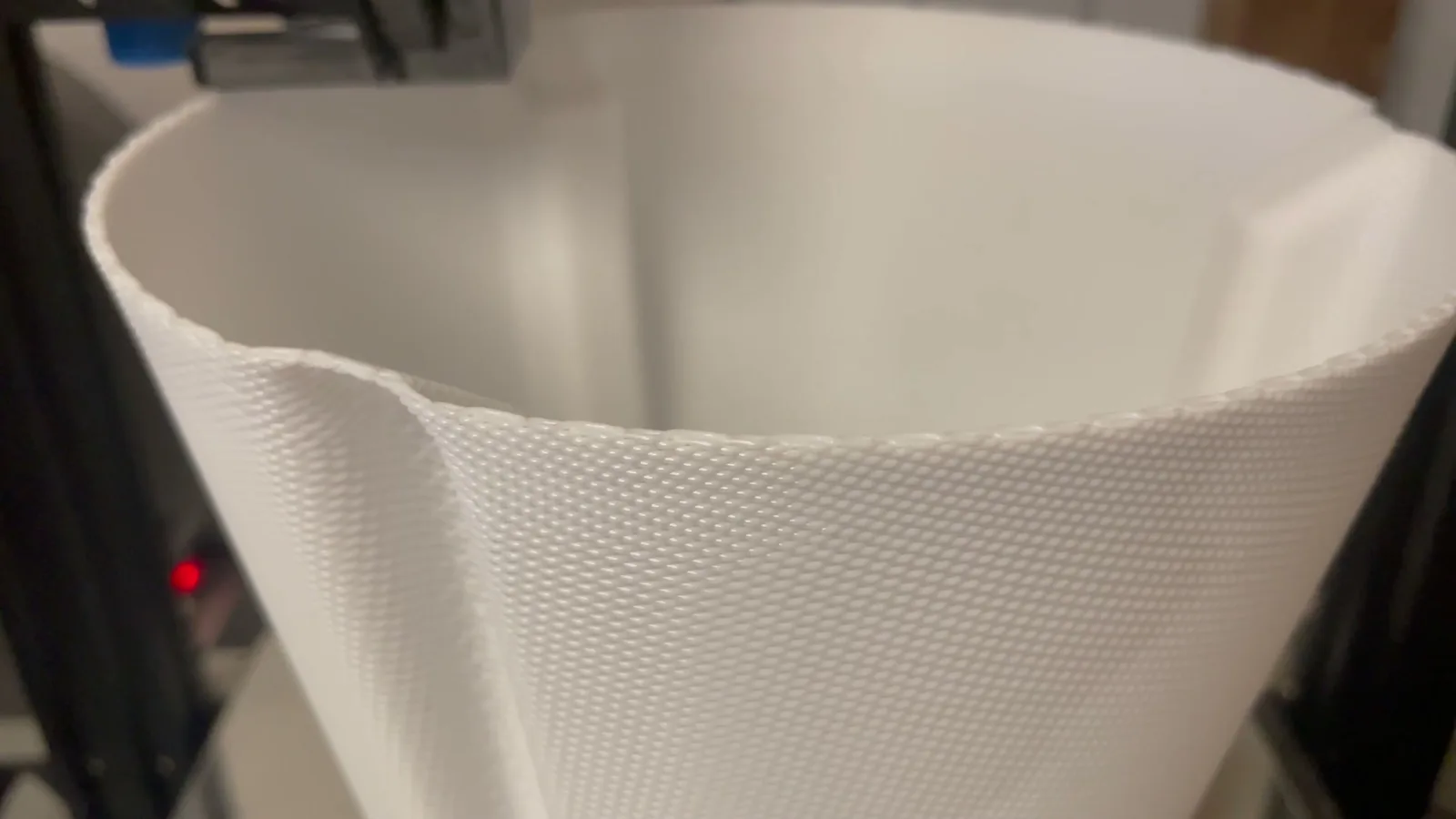
2 mm ASA/ABS sheet: the impact strength of ABS under a UV-resistant ASA layer, laser cut and folded with heat.
Two near-identical halves
Both halves use the same fold settings; only the cut-out for the cable gland differs. They overlap and bolt together, so they come off for maintenance.
Sized by testing
The opening at the bottom is 31 × 41 cm, the size found in the camera tests.
03 · Support structure
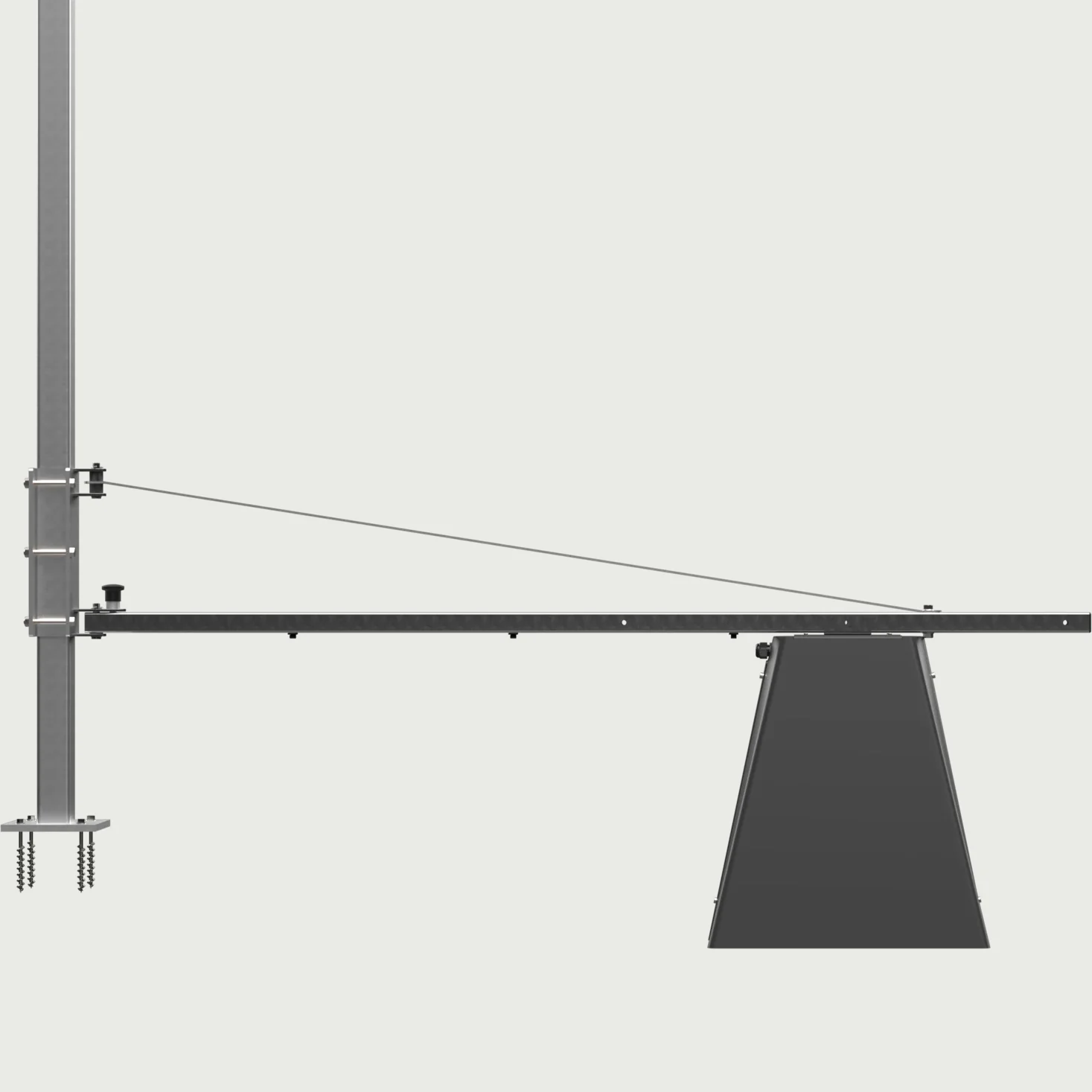
An arm one person can handle
Aluminium, for weight
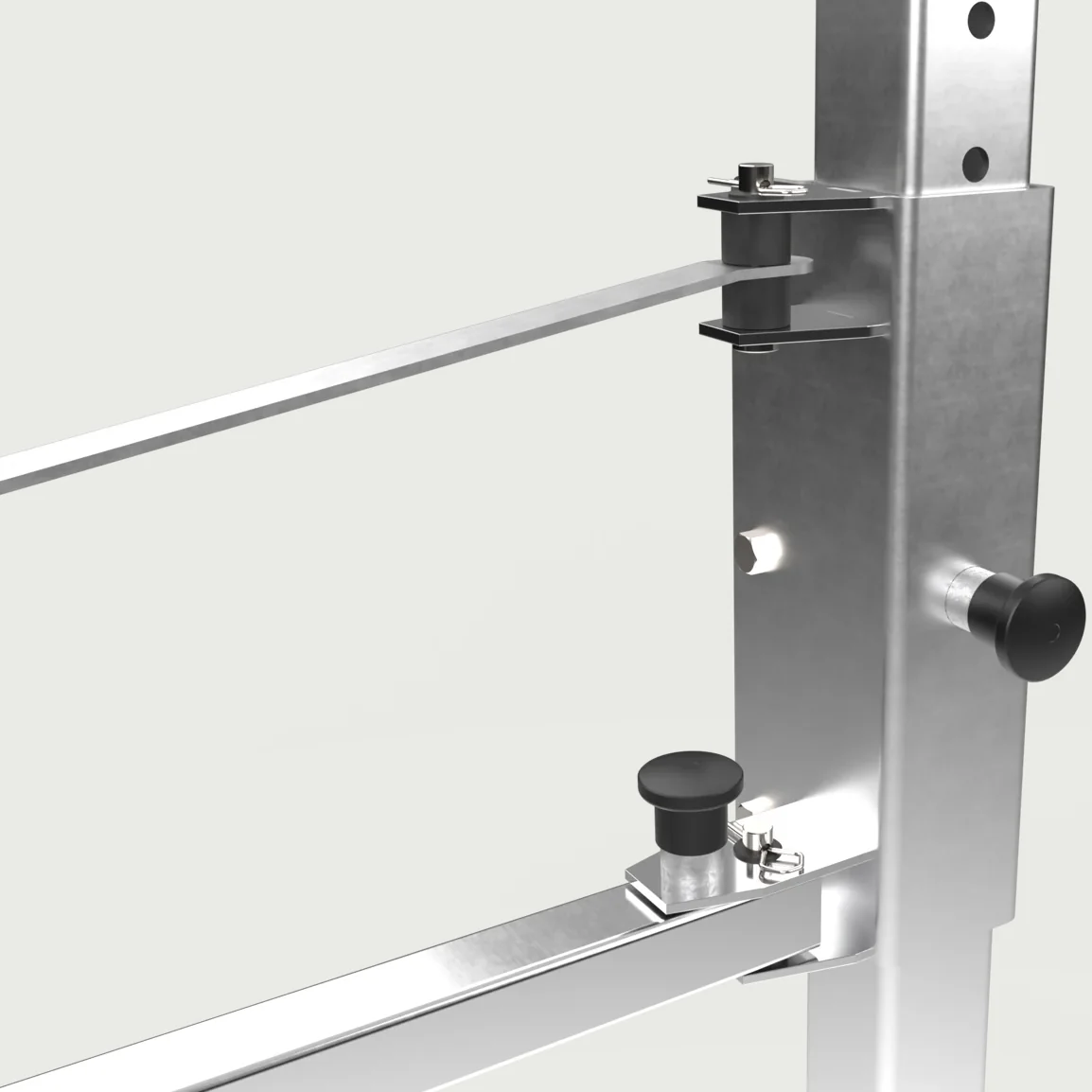
The arm is moved up and down by hand. Aluminium keeps it light and does not corrode in the humid air.
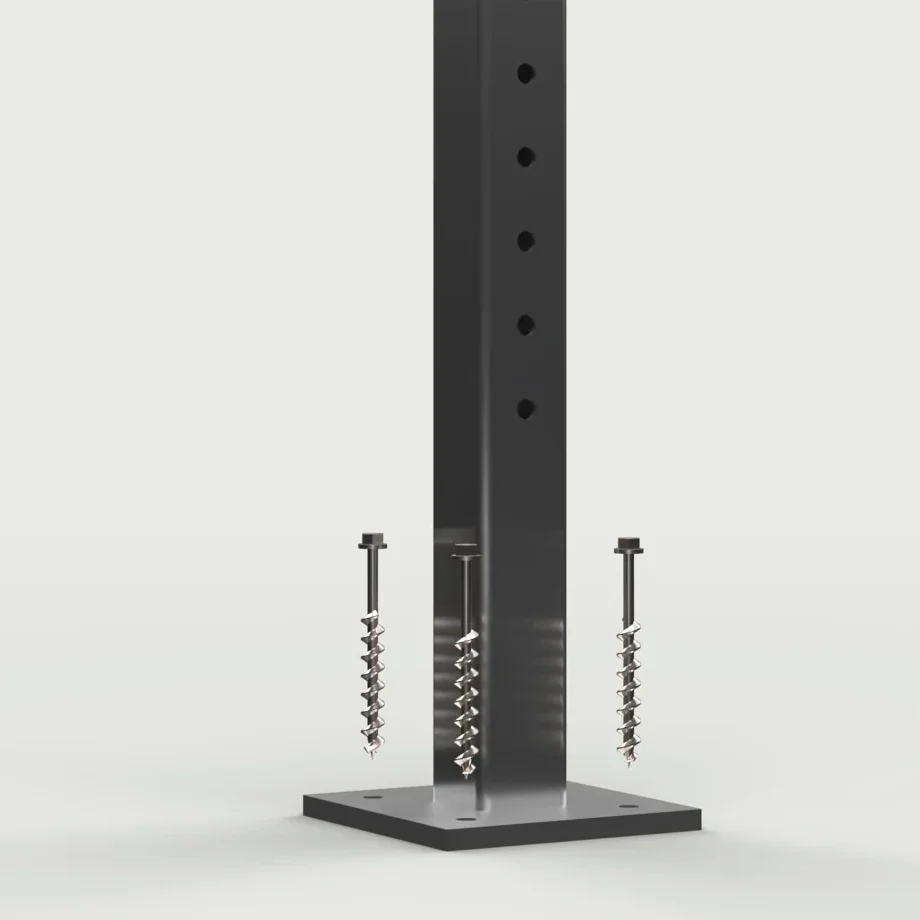
One tube, four arms
A 30 × 30 mm tube, 1500 mm long. Four arms come out of one 6 m length, with every hole cut on a tube laser in one step.
Height and rotation
A folded sleeve and clamp plate slide over the post and lock in its holes. The arm turns on M10 pins and locks in set positions.
Checked with the makers
The structure was reviewed several times with a welder and a draughtsman at a metalworking company, to keep it simple to produce.
One number for the grower
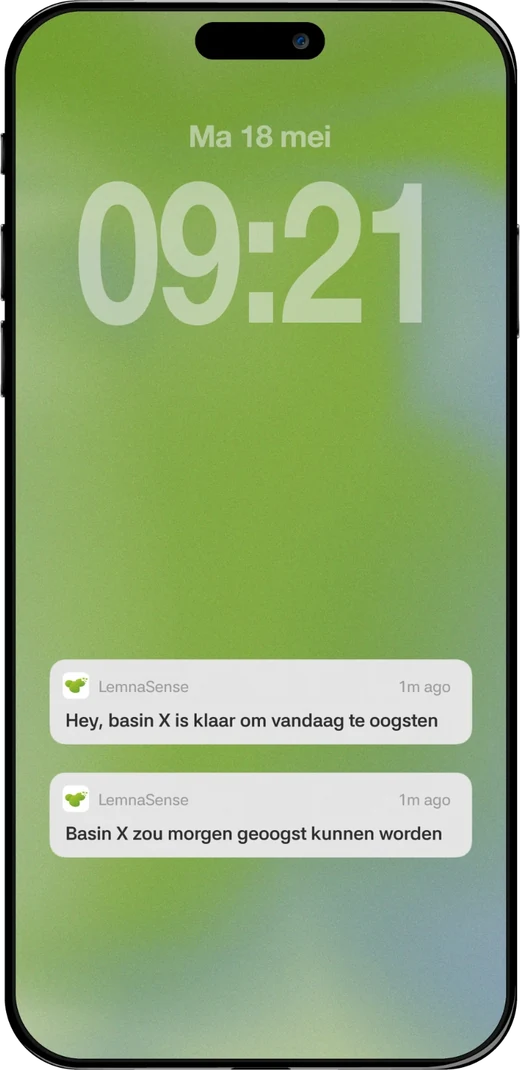
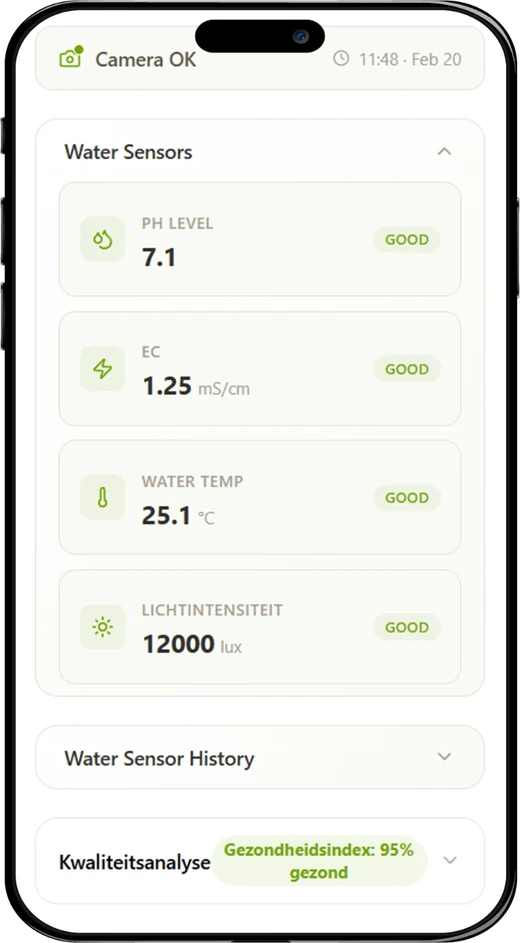
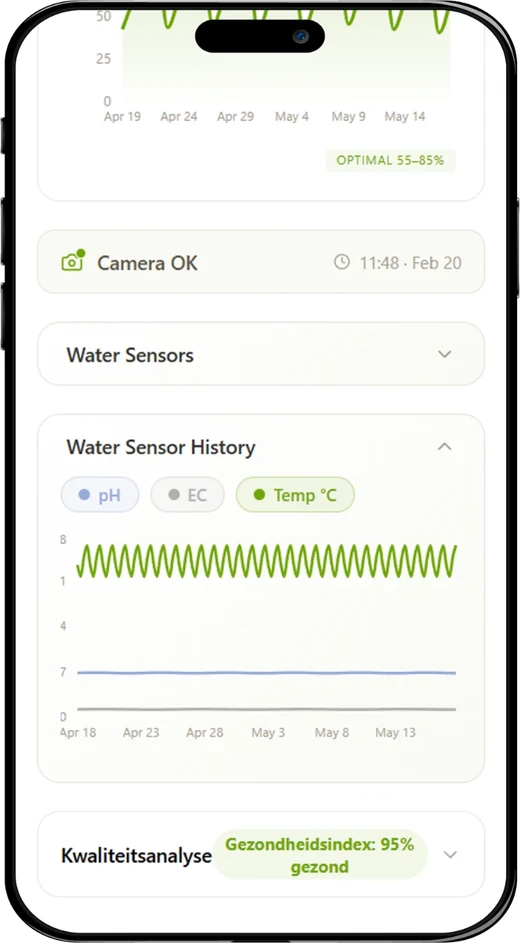
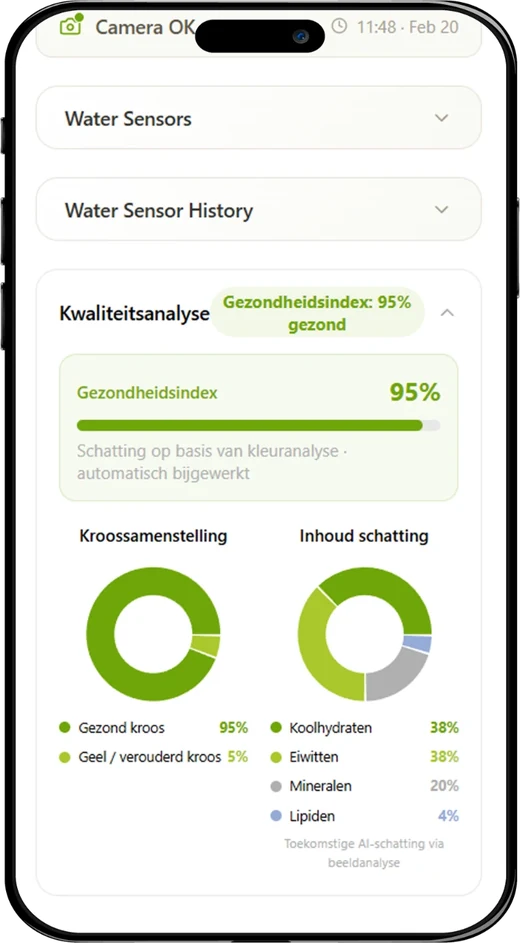
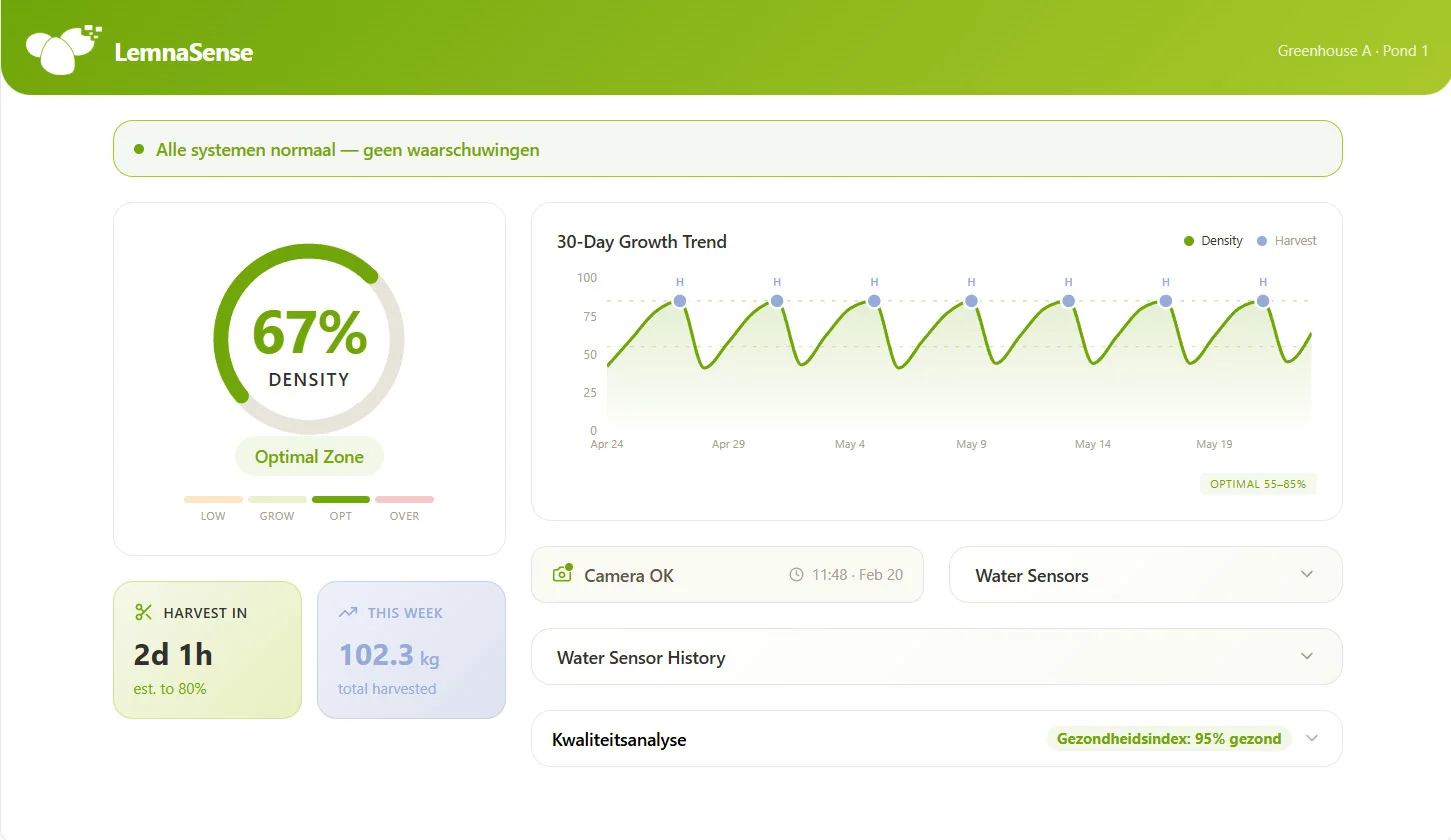
The app shows the density, the zone it is in and the expected time to harvest. Nothing more on the first screen.
The growers warned against the busy dashboards they know. Charts show at most three lines; pH, EC and temperature stay one tap away. Because fresh duckweed has to be steamed and frozen right after harvest, the app predicts the moment and sends a notification in advance.
Master's thesis, Product Development, University of Antwerp, 2025–2026. Promotor: Filiep Dewitte. With input from Inagro, VIVES and Azaleakwekerij Van De Steene.
Next projectResonance→
 Photo:

 Photo:

 Photo:



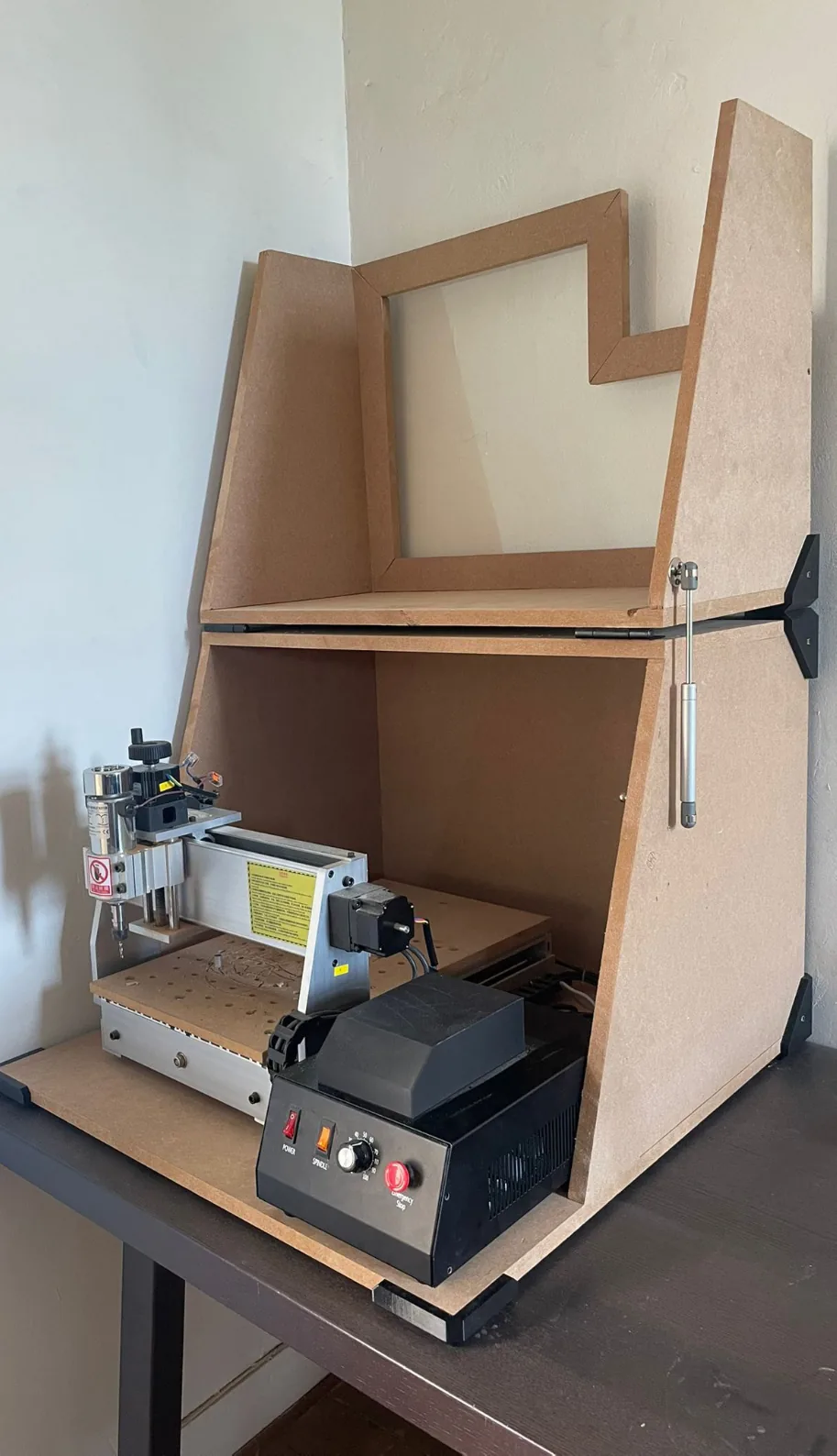 The 3040 desktop CNC, in its own enclosure.